 EN
Quick Answer
Choose wholesale shapewear when you want to test a ready-made assortment with limited development responsibility and are comfortable selling the supplier’s approved product identity. Choose private label when your first launch needs your own branding and a product platform that can support it. In either case, validate the physical garment and the order conditions before committing stock.
Private label vs wholesale shapewear is a comparison of work, rights and commercial scope. Private label does not automatically mean exclusive design, and wholesale does not automatically mean a small order. Ask who owns the brand on the product, what changes are included, which minimums apply and whether you can reorder the same specification. The best startup route is the one that fits your customer promise and the decisions you can responsibly manage.
What Is the Difference Between Wholesale, White Label and Private Label Shapewear?
Wholesale describes a business buying products for resale. It does not specify whether those products carry the supplier’s brand, your brand or no visible consumer brand. Private label describes products marketed under a buyer’s brand. A private-label order can therefore also be a wholesale transaction. Clarify the product arrangement before treating the words as mutually exclusive categories.
In this guide, the wholesale route means reselling an established ready-made product with its permitted presentation. The private-label route means using an existing or adapted product platform under your own brand. White label often means a broadly available standard product offered to multiple businesses, but suppliers use the term inconsistently. Ask for a practical description rather than relying on a label in a search result.
A startup can begin by selecting an existing style and adding labels, packaging and customer guidance. Another may need a revised rise or torso length before the product can serve its niche. Those projects have different development requirements even if both suppliers call them private label. Put the garment reference, changes and approvals into the quotation request.
The distinction also affects your marketing. A retailer can build trust through curation, availability and service; a private-label brand must explain its own promise and support the product experience associated with its name. Neither approach removes the need for accurate fit advice and a reliable supplier. Choose what your business is prepared to deliver consistently.
| Term | What it describes | Question to ask |
|---|---|---|
| Wholesale | Business purchase for resale | Whose branding and resale conditions apply? |
| White label | Often a shared standard platform | Can other buyers sell this underlying style? |
| Private label | Product sold under your brand | Which product and branding changes are included? |
| OEM / ODM | Manufacturing or development arrangement | Who provides and approves the specification? |
Private Label vs Wholesale Shapewear: Which Route Fits Your First Launch?
| Buying criterion | Ready-made wholesale resale | Existing-platform private label |
|---|---|---|
| Main advantage | Can test an established assortment | Can build your own brand identity |
| Key preparation | Resale permission and product knowledge | Artwork, branding approval and product validation |
| Control to confirm | Assortment, channel and product presentation | Labels, packaging and permitted garment adjustments |
| Inventory question | Minimum by item and available pack | Minimum by style, color and branding component |
| Main dependency | Continuity of the supplier’s range | Continuity of your approved product platform |
Select the route according to the specific reason a customer should buy from you. If you plan to serve a local boutique audience through careful fittings and a curated collection, established wholesale styles may suit the initial test. If your proposition depends on a coherent brand presentation and repeatable own-label range, private label deserves a detailed quotation.
For an online founder, presentation is only one part of the choice. Ask whether you can obtain the product measurements, care information and imagery permissions needed for a credible product page. A private-label garment with weak sizing information creates avoidable questions, while an established wholesale product may already have usable guidance that still needs verification for your channel.
Look at S-SHAPER’s catalogue to identify the actual product you would compare. Keep the silhouette, material and quantity as close as possible between proposals. Comparing one supplier’s basic brief with another’s built-in shaping dress tells you little about the cost of branding.
Finally, consider what happens after the first test. Can you reorder the same material and size chart? How are style changes communicated? Are your labels and packaging stored separately or reordered each time? A route that looks simple for the first shipment can become difficult if its product identity changes without warning.
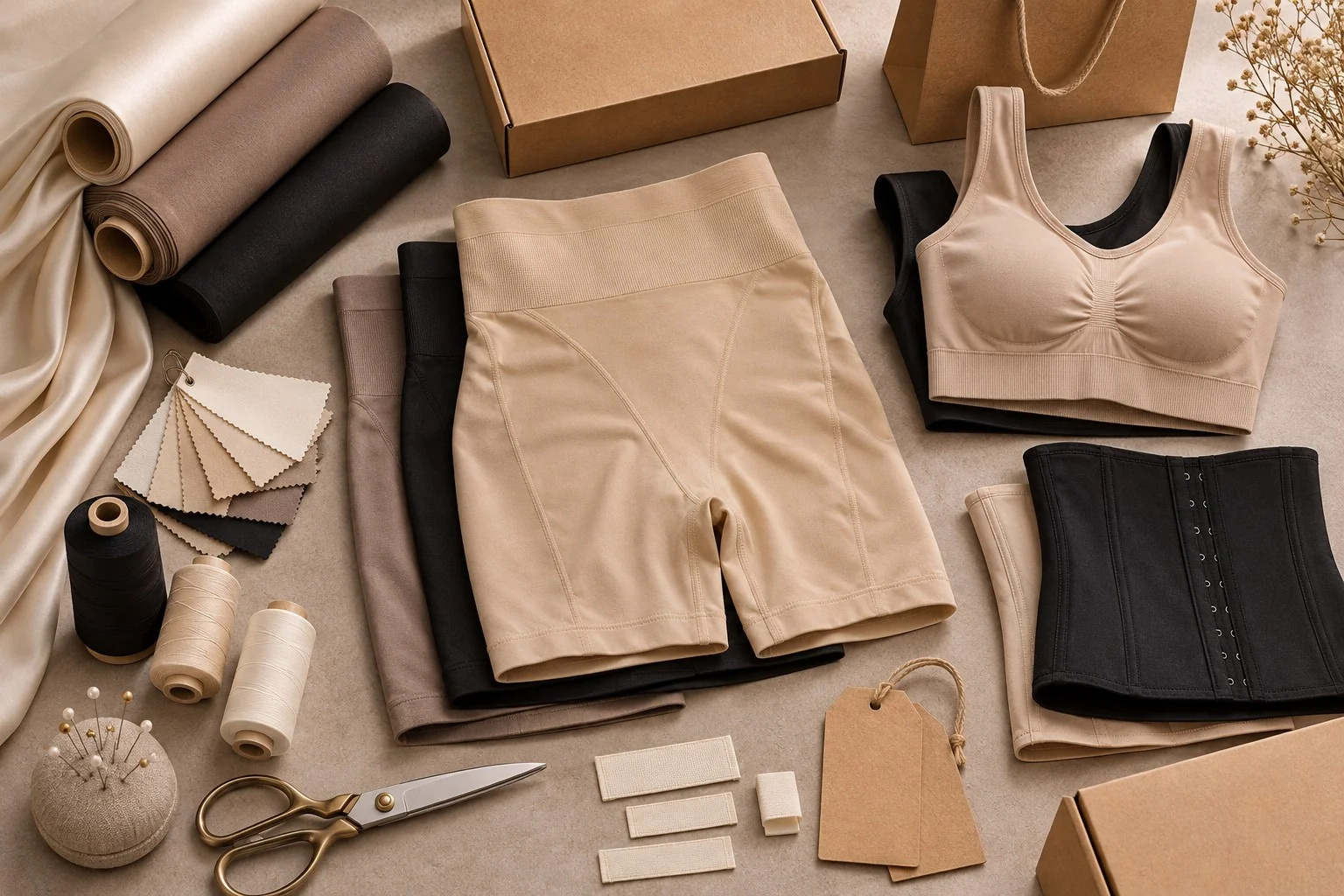
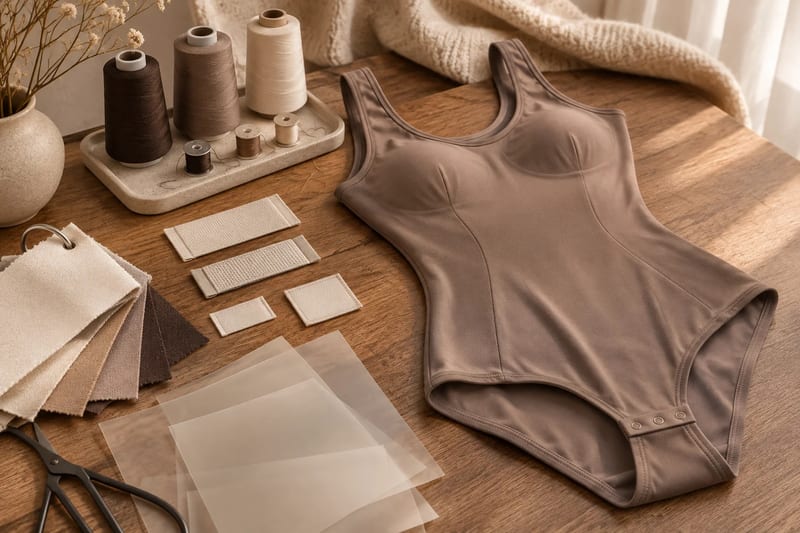
Illustrative own-label workspace. Review how the selected product and branding scope affect the price comparison.
Wholesale vs Consumer Retail: Which Price Should an Own-Label Founder Compare?
Private label and wholesale describe different aspects of a transaction, so compare the work and rights behind the price. A finished consumer garment, a resale wholesale assortment and a branded platform may have different preparation, presentation and inventory commitments. The four-channel observations below help locate these offers without treating them as interchangeable quotations for one product.
| Channel / buying model | Observed USD per garment | Product and order basis |
|---|---|---|
| Amazon US retail bodies | $12.38–$35.14 | Seamless/lighter bodies $12.38–$19.99; Structured bodies $35.14–$35.14. |
| Value/mid-tier brand DTC bodies | $29.99–$49.00 | Shapermint/Shapellx sale prices; no multi-pack or order code |
| TikTok Shop US bodies | $21.99–$54.99 | Seamless/lighter bodies $21.99–$46.99; Structured bodies $39.99–$54.99. |
| B2B small-order platform bodies | $3.18–$10.00 | Tianchen, Junmao and S-Shaper; listed minimums 5/2/10; not deep-custom eligibility |
| B2B higher-volume platform bodies | $2.50–$12.85 | Listed minimums 100–600; different garments, not a same-SKU volume discount |
US-facing USD single-garment observations reviewed November 10, 2026; variants, retail promotions and shipping/tax differ. Amazon uses May–October 2026 tracker snapshots, not live November checkout. These selected samples are not industry averages or matched constructions. B2B advertisements are not landed costs or final custom quotes. Deeper development needs separate specifications, deliverables and an itemized quotation.
Wholesale B2B commonly removes part of the retail selling layer, which can produce a lower piece price while leaving merchandising, stock risk and support with your business. Private-label changes can add samples, branded components or development beyond a standard bulk offer. A brand-site premium may reflect product differentiation, positioning and service, but does not by itself prove a more expensive factory garment. Request comparable standard and branded scopes from S-Shaper using the same construction, quantity and matrix before judging the cost of your own label.
This profile concerns everyday platforms. Structured fajas require a separate specification; new patterns, materials and deeper customization are not assumed included in ready-made bulk supply.
Does Private Label Give You Exclusive Designs or Better Product Control?
Branding rights and design rights are separate. Your logo can be yours while the underlying bodysuit remains available to other buyers. If exclusivity matters, define the design elements, territory, channel, duration and any conditions with the supplier. An email saying “your brand” is not enough to establish those boundaries.
Product control also needs a concrete meaning. Specify which materials, measurements and construction details must remain unchanged between orders. Ask how substitutions are proposed and approved. A private-label relationship is valuable when it gives you a repeatable product record, rather than only a different label on a garment you cannot describe.
Discuss the S-SHAPER customization options relevant to your concept: fabric, color, sizing and branding. Ask which can be changed on an existing platform and which require new development. The practical boundary may depend on the chosen style and quantity, so avoid treating a service-page list as an all-inclusive order package.
If you are reselling a supplier-branded product, obtain the rules for photography, product descriptions, sales territories and channels where relevant. Do not remove labels or reuse imagery without permission. A clear resale arrangement can be a sound startup model; ambiguity about presentation and rights makes either route harder to manage.
Keep your own approved files and records. Store the final artwork, specification, sample photographs and commercial terms with the purchase order. Those documents help preserve consistency when staff, supplier contacts or product versions change.
Which Samples and Quality Checks Do Both Buying Routes Still Need?
Both routes need a garment review based on your customer. A known wholesale style may still fit your audience poorly. A private-label sample may resemble the standard product while using a different fabric or finishing method. Confirm that the sample represents the version you are actually buying.
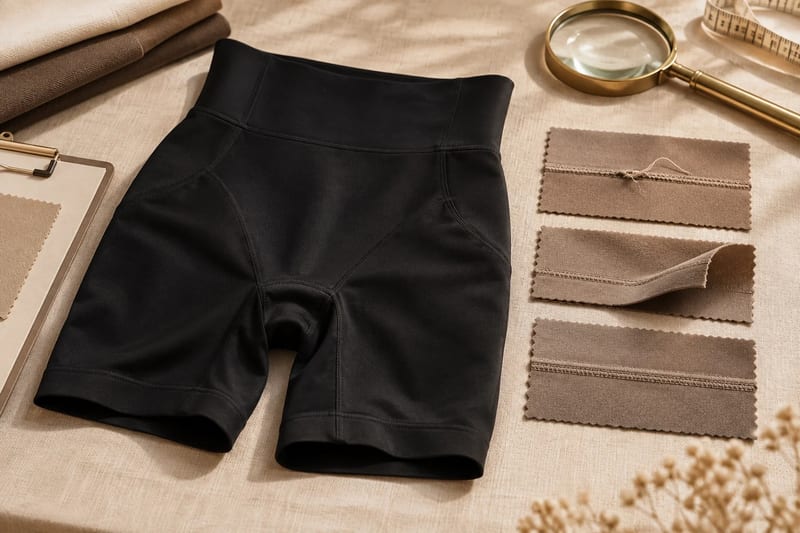
For briefs and shorts, examine the waistband, leg openings, rise, seam visibility and recovery after wear. For bodysuits, add torso length, bust coverage, straps, gusset access and dressing convenience. Use repeatable tasks and the intended care routine. Agree measurable acceptance criteria rather than relying on a general description such as premium quality.
Review the size range deliberately. If you test only one size, ask how the remaining sizes were graded and which should be physically checked before ordering. A change to a neckline or waistband can affect fit in ways a logo approval cannot reveal. Keep fit comments separate from packaging feedback so each change reaches the right person.
The S-SHAPER quality-control overview can frame your questions about material, construction and finished goods. Request the relevant order-specific records and confirm any inspection arrangement before dispatch. The supplier’s process description provides context; your approved reference defines the product you expect to receive.
For resale stock, also inspect lot consistency and the accuracy of size and product identification. For private label, check your branded components against approved artwork. Every route needs a way to identify and resolve discrepancies before customers encounter them.
Which Shapewear Manufacturers Should You Consider for Private Label or Wholesale?
Compare shapewear manufacturers in China, the USA, France and Colombia for private-label versus wholesale selection. The recommendations below connect country-level capabilities with specific suppliers and the work your brand needs.
China Shapewear Manufacturer: Scope an Existing Platform Under Your Brand
China shapewear manufacturers offering branded platforms let buyers compare existing-product customization with deeper development; clarify ownership and change scope before treating private label as exclusive design.
Recommended China Supplier: S-Shaper
S-SHAPER offers OEM/ODM support with recommendations on materials and styles and communication across design, production, QA and export. A China factory-direct proposal is relevant when you want your own presentation on a suitable platform, with the option to discuss product changes. Ask which existing garment can deliver the benefit before commissioning deeper development.
Its public brief tiers anchor goods pricing, but the final branding and sample scope still needs quotation. Small initial quantities are conditional and do not establish exclusive patterns. This route fits a founder building an own-label identity who is ready to approve fit and components. Compare it with wholesale on the same garment purpose, rather than interpreting every lower stock price as a branding saving.
Source: S-SHAPER OEM/ODM and global-brand support.
USA Shapewear Manufacturer: Buy a Defined Finished Assortment
USA shapewear manufacturer comparisons involving wholesale catalogues begin with resale rights and assortment continuity; finished-stock access should not be interpreted as permission to replace product labels.
Recommended USA Supply Partner: Vedette
Vedette’s US-facing wholesale program emphasizes catalogue selection and dedicated B2B support. Those features can be useful for a retailer whose value is curation, fitting advice or availability. Ask about the selected sizes, where goods are held and the actual replenishment conditions, so the first assortment reflects stock you can obtain.
This is a resale comparison, not proof of US fabrication or permission to substitute your label. Product rights and channel terms must be confirmed before reusing presentation material or changing branding. The advantage is fewer development decisions when an existing garment works; the limitation is control over that product’s identity and construction. It fits a first retail test more directly than a request for exclusive own-label measurements.
Source: Vedette US-facing wholesale program.
France Shapewear Manufacturer: Compare Two Explicit Commercial Programs
France shapewear manufacturer routes can distinguish professional resale from occasion-focused own-label development; compare the chosen program before assuming the same minimums or design responsibilities apply.
Recommended France Supplier: Gilsa Paris
Gilsa Paris separates professional resale from own-label work, including adaptation, specific development and packaging. That distinction is useful when your founder is unsure whether to begin with an established occasion-led assortment or a branded product. Ask for the appropriate program before comparing an available-stock offer with a development proposal.
Own-label minimums depend on product type, and no verified public wholesale price establishes the cost of your design work. Obtain separate scope for the garment and branded components. Occasion styling and presentation can justify that work when they define the proposition, but they do not make the underlying design exclusive automatically. This route suits buyers who can explain the invisible-lingerie or outfit requirement their brand intends to own.
Source: Gilsa Paris professional resale and own-label development.
Colombia Shapewear Manufacturer: Evaluate Specialist Finished Shaping Products
Colombia shapewear manufacturer comparisons can include specialist finished shaping ranges; evaluate wholesale suitability separately from any unconfirmed ability to supply an exclusive garment under your brand.
Recommended Colombia Supplier: Leonisa
Leonisa identifies Colombian manufacturing and maintains an international wholesale program. That provides a concrete finished-product comparison when a startup wants an established shaping range rather than a new pattern. Test the relevant coverage, support feel and sizing with your audience, and ask the wholesale representative about the actual assortment available to your market.
The reviewed sources do not establish OEM or private-label availability. A wholesale relationship should therefore not be presented as an own-label shortcut without confirmation. Compare material, closure and finish directly instead of assuming one national fit standard. This route fits a retailer prioritizing specialist finished garments and dependable product explanation, while a brand seeking its own revised construction needs a separately documented development arrangement.
Source: Leonisa Colombian manufacturing and shaping product range.
Choose resale when an established assortment meets the customer need; choose own-label work when the brand presentation or garment changes justify the added approval and commercial scope.
What Should You Ask Before Switching from Wholesale to Your Own Label?
A successful resale test can identify a customer problem without proving that private label is the next necessary step. Review what customers valued: fit, assortment, your advice, availability or the supplier’s existing brand. Own-label development should strengthen the proposition rather than remove a reason people were already buying.
Write a transition brief identifying the product characteristics to preserve, the changes customers requested and the branding work you need. Ask whether the current supplier permits a private-label version and what would change commercially. If another factory is involved, treat its sample as a new product to validate rather than assuming that a similar appearance guarantees the same fit.
Avoid introducing a new fabric, new fit, new packaging and new supplier simultaneously unless the project requires it. Each change adds an approval task and makes feedback harder to interpret. A staged transition may provide clearer evidence about which change improved the product experience.
Keep enough documentation to distinguish the old and new versions in your store and customer support process. If the fit changes, update measurements and explain the difference where relevant. Repeat customers should not discover a revised garment only after receiving it. The transition is ready when the new product can be supported as clearly as the product it replaces.
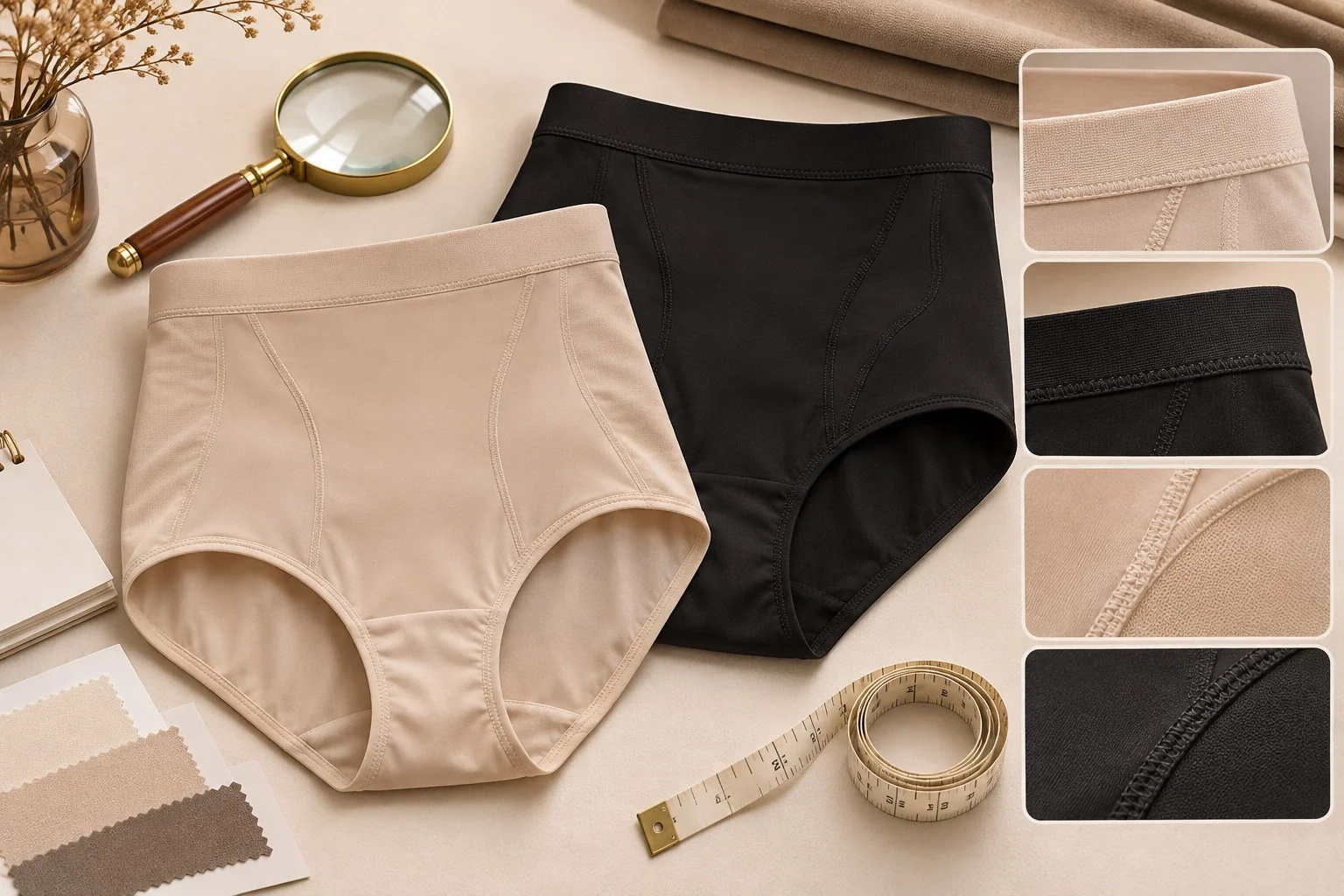
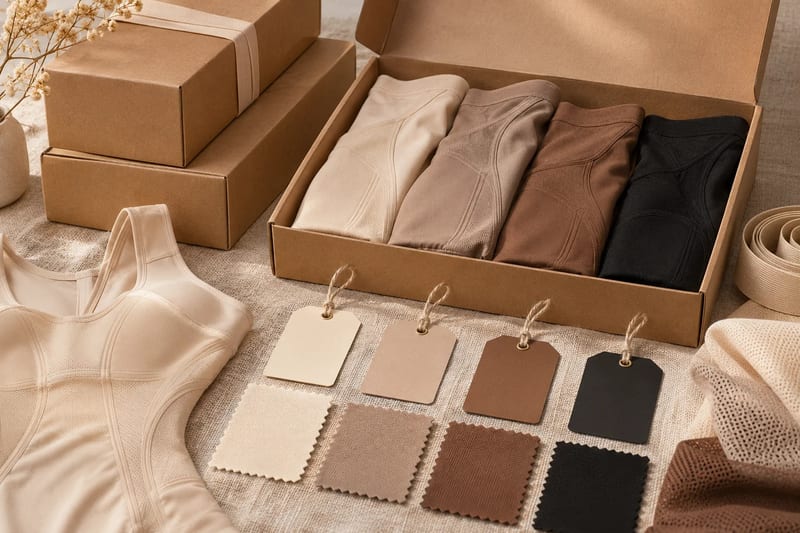
Illustrative garment comparison. Discuss a product-specific own-label proposal with S-SHAPER.
How Can S-SHAPER Help You Evaluate an Own-Label Route?
S-SHAPER’s OEM/ODM services provide a starting point for brands comparing an existing product platform with further development. Its public offering includes material, style, sample and branding support, while the catalogue supplies specific garment references to discuss. Confirm whether your intended order is standard supply, private label or a deeper development project.
Send the team one product reference and ask for a scoped comparison: available standard version, proposed branded version and any changes requiring additional sampling. Include the intended country, quantity, size range and packaging needs. The response should explain which work is included and which conditions still need approval.
Use the published order FAQ for preliminary questions, then request item-specific confirmation. To compare routes on a useful basis, contact S-SHAPER with the same brief you use for other suppliers. Ask for a current written quotation and an appropriate sample route before deciding which arrangement supports your first launch.
FAQ: Private Label vs Wholesale Shapewear
Is private label the same as wholesale shapewear?
Wholesale is a business purchase for resale; private label means selling under your own brand. They can overlap. Ask whose label is on the product, which changes are included, and what resale or manufacturing conditions apply. Those answers are more useful than terminology alone.
Is wholesale shapewear always cheaper for a startup?
No universal price relationship is established by the researched listings. Compare the same garment, quantity and delivery scope, with branding and setup charges shown separately. A smaller total commitment may matter more than a lower unit price when demand is still uncertain.
Does white label mean I cannot create a recognizable brand?
A shared product platform can still support a clear customer promise, thoughtful sizing guidance and reliable service. The limitation is that the underlying style may be available to other sellers. Build differentiation you can substantiate and clarify any exclusivity you require.
Can I add my own label to any wholesale product?
Do not assume permission. Ask the supplier whether relabeling is offered and obtain the approved branding arrangement. Removing or replacing an existing label without authorization can create a commercial dispute. Use a product explicitly supplied for your intended route.
Which route is better for a first shapewear launch?
Choose the arrangement that meets the customer need with an order and approval scope you can manage. Resale can test an assortment; private label can support your own identity. Both need samples, fit evidence, clear quantities and dependable reorder conditions.