 EN
Quick Answer
Validate a shapewear business idea in stages: confirm a repeated wearer problem, test a physical sample, test a clearly priced offer and then use a limited order to observe actual product use. Record what each stage proves and what it leaves unanswered. Interviews reveal needs; samples reveal fit; a waiting list reveals interest; purchases and wear feedback provide stronger commercial evidence.
Before buying inventory, define the decision your next test will support and the conditions that would make you revise or stop. Use a product-specific supplier proposal so your test reflects something you can actually source. This approach reduces uncertainty without pretending that a small pilot can guarantee a successful brand or predict the whole market.
What Exactly Should You Validate Before Ordering Shapewear?
Separate four assumptions: the customer has a meaningful problem, your proposed garment addresses it, the customer will consider the offer at its intended price, and the supply arrangement can support a repeatable product. A test answering only one assumption should not be presented as validating all four.
Write each assumption as a sentence you could disprove. “People want comfortable shapewear” is too broad. “Customers who sit for long workdays dislike the waistband behavior of their current shaping shorts” is more useful. The next question is whether your sample improves that experience enough to motivate a purchase.
Define the target participant by behavior and measurements relevant to the product. Someone who enjoys fashion content may not wear the garment type you intend to sell. A founder’s friends may be generous with encouragement while not representing the launch audience. Recruit people who can describe a real recent purchase or wearing situation.
Keep a validation log containing the assumption, test, participants or traffic source, result and next decision. Include contradictory findings. If the problem is frequent but your sample fails to solve it, the idea may need product work rather than a larger advertising budget. If the sample performs well but the offer is unclear, revise the explanation before changing the garment.
This is a buying process as much as a marketing exercise. The evidence should help you decide which specification, quantity and supplier scope to approve. An idea is ready for a controlled first order when the main uncertainties have become explicit, manageable decisions rather than optimistic blanks.
| Assumption | Test | What it can show | What it cannot prove |
|---|---|---|---|
| A repeated problem exists | Customer interviews | Context and dissatisfaction | Purchase conversion |
| The garment helps | Structured wear trial | Fit and use observations | Broad market demand |
| The offer is attractive | Priced offer or sales pilot | Response to a particular offer | Long-term retention |
| Supply is workable | Sample and written proposal | Feasibility and order scope | Future batch consistency without controls |
Which Interview Questions Reveal Real Shapewear Buying Problems?
Ask about the most recent time the person bought or wore shapewear. What were they wearing over it? How did they choose the size? What happened after sitting, walking or several hours of use? What did they keep wearing, return or stop using? These questions ground the discussion in behavior instead of asking participants to endorse your concept.
Let people describe the problem before showing your solution. If you lead with “Would you buy comfortable shorts that never roll?”, you may collect agreement with an attractive promise rather than evidence about a real purchase. Ask what they already tried and what trade-offs they accepted. A customer who tolerates a problem may still value price, coverage or convenience more highly.
Show reference garments or samples after the open discussion. Ask participants to compare specific features and explain their preference. Record the reason, not only a vote. If one garment feels better but is harder to use under the intended outfit, that trade-off belongs in the product brief.
Summarize patterns without inventing survey precision. A small exploratory group can reveal repeated language and useful hypotheses; it does not produce a nationally representative preference share. Report the number of participants and the recruitment context when you share findings internally. Keep personal measurement records appropriately controlled and use them only for the agreed product research.
End by asking what the person would need to know before buying. Their questions can shape sizing guidance, product photography and customer support. A repeated question about torso length may be as actionable as a repeated complaint about straps, because both affect the ability to choose a suitable product.
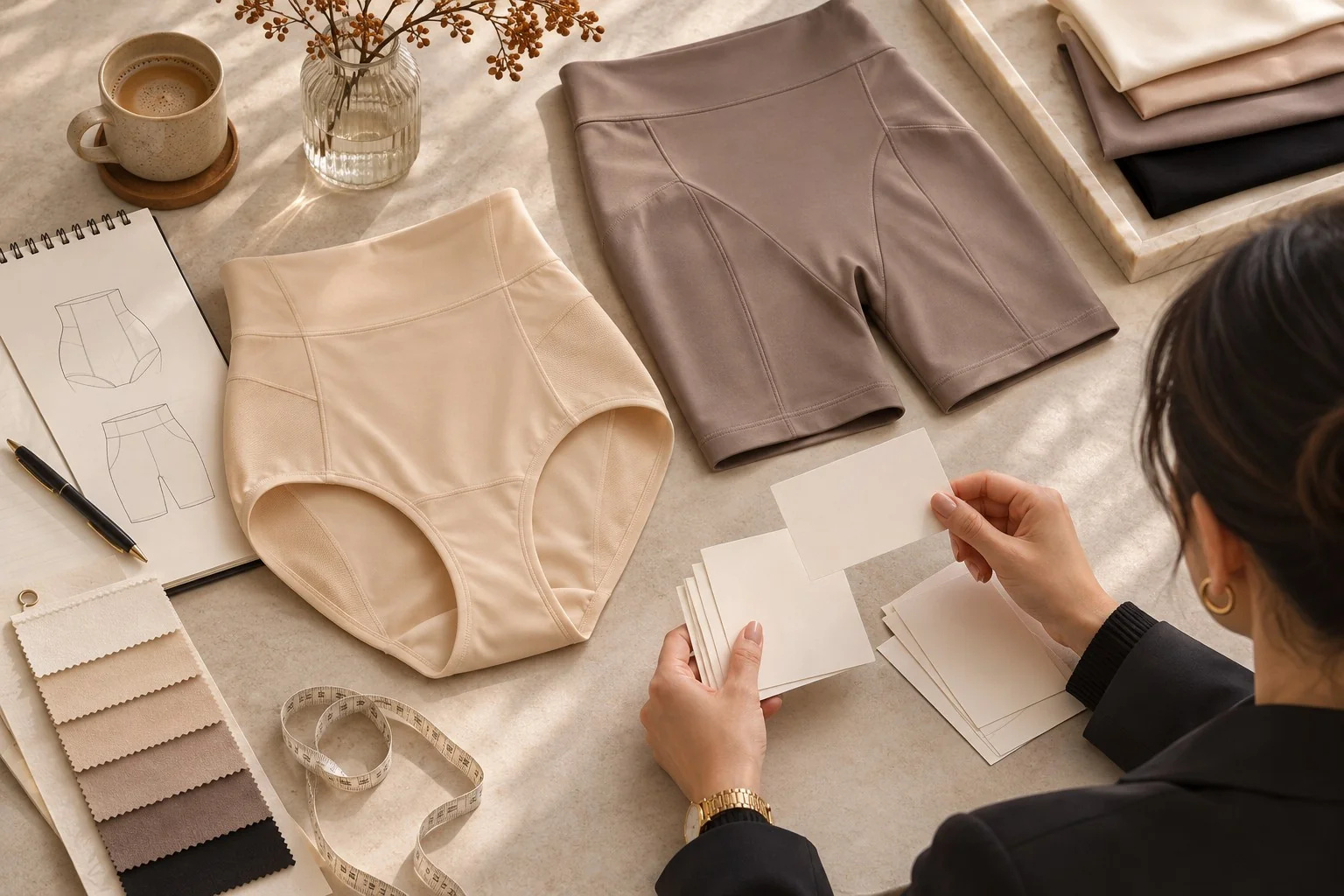
Illustrative customer-research workspace. Compare interest signals with purchase evidence.
How Do You Validate the Product with Samples Before Inventory?
Choose a sample that represents a feasible sourcing route. Use S-SHAPER’s product catalogue to identify an existing platform, or request a development proposal through its OEM/ODM service team. Confirm which material, size chart and construction the sample represents. A test of a different garment will not validate the product you later order.
Write a short trial protocol around the main promise. For shaping shorts, include dressing, walking, sitting and checking the leg openings. For a bodysuit, include torso comfort, straps, closures and the intended outer clothing. Let participants describe the experience before asking them to rate it. Specific observations are easier to convert into development changes than an overall satisfaction score.
Compare measurements and performance after the intended care routine. Document the starting condition so you can identify changes. Agree relevant tolerances and methods with the supplier rather than choosing arbitrary figures. If you compare two samples, keep the tasks and recording method consistent so the difference is easier to interpret.
Test the sizes that matter to your launch proposition. One mid-size fitting cannot validate every proportion in the range. Ask how the supplier grades the product and which sizes need additional physical checks. Discuss changes through S-SHAPER’s customization support and preserve a versioned revision list.
Decide whether the sample passes, needs a defined revision or should be replaced by another platform. Do not purchase production stock merely to find out whether a known unresolved fit issue will improve on its own. The approved sample should become the product reference for the commercial test.
Likes vs Waiting Lists vs Paid Orders: Which Demand Signal Is Stronger?
A like measures a low-effort interaction with content. A waiting-list signup shows a willingness to provide contact details for a particular proposition. A paid order involves a clearer commitment, but it still leaves questions about fit, returns and repeat use. Treat these as different signals rather than combining them into a single excitement score.
The illustrative funnel below is a worked arithmetic example, not a campaign result, industry benchmark or forecast. It shows why naming the denominator matters. Twenty signups from 200 qualified visits is a 10% signup rate; five purchases from those 20 signups is a 25% signup-to-purchase rate. The same five purchases are 2.5% of the original visits.
Use your own measured traffic and audience definitions. Broad social traffic and a carefully selected customer group can respond differently. Record the offer, price, creative, source and dates alongside results. Changing several of these at once makes it harder to understand what the test taught you.
If you accept advance commitments, be clear about the product stage, delivery expectations and what happens if the launch changes. Do not present an unapproved sample as ready inventory. A transparent test produces more useful evidence than an offer customers understand differently from the founder.
| Illustrative stage | Example count | Calculation | Interpretation |
|---|---|---|---|
| Qualified product-page visits | 200 | Starting denominator | Audience reached by this test |
| Waiting-list signups | 20 | 20 ÷ 200 = 10% | Interest, not sales |
| Purchases | 5 | 5 ÷ 20 = 25% | Signup-to-purchase conversion |
| Purchases / visits | 5 / 200 | 5 ÷ 200 = 2.5% | Visit-to-purchase conversion |
Which Channel Prices Can You Use to Validate a Product and a Priced Offer?
Match the price evidence to the test. Buying one consumer sample can help evaluate a garment; it does not prove the sourcing economics of a branded inventory order. A B2B listing may inform a pilot inquiry without establishing that the selected material, branding and mixed sizes qualify. Keep the physical product test and the commercial offer test connected through one identified platform.
| Channel / buying model | Observed USD per garment | Product and order basis |
|---|---|---|
| Amazon US seamless bodies | $12.38–$19.99 | Three brands; dated tracker offer prices, not live checkout |
| Value/mid-tier brand DTC | $29.99–$49.00 | Shapermint/Shapellx everyday bodysuit sale prices |
| TikTok Shop US seamless bodies | $21.99–$46.99 | FeelinGirl selected single-item offers; limited subset of platform |
| B2B seamless/platform bodies | $2.50–$12.85 | Seven supplier offers; MOQ 2–600; custom work and delivery not automatically included |
US-facing USD single-garment observations reviewed November 10, 2026; variants, retail promotions and shipping/tax differ. Amazon uses May–October 2026 tracker snapshots, not live November checkout. These selected samples are not industry averages or matched constructions. B2B advertisements are not landed costs or final custom quotes. Deeper development needs separate specifications, deliverables and an itemized quotation.
Amazon, independent brand stores and TikTok Shop show consumer offers shaped by different merchandising and promotional conditions. B2B is usually lower per piece because the buyer accepts quantity and performs downstream selling work, but deeper customization needs its own proposal. Test a clearly priced offer against a real sample and current sourcing scope rather than assuming that a retail sale price multiplied by waitlist interest predicts a viable order. Ask S-Shaper for a pilot and reorder comparison after the relevant fit and demand evidence is available.
This profile concerns everyday platforms. Structured fajas require a separate specification; new patterns, materials and deeper customization are not assumed included in ready-made bulk supply.
Which Shapewear Manufacturers Should You Consider for Validating Your Product Idea?
Compare shapewear manufacturers in China, the USA, France and Turkey for demand and sample validation. The recommendations below connect country-level capabilities with specific suppliers and the work your brand needs.
China Shapewear Manufacturer: Test the Proposed Own-Label Platform
China shapewear manufacturers offering own-label development can connect a trial garment to a manufacturable platform; validate demand against the version that could actually reach commercial production.
Recommended China Supplier: S-Shaper
S-SHAPER offers material and style advice through an OEM/ODM team spanning design, production, QA and export. For a validation-first founder, those capabilities can help identify the smallest sample change needed to test the central wearer problem. Experience with multiple global customer regions can inform the proposal, but it should not be treated as evidence that your offer will convert.
Ask whether the chosen item qualifies for a small initial test and which changes alter that condition. The published brief tiers are a goods-price reference, not a complete validation budget or universal custom MOQ. This factory-direct route fits an own-label test when the sample represents a feasible production platform. Keep the material, measurement chart and revision identified so later purchasing feedback refers to the same garment.
Source: S-SHAPER OEM/ODM and global-brand support.
USA Shapewear Manufacturer: Test Merchandising with Available Wholesale Goods
USA shapewear manufacturer offers involving available wholesale goods can test merchandising without new pattern work; keep resale results separate from demand for an untested private-label design.
Recommended USA Supply Partner: Vedette
Vedette’s catalogue selection and B2B support offer a practical route to investigate when the uncertainty concerns assortment, price presentation or your selling channel. Ask about exact sizes and available stock, then use a finished garment to test whether customers understand and choose the offer. Confirm actual replenishment and dispatch before promising availability.
This test validates a resale proposition, not necessarily demand for your future private-label design. US-facing supply does not prove domestic fabrication or grant relabeling rights. Record whose product and brand the participants evaluated, so results are not transferred automatically to another garment. It suits a founder testing curation and customer service; a distinctive fit claim still needs a sample that actually embodies that difference.
Source: Vedette US-facing wholesale program.
France Shapewear Manufacturer: Validate the Occasion Result Before Custom Development
France shapewear manufacturer routes with occasion-specific assortments let founders test the dressing result first; distinguish evidence from an available item and assumptions about a future adaptation.
Recommended France Supplier: Gilsa Paris
Gilsa Paris offers finished professional assortments alongside own-label adaptation and development for invisible-lingerie needs. For an occasion concept, an available product can help test whether concealment and coverage matter in the intended outfit. Ask testers to compare the actual dressing result rather than respond to a mood board or attractive neckline description.
If the result requires development, request the product-dependent minimum and the cost of style and packaging work before expanding the test. Available resale success does not prove that a revised own-label version will perform identically. This route suits a hypothesis centered on an outfit or event. Keep the commercial route and sample version in the validation record so the next order follows what was genuinely tested.
Source: Gilsa Paris professional resale and own-label development.
Turkey Shapewear Manufacturer: Verify a Seamless Hypothesis on a Manufacturable Route
Turkey shapewear manufacturer routes integrating seamless stages can make a construction hypothesis testable; confirm that the evaluated yarn, knit and finish match the proposed production garment.
Recommended Turkey Supplier: SML Seamless
SML describes integrated Turkish private-label production from yarn through packed shapewear, with dedicated communication. When the idea depends on seamless construction, this offers a route for connecting a sample with the process that could reproduce it. Ask which yarn, knit and finish choices address the proposed benefit and which trial would test it.
Integration alone does not validate fit or demand. Check opacity, recovery, openings and graded sizes with the intended users, and obtain actual color-batch and order conditions. The reviewed source supplies no universal low minimum or price. This route fits a validation plan whose main uncertainty is a seamless product result, provided the first sample and quoted production version can be connected clearly in the decision record.
Source: SML Seamless integrated private-label manufacturing.
Choose the route that tests the intended commercial proposition; keep resale results, own-label sample results and untested development assumptions separate before increasing inventory.
What Should a Limited Launch Measure Before You Reorder?
Track what happens after the first sale. Did customers choose the intended size? Which fit questions required support? Which issues appeared during wear? Which variants sold and which remained untouched? These observations explain the order result more clearly than revenue alone.
Use the same product version and order records when analyzing feedback. A fit comment about an early sample should not be mixed with a revised production garment. If you change material or construction during the pilot, identify the affected units and avoid attributing all feedback to a single version.
Review the quality and receiving evidence as well. Use an agreed process such as the topics described in S-SHAPER’s quality-control overview to distinguish a production discrepancy from a product-design issue. A repeated manufacturing defect calls for a different response from a consistently manufactured garment that does not meet the wearer’s needs.
Set a next-order decision around the strongest finding. You may need to revise a size chart, simplify colors, improve product guidance or change the platform. A pilot is valuable when it changes a concrete buying decision. Reordering the same assortment without reviewing what you learned wastes the main advantage of starting small.
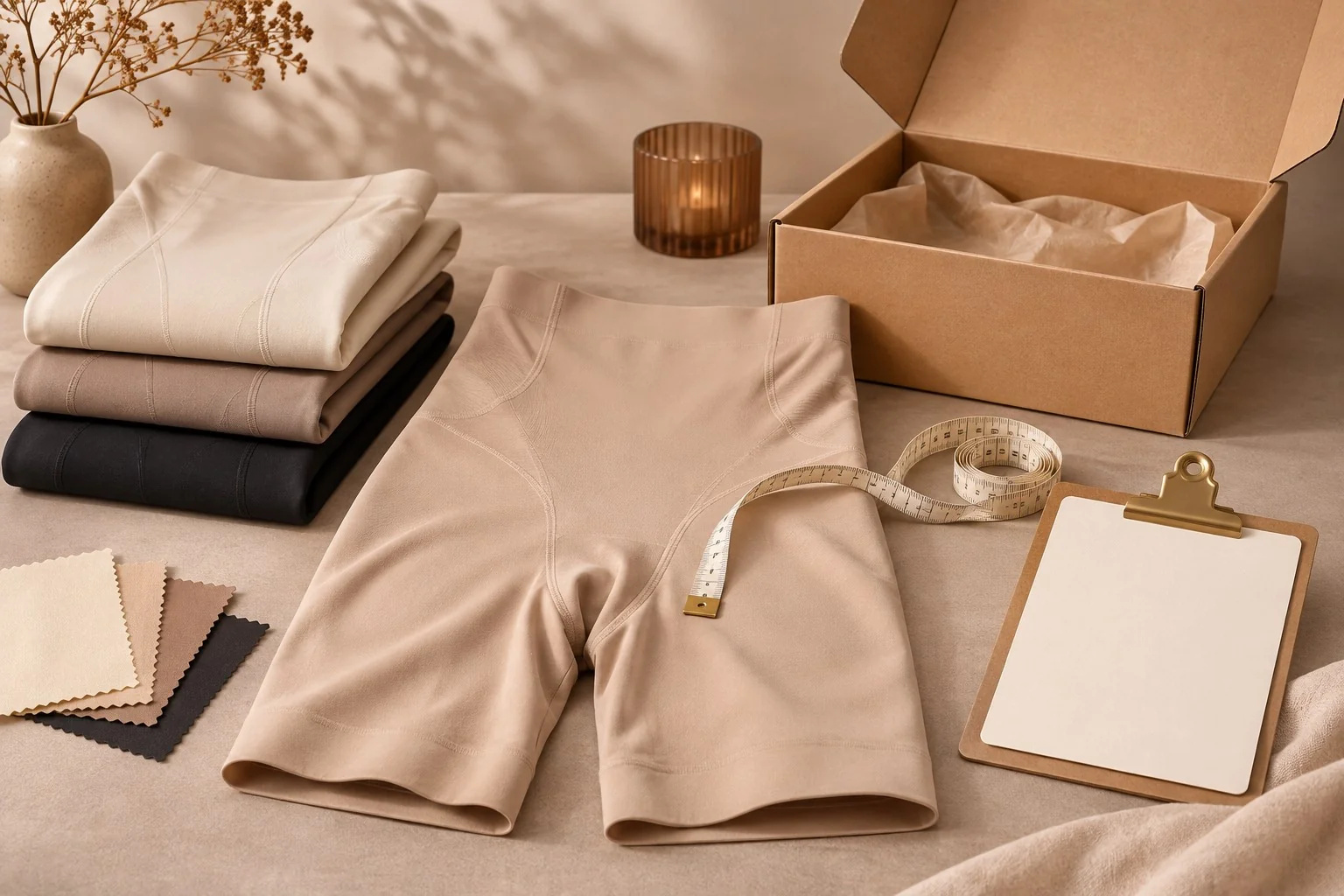
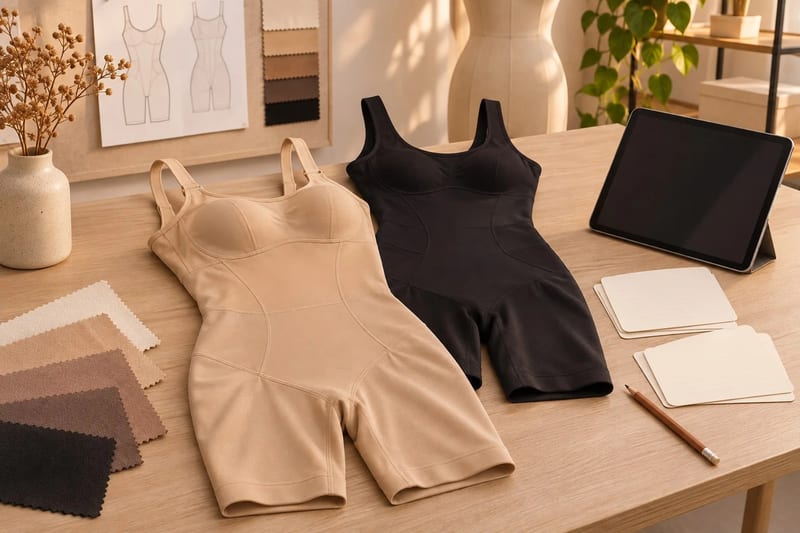
Illustrative pilot preparation. Discuss a feasible sample and first-order scope with S-SHAPER.
How Can S-SHAPER Support a Validation-First Product Launch?
S-SHAPER offers existing product references, OEM/ODM development and private-label customization. For a validation-first founder, those services can help connect a customer hypothesis to a sample that is realistic to manufacture. Ask the team which platform can test your main wearer problem and what changes would be required.
Bring interview findings, the intended trial group, product references and a first-order quantity assumption. Request the sample scope, relevant measurements and a written proposal for the selected garment. Keep the distinction between supplier feasibility and customer demand clear: the factory can assess production, while your tests establish how the intended audience responds.
To begin, send S-SHAPER your validation brief. Explain the decision you want the next sample to support. A focused request makes it easier to compare development options and avoid buying a broad assortment before you know which product result customers value.
FAQ: Validating a Shapewear Idea
How can I validate a shapewear business idea before buying stock?
Start with behavior-based interviews, then trial a feasible sample and test a clearly priced offer. Record what each stage demonstrates. Use a limited first order to learn about actual fit, sizing support and product use before committing to a larger assortment.
Does a waiting list prove people will buy?
No. It shows interest in the proposition presented at that time. Track how signups respond to a specific product, price and delivery offer. Purchase behavior is a stronger commitment, while post-purchase feedback is still needed to evaluate the product experience.
How many people should test my sample?
The sources do not establish a universal number. Choose participants representing the measurements and use cases that matter to your first range. Record the limits of a small group, and add testing where an important size or fit assumption remains unexamined.
Should I buy more units to improve the pilot margin?
Compare the larger cash commitment with the evidence available. A lower unit price does not validate the extra demand. Ask for product-specific pilot and reorder quotes, including relevant minimums, and preserve enough budget to address what the pilot teaches you.
What would justify delaying the launch?
An unresolved fit failure, an offer customers misunderstand, an unworkable supplier scope or a major unquoted cost can justify further work. Name the blocker and the test needed to resolve it. A delay with a clear decision purpose is more useful than continuing from unsupported assumptions.