 EN
Quick Answer
The most expensive shapewear startup mistakes often happen before the goods arrive: ordering too many variants, choosing a size split without evidence, approving production from an incomplete sample, comparing unequal quotes and omitting delivery or branded-component costs. These mistakes tie up cash because the order no longer matches the product or demand the founder thought they were buying.
Prevent them with a versioned product brief, relevant fit trials, an SKU-level order plan and a written quote that identifies the garment, changes, quantities and delivery responsibilities. Use a controlled first order to learn before increasing commitment. A low unit price is useful only when the product is suitable and the inventory exposure makes sense for your startup.
Why Do Too Many Styles, Colors and Sizes Tie Up Startup Cash?
Assortment decisions multiply. One style in two colors and five sizes creates 10 SKUs; three styles create 30 under the same structure. If the total order stays small, each variant receives less depth. If every variant keeps the same depth, the total cash commitment rises. Neither result is visible when a founder thinks only in total pieces.
The mistake is not offering a credible size range. It is adding optional breadth without a reason grounded in customers. If fit coverage defines the audience you serve, preserve it and examine whether every color or extra silhouette is necessary for the first test. Cutting essential sizes to fund untested colors can weaken the brand’s proposition.
Ask what evidence supports the proposed size split. A generic equal allocation may be easy to calculate but may not reflect your audience. Use the measurements and buying intentions you have collected, acknowledge where the evidence is limited and obtain the supplier’s variant-level minimums. A total quantity alone cannot establish whether the mix is workable.
The worked example below is entirely hypothetical. It chooses 50 units at an assumed $12 per piece, with 20 units allocated to variants that do not match the pilot audience. Those units represent $240 of the chosen $600 goods commitment, or 40%. The $12 input is deliberately selected for arithmetic; it is not a S-Shaper quote, a channel observation or a claim that the stock has no future value.
The preventive action is to approve an allocation rationale before the purchase order. Record why each variant exists, how the quantity was chosen and what the pilot should teach you. That makes the next order a decision based on evidence rather than a repeat of the first guess.
| Illustrative inventory measure | Calculation | Result |
|---|---|---|
| 50-piece goods commitment | $12 × 50 | $600 |
| Units in poorly matched variants | $12 × 20 | $240 |
| Share of goods value exposed | 20 ÷ 50 | 40% |
| Interpretation | Hypothetical allocation issue | Not a documented loss or supplier statistic |
What Goes Wrong When You Approve Production from Photos or One Size?
A photograph can show silhouette and general appearance, but it cannot establish how the garment behaves on your intended wearer. It does not tell you whether the waistband folds during sitting, a leg opening rides up or a bodysuit is difficult to use. Approving the product from images alone can leave the main wearing problem unresolved until the stock is already yours.
A single size creates another blind spot. The sample may work on one body while the proposed grading does not suit the rest of the range. Ask which measurements change between sizes and which additional sizes need physical review. Keep body measurements, sample size and trial comments together so the feedback can be interpreted accurately.
Use S-SHAPER’s customization service to discuss the changes you need, then identify the exact sample version that incorporates them. A revised waistband or material should trigger the relevant review rather than being accepted because it looks similar to the previous sample. Keep a numbered change list and ask for acknowledgment of every point.
Discuss the production checks through the quality-assurance overview. Agree how the finished goods will be compared with the approved reference and how discrepancies will be addressed. A general claim of quality does not define the measurements, appearance and labeling expected for your order.
The prevention rule is simple: approve an identifiable physical product and complete specification. If an important decision remains unresolved, make it an explicit condition that must be closed before the affected production stage. Do not let an attractive sample photograph become a substitute for a buying decision.
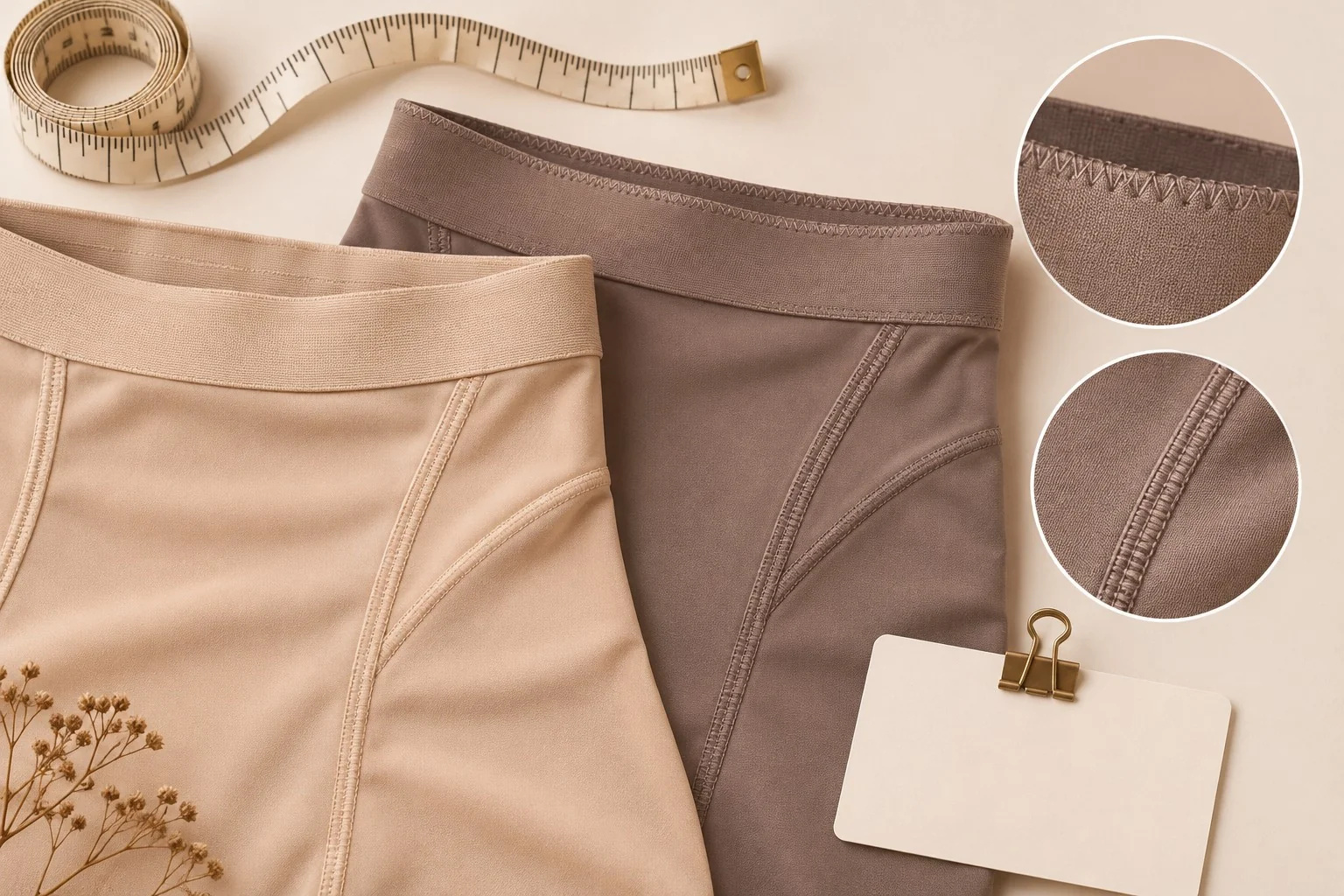
Illustrative sample comparison. Examine the difference between a low unit price and a manageable order commitment.
Low B2B Price vs Consumer Price: Which Comparison Protects Startup Cash?
A striking retail-to-wholesale spread can distract a founder from the amount being committed. The channel observations below compare different commercial layers; they do not establish a guaranteed resale margin or demand for extra inventory. Keep ordinary seamless products and structured fajas separate, and identify whether a B2B figure concerns ready-made supply or additional custom work.
| Channel / buying model | Observed USD per garment | Product and order basis |
|---|---|---|
| Amazon US retail | $9.99–$43.99 | Seamless/lighter bodies $12.38–$19.99; Structured bodies $34.88–$43.99; Shorts $9.99–$28.60. |
| Brand websites / B2C | $26.99–$148.00 | Seamless/lighter bodies $29.99–$78.00; Structured bodies $69.00–$148.00; Shorts $28.99–$81.00; Briefs $26.99–$38.00. |
| TikTok Shop US / B2C | $19.99–$65.98 | Seamless/lighter bodies $21.99–$46.99; Structured bodies $39.99–$54.99; Shorts $19.99–$65.98. |
| B2B existing-platform garments | $2.50–$12.85 | Seamless/body-shaping offers; listed minimums 2–600 pieces; custom scope varies |
| B2B structured bodies / fajas | $14.00–$27.42 | More elaborate body shapers; listed minimums 1–500 pieces; specification-dependent |
US-facing USD single-garment observations reviewed November 10, 2026; variants, retail promotions and shipping/tax differ. Amazon uses May–October 2026 tracker snapshots, not live November checkout. These selected samples are not industry averages or matched constructions. B2B advertisements are not landed costs or final custom quotes. Deeper development needs separate specifications, deliverables and an itemized quotation.
Consumer channels can carry merchandising, acquisition, stockholding and service value, while B2B generally transfers more of those tasks to the buyer. That is why a cheaper piece can still produce a larger or less useful first commitment. Compare the accepted matrix, branding, preparation and delivery proposal before paying. Ask S-Shaper for the smallest scope that can test the wearer need, and keep the bulk alternative conditional on demand evidence. Do not disguise mismatched sizes or unapproved development as a saving earned from a wide retail markup.
Seamless bulk supply and structured fajas have different specifications. Neither B2B row establishes a final price for deep development, samples or tooling.
Which Hidden Commitments Are Easy to Miss in a First Shapewear Order?
Look beyond garment quantity. Labels, hangtags, custom packaging and materials can have their own minimums and setup work. Ask how many components will be purchased, who owns unused stock and how it can be used on a reorder. A small garment pilot can still create a larger component commitment.
Discuss sampling and revision scope before development starts. Ask which work is included, what triggers an additional charge and which technical records you receive. The S-SHAPER OEM/ODM service page describes several kinds of support, but a service overview is not a line-by-line quotation for your project.
Shipping is another common gap. Confirm the handover point, transport method, packing information and the responsibilities covered by the agreed trade term. Ask the relevant providers to quote the remaining work. Do not enter zero for an unknown freight or receiving charge just because it has not yet been discussed.
The S-SHAPER logistics overview can help frame the dispatch conversation. Confirm destination-specific services and timing rather than assuming every listed option applies to your order. The warehouse or fulfillment partner should also know the SKU identifiers and carton structure before arrival.
Finally, identify the cost of changing your mind. A late artwork or material change may affect components, samples and scheduling. Ask the supplier to explain the consequences before authorizing the change. A visible change-control process is more useful than discovering the new scope after work has begun.
Which Approval and Timeline Mistakes Cause Avoidable Launch Pressure?
Do not count the factory’s production duration as the entire launch schedule. Development, sample transit, your own fit review, revisions, final files, inspection and receiving may sit outside that duration. A campaign date chosen before those stages are understood can pressure a founder to accept an unresolved product.
The S-SHAPER FAQ describes stock preparation and bulk-production timing under stated conditions, while other service pages present different ranges. Ask which applies to the selected garment. Record the starting event for each stage and distinguish working days from calendar days. Public lead-time language should not become a guaranteed customer delivery promise.
Give your own approvals a deadline and an owner. Scattered messages about colors, sizes and sample changes can leave the supplier unsure which version is current. Maintain one specification and change log, and ask the factory to acknowledge the files used for production. A founder’s delayed or conflicting response can be a real schedule dependency.
Plan time to address inspection findings. If inspection is scheduled immediately before the intended collection, a correctable issue may still disrupt the launch. Agree the process early and ask what evidence closes any corrective action. Avoid treating inspection as a ceremonial checkbox after every commercial commitment is irreversible.
The preventive action is a dependency-based timeline with explicit buffers and stop conditions. Update it when inputs change. That gives the startup a better chance of choosing between revising the product, changing the date or reducing the launch scope deliberately.
Which Shapewear Manufacturers Should You Consider for Avoiding First-Order Mistakes?
Compare shapewear manufacturers in China, the USA, Portugal and Colombia for reducing first-order cash exposure. The recommendations below connect country-level capabilities with specific suppliers and the work your brand needs.
China Shapewear Manufacturer: Keep the Unit Tier Separate from Inventory Exposure
China shapewear manufacturers using quantity tiers create a concrete inventory decision; compare total goods commitment and necessary modifications rather than ordering extra units for the lowest price.
Recommended China Supplier: S-Shaper
S-Shaper’s factory-direct development proposal can clarify which material, production and preparation choices drive your actual commitment. Its design, production, QA and export specialists can advise on a platform suited to the wearer brief, informed by global client experience. Ask which necessary changes can remain on an existing platform, then compare the full scope with the channel observations rather than treating one product tier as an industry benchmark.
The risk is buying additional units merely to reach the lower tier or assuming that conditional small-order statements include every custom component. Request the exact variant and branding scope. This route suits a founder who can connect customer evidence with an approved sample and compare total cash exposure, rather than treating the lowest advertised unit number as the order decision.
USA Shapewear Manufacturer: Avoid Buying an Assortment Just Because It Is Available
USA shapewear manufacturer offers based on wholesale assortments can avoid development spending, yet available stock still ties up cash; buy variants supported by your actual audience.
Recommended USA Supply Partner: Vedette
Vedette’s wholesale catalogue and B2B support let a retailer investigate an established style and size assortment. That can avoid commissioning a new garment before validating a selling channel. Confirm stock, where it is held and replenishment conditions, so the initial selection serves the audience you actually tested.
Ready supply can still absorb cash in the wrong sizes or optional styles. It does not establish relabeling rights, US manufacture or a guaranteed local dispatch period. Ask for the applicable commercial terms and fit-test the selected product. This route suits a curated resale pilot when available garments match the problem; it is not a cash-saving substitute for an own-label specification if the existing product does not satisfy it.
Source: Vedette US-facing wholesale program.
Portugal Shapewear Manufacturer: Budget the Technical Work Before Committing Materials
Portugal shapewear manufacturer technical development may introduce material and testing commitments before stock exists; budget the defined investigation separately so an unclear concept does not absorb capital.
Recommended Portugal Supplier: Impetus
Impetus describes research-led material and construction development, with physical and chemical checks across relevant textile and garment inputs. That can be valuable when your product needs evidence beyond appearance. Ask which investigation or test could resolve the issue before deciding to fund a differentiated platform.
Research capability does not establish a low startup minimum, fixed development fee or included laboratory package. Material and technical scope may add early commitments relative to an existing-style order. This route suits a validated need for technical differentiation and a founder who can separate development spending from goods value. Avoid commissioning broad innovation while the critical customer problem or acceptable product result remains undefined.
Source: Impetus quality control.
Colombia Shapewear Manufacturer: Check the Commercial Route Behind a Specialist Product
Colombia shapewear manufacturer wholesale routes offer finished shaping products, but misunderstood branding rights can undermine the launch; verify the commercial arrangement before funding an own-label presentation.
Recommended Colombia Supplier: Leonisa
Leonisa’s Colombian manufacturing and international wholesale offering provide a finished-shapewear route to investigate. For a retailer, an established shaping platform may avoid pattern-development spending and provide a tangible product to evaluate. Confirm the relevant assortment, sizes and supply conditions with the wholesale representative before committing cash.
An attractive finished range does not establish private-label availability or permission to change the product’s brand. Mistaking resale supply for an own-label shortcut can create unusable presentation plans or additional redevelopment later. Test support feel, material and finish instead of assuming national fit consistency. This route suits a specialist resale proposition; a founder needing changed measurements should quote that development separately before comparing the total first-launch exposure.
Source: Leonisa Colombian manufacturing and shaping product range.
Reduce the commitment causing the risk: optional inventory, unsupported development or unclear branding rights. Keep necessary fit coverage and approval evidence intact while simplifying the first order.
What Should You Do If You Discover a Mistake Before or After Production?
Identify the product version, affected quantity and decision stage first. A wrong size split before cutting may have different remedies from a labeling issue after packing. Ask the supplier what has already been completed and what options remain. Avoid issuing a vague instruction to fix everything without understanding the scope.
Compare remedies against the original requirement. A substitute fabric or modified construction should be reviewed before acceptance, even under time pressure. Document the proposed change, sample evidence if needed, commercial effect and schedule effect. An expedient fix can create another product difference if it is not evaluated.
If the goods have arrived, distinguish a production discrepancy from a demand or allocation mistake. The first should be compared with the agreed acceptance record. The second may require a merchandising, product or future buying decision. Accurate diagnosis helps the discussion stay tied to evidence rather than general disappointment.
Capture the lesson in the next-order checklist. Add the missing approval, quote item or allocation rationale that would have exposed the issue earlier. A startup cannot remove every uncertainty, but it can prevent the same undocumented assumption from recurring. The purpose of reviewing mistakes is a more reliable buying process for the next collection.
Illustrative order review. Explore the support available for a clearer first production order.
How Can S-SHAPER Help a Startup Reduce First-Order Uncertainty?
S-SHAPER presents product development, OEM/ODM, private-label customization and quality-related services that can support a clearer first-order process. Its catalogue and public product prices provide specific starting references, while the actual garment, changes and quantity conditions need a written proposal.
Bring the team a focused brief and a list of unresolved buying decisions: fit, material, size allocation, branding, inspection and delivery scope. Ask which information it can provide and which approvals remain yours. Review the factory introduction and identify the people responsible for development and production communication.
Then ask S-SHAPER for an item-specific sample and quote review. Compare the response with your checklist and customer evidence. Useful supplier support makes the open decisions clearer; it should not be interpreted as a promise that a product will sell or that every small-order option covers full customization.
FAQ: First-Order Shapewear Mistakes
What are the biggest shapewear startup mistakes?
Common first-order risks include untested fit, an unsupported size split, too many optional variants, unequal quote comparisons and missing component or logistics costs. The preventive action is a documented product and order scope, supported by samples and customer evidence.
Is ordering the lowest-price quantity always a mistake?
No. It may suit a business with validated demand and the necessary cash. The mistake is treating the discount as proof that extra inventory is justified. Compare total commitment, variant allocation and remaining operating needs before moving to a higher tier.
Can supplier photos replace my own sample review?
They can help shortlist a product, but they do not establish fit or use performance for your audience. Review an appropriate physical sample and identify its material, size and version. Agree the final specification and relevant range checks before production release.
How do I avoid missing costs in a quote?
List the garment, development, branding components, transport and receiving responsibilities separately. Ask providers to identify inclusions, exclusions, payment timing and validity. Mark unquoted work as unresolved rather than entering zero. Reconfirm the quote when the specification changes.
What is the best response to an early order problem?
Establish the affected version, quantity and stage, then compare possible remedies with the approved requirement. Document any change and its price or schedule effects. Use the evidence to distinguish a production discrepancy from a demand or allocation decision, and update the next-order process.