 EN
Quick Answer
You can launch a one product shapewear brand when the garment solves a clear wearer problem, the size offering is credible and the product can be reordered consistently. Choose the hero product by customer need and sample evidence, then limit optional styles and colors while preserving the fit coverage your audience requires.
One product does not mean one SKU or no operational work. A single style in two colors and five sizes creates 10 variants, each needing identification, stock allocation and customer guidance. A focused launch can make product feedback easier to interpret, but it concentrates the brand’s dependence on one garment. Validate the fit, supplier scope and reorder plan before building the whole business around it.
How Do You Choose the Right Hero Product for a Shapewear Startup?
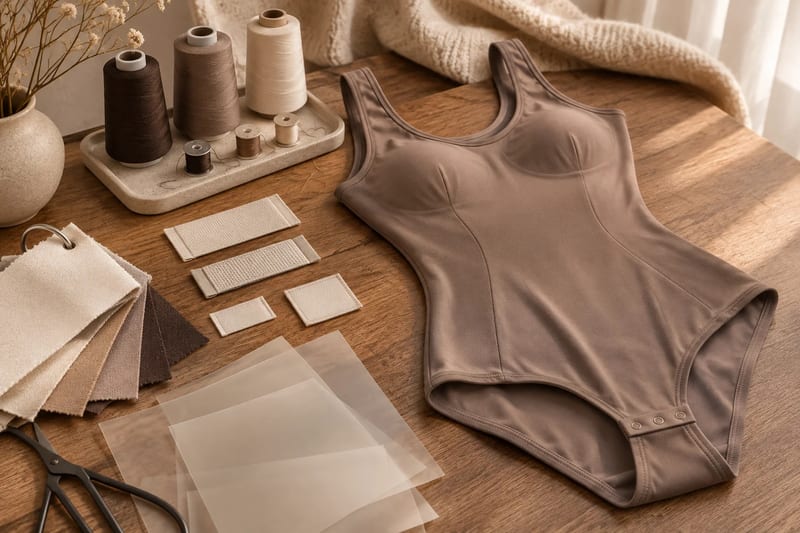
Choose a benefit a customer can recognize in use. A waistband that remains comfortable during sitting, shorts that suit a particular outfit or a bodysuit with appropriate torso coverage gives the product a testable purpose. “The best shapewear” leaves both the factory and customer with an undefined comparison.
Compare a few product platforms before committing to your hero. Use S-SHAPER’s product catalogue to identify the garment types relevant to the wearing problem. Briefs, shorts, bodysuits and built-in shaping dresses introduce different fit questions. The simplest-looking silhouette is not automatically the easiest one for your audience to wear or for your brand to explain.
Ask testers what they would replace with the proposed garment. If it adds a novel feature but does not improve a meaningful part of their routine, the product may be difficult to position as essential. Record the existing alternatives and the trade-offs customers accept. Your hero should earn its focus through a clear reason to choose it.
Confirm whether the platform can support a repeatable specification. Ask about material identification, size chart, construction and change notification. A product that sells once but cannot be reordered consistently creates a fragile single-product proposition. Discuss the development route through S-SHAPER’s OEM/ODM services if the available sample needs substantive changes.
Finally, check whether you can support the garment with useful education. A clear measurement guide, realistic photographs and answers about coverage and dressing can reduce uncertainty before purchase. The hero product should be something your small team can describe and service accurately, not merely the item with the strongest launch image.
| Candidate | Key fit decision | Hero-product proof |
|---|---|---|
| Shaping brief | Rise, waist and leg opening | Useful coverage without the reported discomfort |
| Shaping short | Inseam, thigh opening and movement | Performance in the intended walking and sitting tasks |
| Bodysuit | Torso, neckline, straps and gusset | Appropriate fit across relevant body proportions |
| Built-in shaping dress | Outer layer and internal garment | Both layers work together in the intended use |
One Hero Product vs a Full Collection: What Changes for the Buyer?
A focused product reduces the number of separate garment platforms requiring development and explanation. It can simplify the first sample process and make customer feedback easier to attribute. A wider collection can serve more situations, but it also introduces more specifications, stock decisions and opportunities for inconsistent fit information.
The comparison should include the risk of concentration. If the hero garment has a material or fit problem, the whole launch is affected. A broader assortment can spread product exposure, but it does not automatically reduce financial risk if every style is weakly tested. Choose the structure that matches the strength of your evidence and team capacity.
Do not create extra products simply to make the website look like a larger brand. A well-explained single product can be a coherent offer when its purpose, fit and service are clear. Conversely, one product with vague sizing and a generic claim can feel incomplete even if the photography is attractive.
Keep a written expansion rule. Decide what customer feedback, repeat demand or adjacent use case would justify another style. That preserves focus while allowing the business to grow from evidence. The first product is a learning platform as well as a commercial offer.
| Buying issue | One hero product | Broader first collection |
|---|---|---|
| Development scope | One main platform to approve | Several platforms and change histories |
| Customer guidance | Deep explanation of one garment | Clear comparison between garments |
| Inventory allocation | Concentrated across sizes and colors | Spread across styles, sizes and colors |
| Main risk | Dependence on one product | Complexity before evidence |
| Learning advantage | Feedback is easier to attribute | Can compare use cases if data is sufficient |
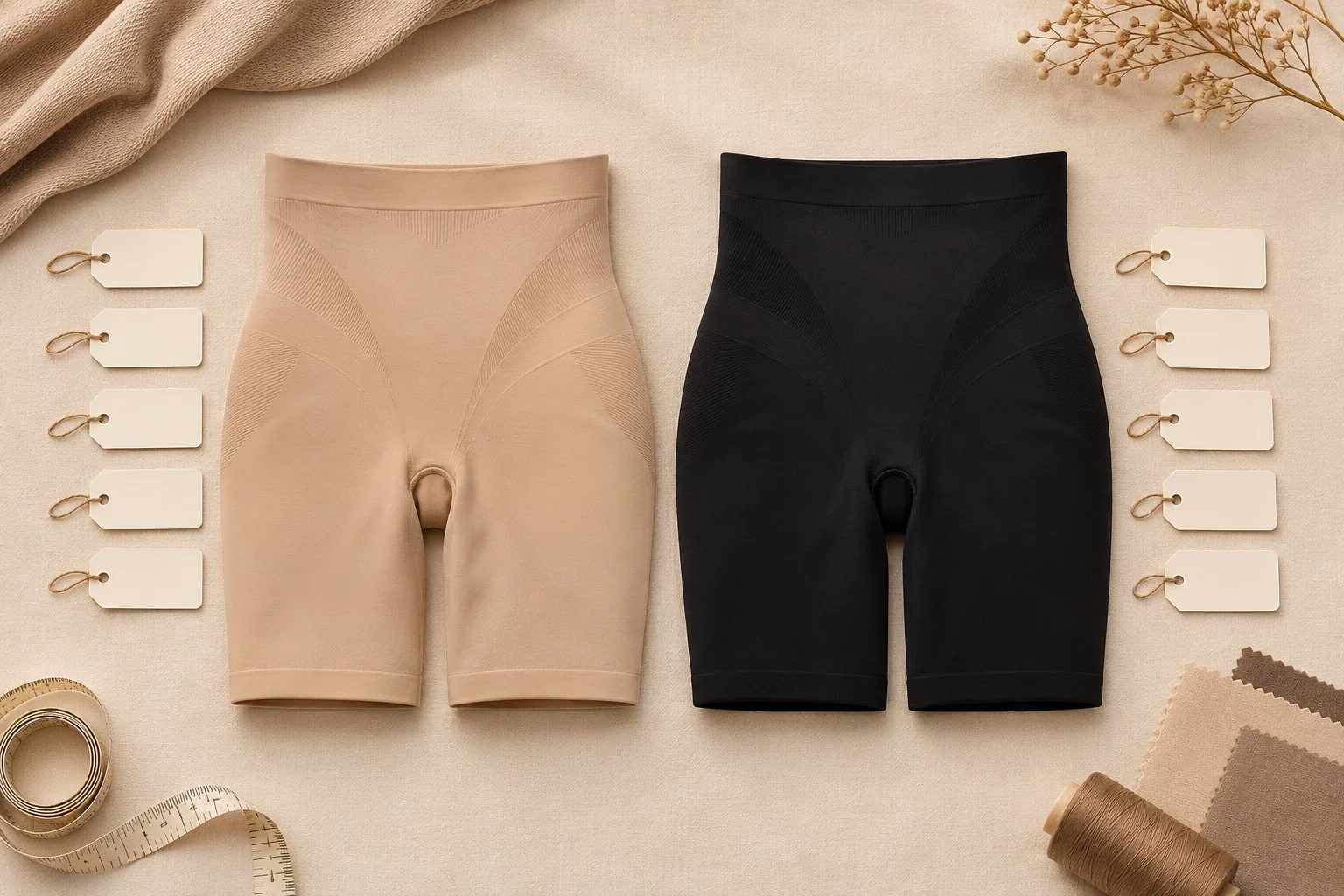
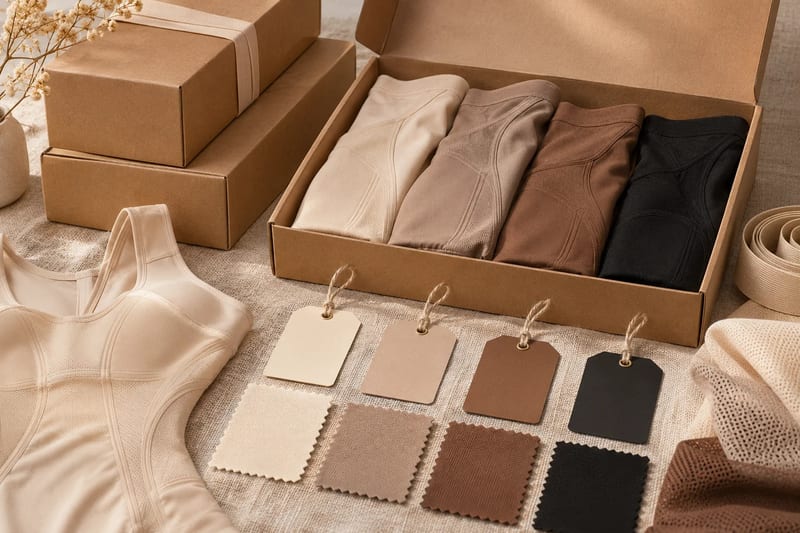
Illustrative focused assortment. Count the size and color combinations behind a one-product launch.
How Many SKUs Does a One-Product Shapewear Brand Really Need?
Count style, color and size combinations before asking for an order quote. One style does not erase the variant structure. If a founder chooses five sizes and two colors, the result is 10 SKUs. Adding one more color makes 15. Adding two more styles with the original structure makes 30.
The model below holds total stock at 150 units to show how assortment breadth changes the average units available per SKU. It is an arithmetic illustration, not a recommended order size, size ratio or supplier minimum. Actual allocations should reflect your customers and the supplier’s conditions.
| Illustrative range | SKU calculation | Total stock | Average units / SKU |
|---|---|---|---|
| 1 style × 1 color × 5 sizes | 5 | 150 | 30 |
| 1 style × 2 colors × 5 sizes | 10 | 150 | 15 |
| 3 styles × 2 colors × 5 sizes | 30 | 150 | 5 |
Avoid cutting the size range simply to improve the average. If the intended audience needs the broader fit coverage, reducing it can undermine the reason the brand exists. Consider fewer optional colors before removing the sizes essential to your customer promise, then verify whether the chosen platform can fit those measurements appropriately.
Ask about minimums at each level. A total 150-unit inquiry may still be unworkable if a material, custom color or label component has its own threshold. Review the S-SHAPER order FAQ for context and obtain written confirmation for your exact style and variant split.
Use unique identifiers from the beginning. The size in your store, purchase order, label and carton record should refer to the same variant. A small range is an opportunity to establish clean product data before the catalogue grows.
How Do Channel Price Ranges Inform the Budget for One Hero Product?
A one-product strategy should narrow the pricing comparison to the actual hero construction. Do not average a seamless bodysuit, a structured faja and an integrated dress into one sourcing target. Compare the relevant channel observations, then identify which product benefit, fit coverage and service your brand needs to deliver consistently.
| Channel / buying model | Observed USD per garment | Product and order basis |
|---|---|---|
| Amazon US bodysuits | $12.38–$35.14 | Seamless/lighter bodies $12.38–$19.99; Structured bodies $35.14–$35.14. |
| Brand DTC bodysuits | $29.99–$148.00 | Seamless/lighter bodies $29.99–$78.00; Structured bodies $69.00–$148.00. |
| TikTok Shop US bodysuits | $21.99–$54.99 | Seamless/lighter bodies $21.99–$46.99; Structured bodies $39.99–$54.99. |
| B2B seamless/platform bodies | $2.50–$12.85 | Garment-only offers across sellers; MOQ 2–600; no setup/freight assumed included |
| B2B structured bodies | $14.00–$27.42 | Different support/coverage construction; MOQ 1–500; quote the approved sample |
US-facing USD single-garment observations reviewed November 10, 2026; variants, retail promotions and shipping/tax differ. Amazon uses May–October 2026 tracker snapshots, not live November checkout. These selected samples are not industry averages or matched constructions. B2B advertisements are not landed costs or final custom quotes. Deeper development needs separate specifications, deliverables and an itemized quotation.
A lower B2B piece price can support an own-label offer while requiring quantities, components and product approvals that a single consumer purchase does not. Brand-store premiums can reflect identity and customer experience, while Amazon and TikTok Shop offers can be affected by selected variants and promotions. None establishes your startup’s sustainable selling price. Request a scoped proposal from S-Shaper for the hero and the variants that matter, then review total commitment. Preserve the specification and reorder conditions rather than increasing inventory solely to reach the lowest displayed tier.
The B2B rows separate seamless platforms and structured bodies. Retail endpoints include different styles; new patterns, support changes and private-label setup need a scoped proposal.
Which Fit and Quality Checks Matter Most When One Product Carries the Brand?
The main promise of the hero product should determine the most demanding part of the review. If comfort during a long seated day is central, a brief standing fitting is insufficient. If invisibility under an outfit is central, test the garment under relevant fabrics and cuts. Document what happened and the conditions, not just whether someone liked the sample.
Use participants representing the body measurements and proportions you intend to serve. Ask the supplier how the size range is graded and identify the sizes requiring physical checks. A concentrated product range creates the opportunity to examine one platform carefully; use that advantage instead of assuming fewer styles mean less fit work.
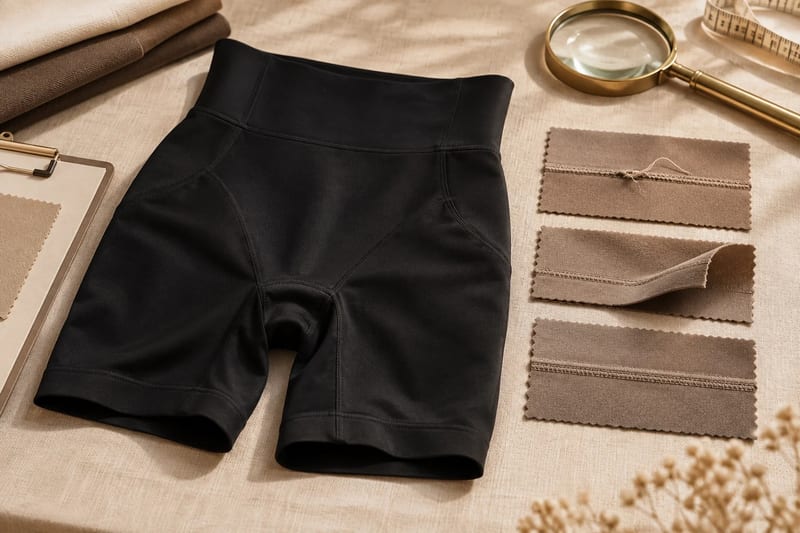
Discuss potential changes through S-SHAPER’s customization options and confirm which sample represents the production version. Keep the original problem, proposed change and result linked in the revision record. A new fabric or waistband can solve one issue while changing another part of the garment’s behavior.
Agree production checks with reference to the S-SHAPER quality-control overview. Ask how measurements, seams, appearance, labels and quantity accuracy will be checked for your order. If you arrange independent inspection, clarify timing and the process for addressing findings before dispatch.
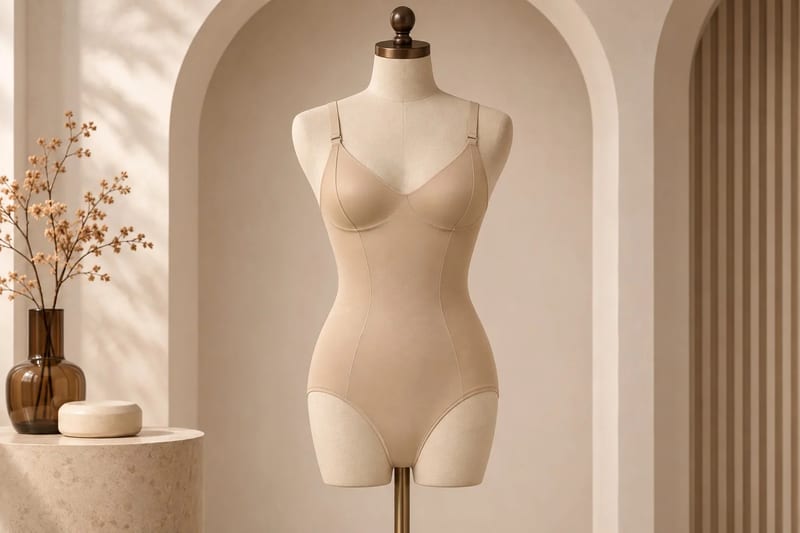
Preserve an approved reference and current specification for reorders. The brand’s customer experience depends on repeatability. If the supplier proposes a material or construction substitution later, review it against the same promise rather than treating it as an administrative change.
Which Shapewear Manufacturers Should You Consider for a One-Product Launch?
Compare shapewear manufacturers in China, Portugal, Turkey and Colombia for a single hero product. The recommendations below connect country-level capabilities with specific suppliers and the work your brand needs.
China Shapewear Manufacturer: Develop and Maintain an Own-Label Reference
China shapewear manufacturers with own-label platforms can support a focused hero garment; prioritize the approved specification and substitution process because one product concentrates the brand promise.
Recommended China Supplier: S-Shaper
S-SHAPER’s factory-direct OEM/ODM support links material and style advice with design, production, QA and export specialists. A founder can use that conversation to select one platform and define the changes essential to the hero benefit. Global client experience can help frame market-specific questions while the brand’s own tests establish the product promise.
Published quantity tiers and conditional small-order options provide a starting commercial comparison; confirm which variants and branded components qualify. Do not increase quantity solely to reach a lower unit tier. This route suits an own-label hero with a maintained specification and a clear reorder plan. Ask how substitutions are communicated so a successful first garment does not become a different product without review.
Source: S-SHAPER OEM/ODM and global-brand support.
Portugal Shapewear Manufacturer: Invest in Technical Differentiation That the Hero Needs
Portugal shapewear manufacturer routes involving material research can deepen a hero product’s distinction; choose technical work only when its evidence supports the central benefit customers value.
Recommended Portugal Supplier: Impetus
Impetus describes research-led development and quality checks on materials, elastics, accessories and finished parts. For a hero whose value depends on a particular textile or construction result, that offers a concrete technical comparison. Ask which evidence would verify the benefit and what product records would preserve it on future orders.
Development and laboratory scope can require more commitment than selecting an existing platform, and startup eligibility, quantities and fees remain unverified. A single-product strategy does not remove those costs. This route suits a differentiated hero with a defined technical need and budget for evidence. It is less compelling when the main customer benefit can already be demonstrated with a suitable existing garment and clear size guidance.
Source: Impetus quality control.
Turkey Shapewear Manufacturer: Align the Hero with a Seamless Production Platform
Turkey shapewear manufacturer capabilities spanning seamless yarn-to-finish operations merit comparison for one repeatable platform; evaluate edge behavior and grading before concentrating the whole launch on it.
Recommended Turkey Supplier: SML Seamless
SML describes integrated yarn-to-packed production of private-label shapewear in Turkey. For a seamless short or brief, that can support a focused discussion of yarn, knit structure, dyeing and finish rather than several disconnected supplier conversations. Ask how the proposed material and construction will be identified in the approved sample and reorder record.
Confirm actual minimums, color conditions and sample scope; integration does not imply the smallest or cheapest order. Test waist and leg edges, recovery, opacity and grading because the entire brand depends on this platform working. This route suits a seamless hero that matches the supplier’s capabilities. Evaluate the selected garment’s finish directly instead of using the production country as a proxy for quality.
Source: SML Seamless integrated private-label manufacturing.
Colombia Shapewear Manufacturer: Build a Curated Offer Around a Specialist Finished Garment
Colombia shapewear manufacturer ranges can anchor a specialist single-product resale offer; verify replenishment and commercial identity before treating an established garment as your own exclusive hero.
Recommended Colombia Supplier: Leonisa
Leonisa identifies Colombian manufacturing and an international wholesale program, making it a relevant finished-product route for a focused retail offer. A founder may investigate whether one established shaping garment can anchor the assortment, supported by accurate fit and product guidance. Ask about the selected sizes, replenishment and commercial access through the appropriate wholesale representative.
This is not evidence that your own label or exclusive pattern is available. If branding control is central to the hero strategy, confirm a different arrangement before transferring the concept to this route. Test material, coverage and support feel with your audience rather than assuming uniform fit across a national category. It suits a specialist resale proposition more directly than a new brand requiring its own revised construction.
Source: Leonisa Colombian manufacturing and shaping product range.
Pick the route that can preserve the hero’s actual benefit and commercial identity on reorder, then limit optional variants before weakening the size coverage that makes the product credible.
When Should You Add a Second Shapewear Product?
Add another product when it answers a customer need your hero garment cannot reasonably cover. Repeated requests for a different silhouette may justify a new platform. Repeated questions caused by unclear sizing may call for better guidance instead. Diagnose the reason before adding another item to the catalogue.
Review the first product’s fit feedback, variant movement, support workload and reorder consistency. If important issues remain unresolved, another style can divide attention and cash without improving the brand. Define what must be stable before development expands, and keep that decision separate from the excitement of a new launch.
Test the adjacent idea with the audience you have already learned from. Ask how it would fit into their existing wardrobe and whether they would prefer it to the current product in a distinct situation. A second style should have its own brief and approval record; familiarity with the factory does not validate a new garment automatically.
Continue to manage the hero product after expansion. Maintain its specification, content and customer service information. A focused launch succeeds as a foundation when the business can preserve what customers valued while adding something genuinely useful. The number of products should follow the evidence and the team’s ability to support them.
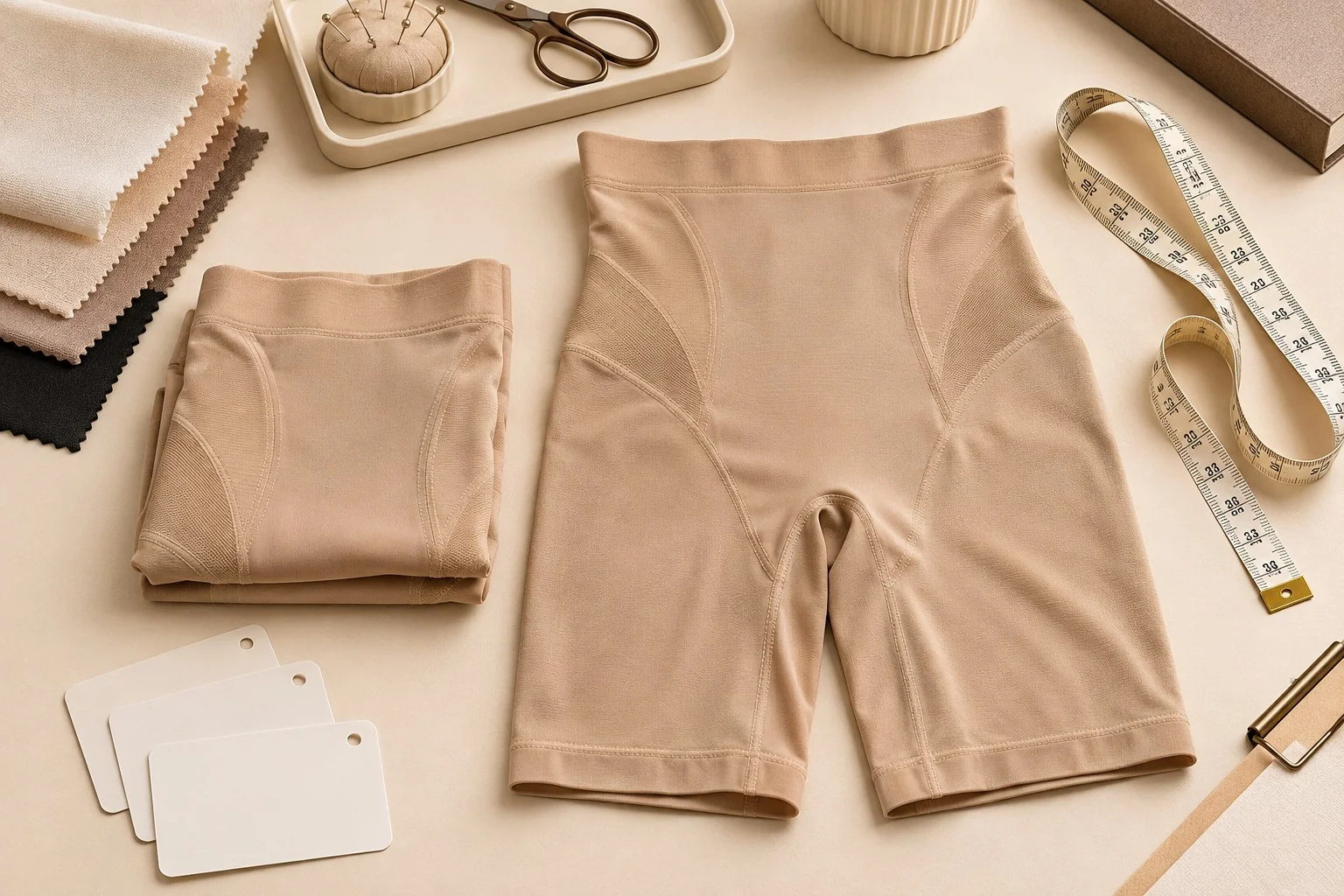
Illustrative reorder-reference review. Explore how to maintain a consistent hero-product specification.
How Can S-SHAPER Support a One-Hero-Product Launch?
S-SHAPER’s product catalogue and OEM/ODM services provide starting points for selecting and developing a focused shaping garment. Its private-label and customization offering can help a startup discuss materials, fit, branding and packaging around one clear platform. Confirm the support available for the exact product and quantity you intend to test.
Send the team the wearer problem, selected silhouette, size direction, intended colors, destination and first-order assumptions. Ask for a sample route, variant-level minimums and a specification that can be maintained on reorder. The factory introduction provides context for discussing production responsibility.
To begin, request a hero-product proposal from S-SHAPER. Compare the recommended platform with your fit evidence and commercial test. A focused proposal should explain how the garment addresses the brief and what must be approved before production, rather than encouraging extra styles merely to enlarge the first order.
FAQ: One-Product Shapewear Brands
Can I launch a one product shapewear brand?
Yes, if the garment solves a clear need and your brand can support fit, sizing, service and reliable reorders. One product can provide a coherent launch proposition. It still needs customer validation and an order scope you can manage.
Does one product mean I only have one SKU?
Usually not. Sizes and colors create separate variants. One style in two colors and five sizes makes 10 SKUs. Count these combinations before allocating stock, and confirm the supplier’s minimums for the garment and any branded components.
Should I launch in only one color?
That can reduce optional complexity, but it should match the customer use case and supplier conditions. Do not treat it as a universal rule. Preserve the fit coverage essential to your audience and use demand evidence to decide which colors deserve the first order.
Is a hero-product strategy cheaper than a collection?
It can reduce the number of platforms and assets to manage, but the sources establish no universal savings percentage. Obtain actual quotes for the selected garment and services. Compare total cash commitment, not only the listed unit price or the number of styles.
What should trigger a second product?
Look for a distinct, repeated customer need supported by the first product’s learning. Confirm that fit, service and reorder issues on the hero are under control. Give the second garment its own brief, sample review and commercial test before adding production stock.