 EN
Quick Answer
A shapewear sample development cost should identify the work the sample is intended to perform: an existing-platform demonstration, pattern or material development, color approval, a revised garment or a size-set review. Ask what documents, versions, revision work and delivery are included, and which changes trigger a separate charge. The sample fee is not automatically the production unit price multiplied by a small quantity.
The reviewed sources do not establish a universal custom sample-fee range. Use the real garment tiers in this guide as production-price references, then request an itemized sample proposal for your specific project. Approve a learning objective and a review process before paying for repeated rounds.
What Should the Sample Fee Be Buying?
Begin with the question the sample must answer. A founder may need to inspect an existing garment, compare two fabrics, test a revised waistband or review grading across sizes. Those tasks involve different work. Tell the supplier the decision you will make after evaluation so the proposal can identify the appropriate sample and supporting information.
Choose a reference platform through S-Shaper’s product catalogue or identify your current design. Explain which parts are already fixed and which remain open. A stock demonstration can be useful, but it should not be presented as validation of a later production garment with different fabric or construction. Ask the supplier to identify the difference before you approve the sample scope.
Request deliverables, not only a parcel. Depending on the project, useful information may include sample size, material reference, measurements, version and the changes incorporated. The OEM/ODM service scope can frame the discussion of who prepares technical records. Confirm which documents you receive and what remains your responsibility.
Keep appearance and functionality separate. A presentation sample may serve photography or internal design review without proving a graded size range or production material. State how you intend to use it and ask whether that purpose is supported. This avoids paying for an attractive sample that cannot close the decision blocking your first order.
| Sample purpose | Work to specify | Decision it may support |
|---|---|---|
| Existing-platform review | Identified garment and material | Whether the platform merits development |
| Fit revision | Numbered change and size | Whether the change solves the problem |
| Material/color approval | Defined alternatives and references | Which option proceeds |
| Size-set review | Selected sizes and grading questions | Range approval needs |
| Presentation | Appearance and production differences | Permitted content or design use |
Stock Sample vs Custom Development Sample: Why Can Charges Differ?
A stock sample generally begins with an existing item, while a development sample may involve interpreting a brief, adjusting patterns, sourcing material or assembling a revised construction. The actual scope varies by provider. Ask which work is required for your garment instead of assuming the same fee treatment under every service called sampling.
An existing product can reduce preparation work when it genuinely fits the intended use. It does not remove the need for physical review. Conversely, deeper development may be justified when the platform cannot meet a specific fit requirement. The relevant comparison is the question each sample can answer, not which parcel has the lowest stated charge.
Discuss material and branding changes through S-Shaper’s customization service. A logo proof, a new color and a changed construction are different deliverables. Ask whether components are made only for the sample or require a separate quantity commitment. Preserve those differences in the proposal so the founder understands why another approval may be necessary.
Do not infer a universal free-sample policy or production-order credit. If a provider offers a credit, ask the qualifying order, amount, timing and conditions. If none is offered, evaluate whether the defined sample work still provides useful evidence. Commercial incentives should not be mistaken for a reason to order inventory before the product is approved.
| Issue | Existing-platform sample | Development sample |
|---|---|---|
| Starting inputs | Identified available garment | Brief and proposed changes |
| Main uncertainty | Suitability of current platform | Result of new technical work |
| Records | Size/material/version | Changes, measurements and approval status |
| Commercial questions | Item availability and delivery | Preparation, revisions and component scope |
| Interpretation | Not always production-final | Not automatically a complete size-range approval |
Which Revision Requests Can Change the Sample Proposal?
Separate correction of a missed agreed instruction from a new request after review. If the supplier did not incorporate the acknowledged change, compare the sample with the record and discuss the appropriate remedy. If the founder introduces another material or silhouette, ask for the new development scope before assuming it belongs within the previous round.
Keep a numbered comment list. Describe the observation, size, relevant body or garment measurements and the desired result. “The waistband folds during the seated task” is more actionable than “make it better.” Ask the developer to respond to each point and identify the next sample version. This turns a revision charge into a defined work decision.
Clarify whether a revision affects one area or the whole garment. A changed fabric may alter fit, recovery and finish; a new closure may affect construction and convenience. Ask which checks need repeating. Do not approve unrelated aspects automatically just because one requested change appears successful.
Agree the commercial trigger before the work starts. Which round or change is included, which needs a revised proposal and who can authorize it? The reviewed sources do not establish a universal number of included revisions. A startup needs the provider’s actual arrangement, recorded with the current brief and the evidence that will close the next review.
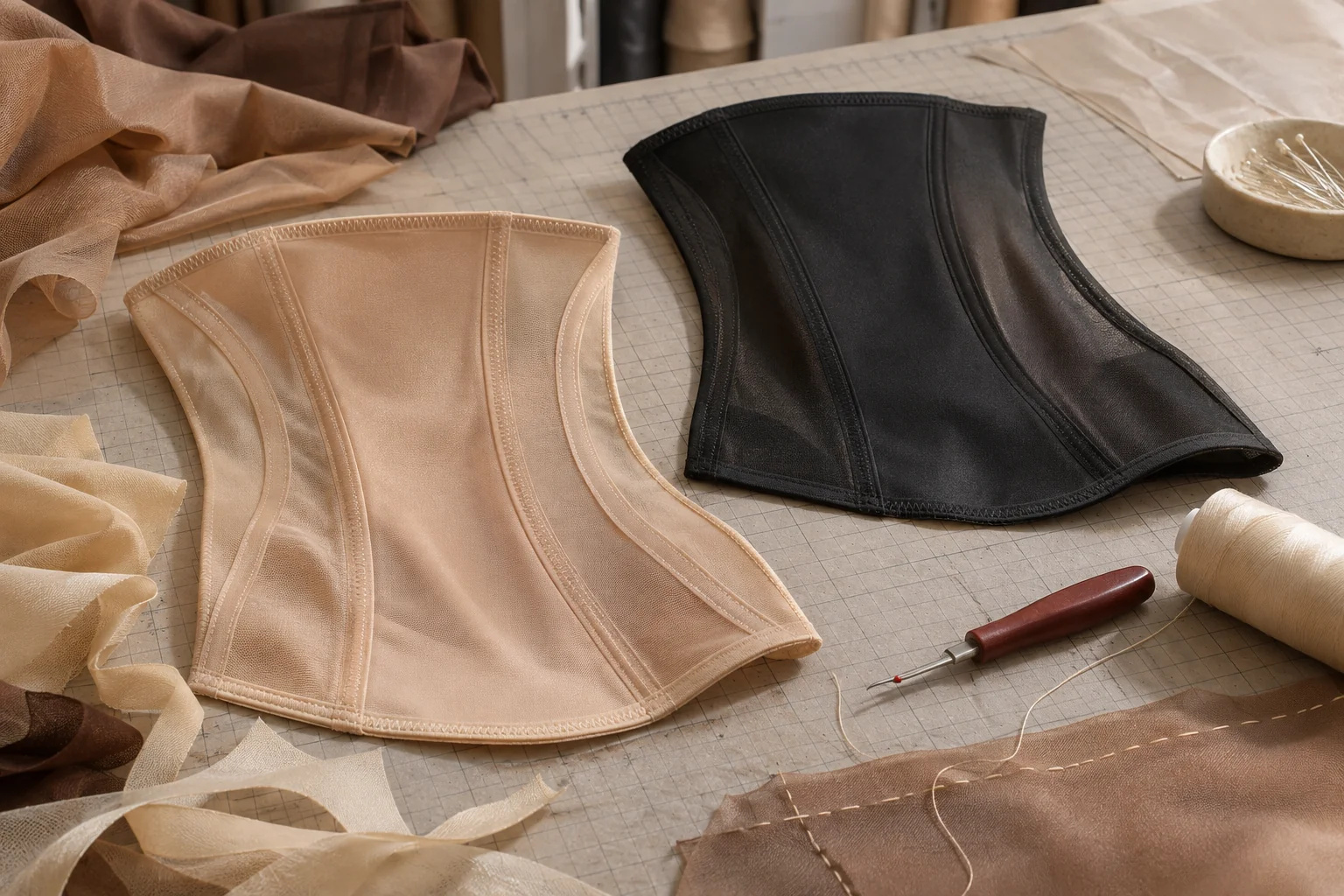
Illustrative sourcing and product-development scene. Click to continue the related buyer guidance.
How Do Four-Channel Garment Prices Differ from Sample and Development Fees?
Separate buying an existing garment from paying to develop one. Amazon, B2C brand websites and TikTok Shop show consumer product offers, while the B2B observations concern specified finished-garment or supply listings. A prototype, pattern revision or size set can involve another deliverable entirely, so these bands cannot be treated as a sample-fee tariff.
| Channel / buying model | Observed USD per garment | Product and order basis |
|---|---|---|
| Amazon US retail bodies | $12.38–$35.14 | Seamless/lighter bodies $12.38–$19.99; Structured bodies $35.14–$35.14. |
| Brand DTC bodies | $29.99–$148.00 | Seamless/lighter bodies $29.99–$78.00; Structured bodies $69.00–$148.00. |
| TikTok Shop US bodies | $21.99–$54.99 | Seamless/lighter bodies $21.99–$46.99; Structured bodies $39.99–$54.99. |
| B2B advertised OEM bodies | $4.25–$8.30 | Rihope/Shangyou garment offers; listing MOQ 600/100; own-design terms reconfirmed |
| B2B custom shiny-fabric example | $22.00–$23.00 | Hucai FOB garment example, MOQ 200; a different fabrication; development fees unconfirmed |
B2B finished garments are generally priced below consumer tickets, but that advantage does not make concept work or repeated sampling free. Product family matters: basic seamless pieces and structured fajas should not share one assumed preparation charge. Promotions and brand presentation change consumer tickets, while construction and technical scope can change the actual sample proposal.
The provider-specific sample programs in the next section remain separate evidence, with their own units, revision allowances and credit conditions. Ask your supplier what the sample represents, which records it includes and what authorizes more work. Do not use a low bulk piece price or the retail-to-B2B spread to invent a custom sample charge.
US-facing USD per single garment, reviewed November 10, 2026. Amazon uses dated May–October 2026 third-party PriceHistory snapshots, not live November checkout. These selected-seller observations are not industry averages or matched-quality comparisons. Variants and promotions change; shipping and tax are not normalized. B2B bands describe advertised garments, not landed costs or a final custom-development quote. Sources: dated PriceHistory Amazon records, official brand/TikTok Shop pages and Made-in-China supplier listings.
What Do Published Sample and Development Fees Actually Show?
The following are supplier-specific public examples checked on November 10, 2026, not an industry tariff or S-Shaper sample prices. ShaperFactory states USD50–120 per developmental sample piece depending on construction, with a full credit upon a bulk-production contract. The JaceApparel public lingerie prototype program states USD80–150 per style and a credit once its bulk order passes 500 pieces. Confirm the current scope and exact qualifying conditions before relying on either statement.
CI Aliada describes a different package: approximately USD300 for design/pattern work on a new or modified product, including three sample rounds, with an additional round at USD100. It distinguishes development from adding branding. A package of technical work is not equivalent to buying one existing garment or obtaining unlimited revisions.
The arithmetic can illustrate exposure without equating the services. Three developmental pieces at ShaperFactory’s published range imply USD150–360; three styles at JaceApparel’s range imply USD240–450. Those calculations preserve each provider’s unit and do not establish that the garments or deliverables are identical. CI Aliada’s stated package plus one extra round would be approximately USD400 under its listed conditions, not a quote for another factory.
Ask each provider about materials, shipping, size sets, revisions and the technical records supplied. A conditional credit does not make the initial work free or justify buying more inventory solely to recover it. For your own project, request the actual sample purpose, quote, payment trigger and credit conditions. Keep authorized work separate from possible later rounds, and review whether each round is producing useful evidence before continuing.
| Provider-specific public reference | Listed amount | Scope or condition to preserve |
|---|---|---|
| ShaperFactory | USD50–120 per developmental piece | Construction-dependent; bulk-contract credit stated |
| JaceApparel | USD80–150 per style | Sewn prototype program; credit after bulk order passes 500 pieces |
| CI Aliada | Approximately USD300; extra round USD100 | Design/pattern package with three rounds, not branding |
| Buyer interpretation | Current confirmation required | Not universal rates or S-Shaper quotations |
Which Shapewear Manufacturers Fit Your Sample-Development Needs?
Compare the sample question and proposed deliverable before the country. An existing-platform evaluation, research prototype and seamless revision can require different work. These examples show the relevant service models and their limits, rather than establishing national sample-fee bands or a universal startup package.
China Shapewear Manufacturer: Define the Sample Before Funding Revisions
China shapewear manufacturers offering ODM can connect platform advice with sample development; specify what each round must prove before treating a small trial as full custom preparation.
Recommended supplier: S-Shaper
S-Shaper’s development offering describes material and style recommendations and specialists across design, production, QA and export, informed by clients in several global regions. Ask the team to distinguish an available garment review from development of your requested fit or construction. A clear sample record can make the next approval more understandable for a founder without technical staff.
Public quantity tiers and conditional small-order options do not establish a universal sample fee or included revision count. Confirm documents, material identity, charges and any order-credit conditions. This route suits an own-label founder who can provide a clear wearer problem and consolidated feedback. Market experience can inform recommendations, while your trial must establish whether the actual sample serves your audience.
Portugal Shapewear Manufacturer: Scope Research and Prototype Work Separately
Portugal shapewear manufacturer routes involving research can require prototypes and material evidence beyond an existing garment; define the technical question before comparing the resulting sample commitment.
Recommended supplier: Impetus
Impetus describes research capability, technical collaboration and seamless and cut-and-sew development. For a founder investigating a distinct material or construction result, ask which sample, investigation or test the proposed service provides. The value lies in answering a defined question, not simply receiving a more sophisticated presentation sample.
Startup acceptance, minimums and development charges are not established by the reviewed source. Laboratory and material scope may create additional commitments before production. This route suits a clearly defined technical need with budget for evidence. It is less appropriate as an open-ended attempt to discover the brand concept through repeated prototypes. Confirm the deliverables and revision boundaries before treating technical capability as an all-inclusive beginner package.
Turkey Shapewear Manufacturer: Link Sample Changes to the Seamless Process
Turkey shapewear manufacturer options with integrated seamless stages can connect yarn, knit and finishing choices; ask how a requested revision changes the sample and its production reference.
Recommended supplier: SML Seamless
SML describes Turkish private-label shapewear and activewear production from yarn through packed goods, with dedicated communication. If the proposed garment fits that seamless route, ask the technical team which material or structure alternatives would address your observation. Keep each option identified so the trial can compare a real product difference.
Integration does not establish a fixed fee, the smallest order or unlimited sample rounds. Obtain actual yarn, color and development conditions. Review recovery, opacity, edges and grading where relevant rather than assuming a visual change solves the wearer problem. This route suits a seamless brief with specific construction questions and a founder able to record comments and authorize additional work deliberately.
Choose the route that can produce the needed evidence, then confirm the sample version, deliverables and authorization conditions before paying for the next round.
What Should Be Approved at the End of Each Sample Round?
End each review with a defined outcome: approve the identified version, request a specific revision or reject the platform. Record which materials, measurements and features the decision covers. A vague approval such as “looks good” may leave both sides unsure whether fit, labels and construction are all considered final.
Use the quality-assurance discussion to identify the checks that matter before production. A sample can resolve one issue while the size range still needs review. Keep remaining evidence visible rather than treating delivery of a new parcel as automatic completion of development.
Clarify sample transit and later production milestones through the logistics scope. Sample-making time, courier transit and the founder’s wear review are separate stages. A short preparation statement does not establish a complete launch date or a guaranteed cost of delivery.
Preserve the version and comments with the eventual quote. If the production proposal changes materials or construction, ask whether the sample approval remains applicable. The most useful outcome of sample spending is an identifiable product and a better buying decision, with a clear reason for any further work.
How Can S-Shaper Help Define Your First Sample Proposal?
S-Shaper’s product catalogue and ODM services provide a starting point for selecting an available platform or discussing a revised garment. Send the target wearer, use case, reference and numbered changes. Ask the team what the first sample will represent, what information accompanies it and which conditions apply to revisions.
Review the published FAQ for preliminary order context and request direct confirmation for your item. Keep sample preparation, branded components and later production as separate scope questions where appropriate. A low initial garment quantity should not be interpreted as a promise that all technical work is included.
To begin, request a sample-development scope from S-Shaper. Identify the decision your next sample must support. A concrete proposal can help the founder compare deliverables and authorize work responsibly without relying on an invented universal sample fee or an unapproved expectation of unlimited changes.
FAQ: Understanding Shapewear Sample Fees and Revision Charges
What is included in a shapewear sample fee?
The scope depends on the provider and project. Ask whether the charge covers an existing garment, pattern changes, material or color work, technical records, revisions and delivery. Identify the intended sample purpose before comparing amounts.
Is there a verified universal sample-fee range?
The reviewed sources do not establish one. The published sample examples are supplier-specific programs, while garment tiers describe production references. Obtain an itemized proposal for your actual work and do not transfer another provider’s fees or credit conditions to S-Shaper.
Are revision rounds normally free?
No universal revision policy is established here. Confirm which work is included, what triggers another charge and how additional work is authorized. Distinguish a correction of a missed agreed instruction from a new requirement introduced by the founder.
Can sample charges be credited against production?
Only where the provider explicitly offers that arrangement. Confirm the qualifying order, amount, timing and conditions in writing. Do not buy inventory simply to recover a development charge before the product is ready.
When should I stop requesting revisions?
Reassess when rounds are not producing clearer evidence or when the platform cannot meet the essential wearer requirement. Improve the brief or obtain the missing technical help. Each round should answer a defined question and lead to an approval, specific revision or platform decision.