 EN

Quick Answer
A shapewear pre-production sample should let the buyer review the version intended for the actual order, including agreed production materials, components, dimensions, construction, labels and packaging scope. Confirm the supplier’s definition and identify every exception. A first prototype made with substitutes does not automatically approve the production version.
Compare the sample with the current order specification, relevant fit and care evidence and final artwork. Resolve or explicitly control deviations before authorizing the named next action. Keep physical sample approval, material purchasing and bulk release distinguishable. A pre-production sample is a reference and decision point, not proof that every later unit will be identical.
What Is the Pre-Production Sample Intended to Confirm?
Ask the supplier to state what the sample represents in this project. Stage names can differ, so the written scope matters more than an abbreviation. Identify the garment, size, shade, materials and order against which the sample is to be reviewed.
For an own-label project, the purpose is often to reconcile earlier development decisions with actual production inputs. A prototype may have answered fit while a label or trim remained provisional. The pre-production review should expose those remaining substitutions rather than let them disappear behind a positive first impression.
Use the identified platform from S-Shaper’s product range only as a starting reference. The current specification and order define the selected product. Confirm whether the sample covers one configuration or an agreed representative set, and list the order configurations it does not physically represent.
Do not treat the sample as a new design competition unless the project actually remains open. If the buyer changes the silhouette, main material or size architecture at this stage, ask whether more development is needed and what happens to the order plan. A late change can be appropriate, but should be recognized as work rather than hidden in a routine sign-off.
Define the authorized next step. The review might permit production only after a listed label correction, or it might hold the order for a material question. Avoid a message saying approved without naming the version, scope and conditions. The factory and buyer need the same understanding of what may proceed.
| Scope field | Identify | Avoid assuming |
|---|---|---|
| Order link | Style, order and specification revision | A similar sample governs every order |
| Physical coverage | Size, shade and configuration reviewed | One garment represents every combination |
| Production inputs | Materials and components actually used | Prototype substitutes are automatically equivalent |
| Decision | Authorized next action and conditions | A positive comment is unrestricted release |
Which Production Materials and Components Must Be Reconciled?
Compare the main fabric or yarn, lining, panels, elastics, edges, straps, closures and gusset as applicable. Request identifiers and confirm whether the sample uses the inputs intended for the order. Do not rely only on composition: materials with the same fiber percentages can have different constructions and behavior.
Inspect attachment and orientation as well as component identity. The correct material used in a different direction or joined differently can produce another garment. The approval record should connect the component list with the actual sample, not exist as an unrelated spreadsheet.
Ask about shade and finish references. If the sample does not use the final dye lot or finish, identify the limitation and the evidence required before release. A physical material alternative can be useful for a limited purpose, but should not be described as production-equivalent without appropriate review.
Review what changed since the accepted fit version. A closure substitution, new elastic or another lining may affect dressing, contact, dimensions or care. Ask the developer which previous evidence transfers and which needs repeating. Do not reopen unrelated checks automatically, but do not assume all results transfer because the exterior looks similar.
Keep shortages and proposed substitutes visible as commercial and technical questions. An available substitute may be workable, but the approval decision should describe it. Material availability is not proof of equivalence, and production urgency does not turn a provisional component into an accepted one.
First Prototype vs Pre-Production Sample: Which Evidence Can You Carry Forward?
A first prototype can explore the interpretation of a brief. A pre-production sample should be scoped against the selected order and intended inputs. The earlier garment remains useful as a reference, but its evidence needs review if relevant materials or construction changed.
Carry forward decisions with reasons, not by habit. An accepted neckline may remain valid when an unrelated label changes. A previous fit result may need reconsideration when the main elastic material changes. Ask which product requirement depends on the revised component and identify the relevant next check.
Avoid treating the later stage as automatically superior. A pre-production sample can introduce an unintended difference. Compare it with the accepted references and record both improvements and regressions. The buyer should be able to identify the selected version and explain why it is suitable for the order.
The purpose is not to demand every test again without a reason. It is to ensure that the evidence supports the actual version being released. A focused delta review can identify what changed, what remains accepted and what decision each new check will support.
| Question | First prototype | Pre-production review |
|---|---|---|
| Primary purpose | Explore the initial proposal | Reconcile the intended order version |
| Inputs | May include declared substitutes | Confirm intended inputs and exceptions |
| Evidence | Initial fit/construction questions | Relevant carry-forward plus changed-input review |
| Artwork/packing | May remain provisional | Review the agreed final scope |
| Release meaning | Usually another development decision | Explicit order-related authority required |
Consider two fictional changes. In the first, only the printed brand artwork changes while the garment material, attachment and placement remain the same. The relevant new evidence could focus on the correct artwork and agreed production execution. In the second, the main material changes to another article with the same composition. That can reopen questions about dimensions, elastic behavior, appearance and the assembled fit. These examples illustrate a decision process, not a universal instruction to omit or repeat a particular test. The developer and buyer must identify the actual interactions.
Write the reasoning beside the change. A useful record says which requirement depends on it and what evidence supports the decision. An entry saying approved because similar leaves a later reviewer unable to understand whether the difference was evaluated or merely overlooked. The PP stage should make that reasoning clearer before an order multiplies the version into stock.
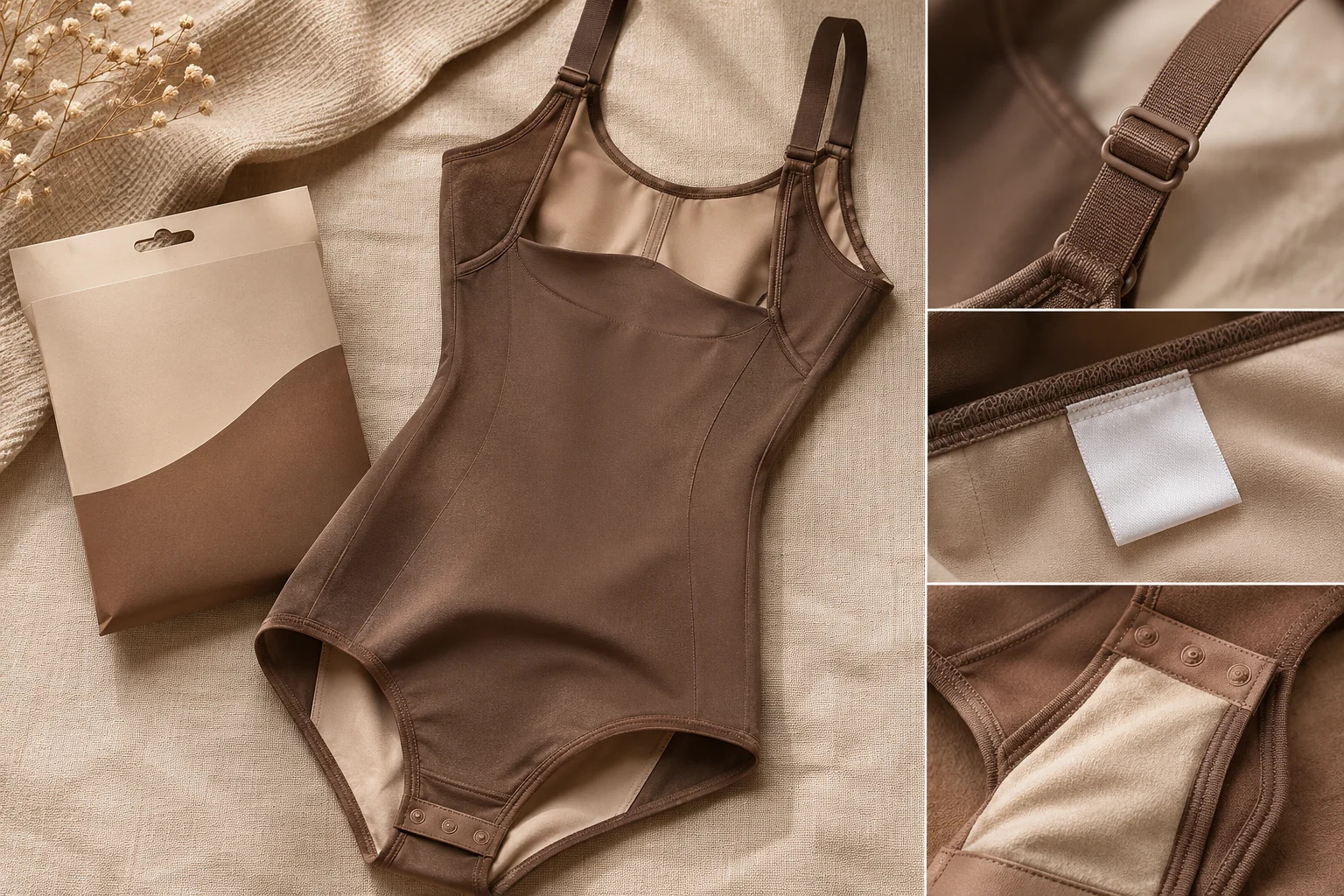
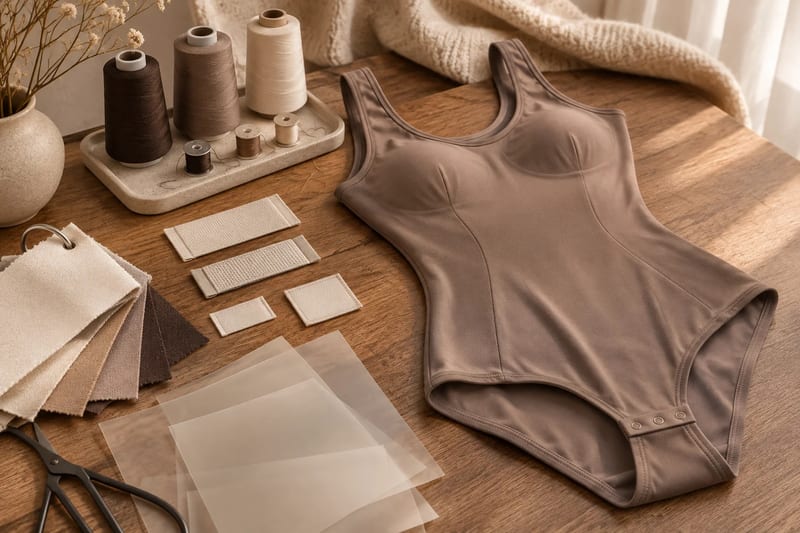
Illustrative sourcing and product-development scene. Click to continue the related buyer guidance.
Why Is Documentation Completeness Not the Same as Product Approval?
Consider a hypothetical register with 12 required reference fields. Eleven are reconciled and one remains provisional. The arithmetic is 11/12, or about 91.7% of those chosen fields complete. That is a document-status measure only. It is not 91.7% product quality, a defect-free rate or evidence that the order can proceed.
If the unresolved field is the main fabric, it may block the relevant fit and care conclusions. If it is a provisional decorative insert outside the current sample scope, the consequence could differ. The team must decide the significance of the open field rather than average it away.
For a separate illustrative review map, two sizes × two shades × two component options creates eight configurations. A single sample does not physically cover all eight. Agree the sample allocation and relevant evidence for the actual order, and identify which options should be removed or reviewed before release.
Neither example is a universal PP-sample requirement. The register and matrix are planning choices. Replace them with the fields and configurations the garment actually needs. A simple complete record can be more useful than a long form whose status no one interprets.
ISO 10007’s published scope concerns configuration-management guidance over a product or service life cycle. It provides context for controlled product identity; it does not prescribe this 12-field worksheet or certify a garment. The project’s approval conditions still need agreement.
Source: ISO 10007: configuration-management guidance across a product/service life cycle
| Hypothetical status | Arithmetic | What it cannot establish |
|---|---|---|
| Reference fields reconciled | 11 of 12 | Product quality percentage |
| Document completeness | 11 ÷ 12 ≈ 91.7% | Permission to ignore the open field |
| Chosen configuration map | 2 × 2 × 2 = 8 | A universal sample quantity |
| Release decision | Depends on actual open requirements | An average-score shortcut |
How Should Labels, Packaging and Care Be Checked at This Stage?
Match artwork with the actual garment and order. Check brand, size marking, relevant material information, care proposal and other agreed content. The review should identify the artwork revision and placement, not merely confirm that a label exists.
Review packing to the extent included in the sample scope: unit identification, size and shade marking, inserts and carton information where applicable. A prototype bag can be provisional, but the final packing decision needs its own record. Do not let an attractive unmarked package obscure the wrong size or version.
Use S-Shaper’s customization discussion to reconcile label and packaging changes with the garment. If a new attachment contacts the wearer or a care instruction changes, ask which evidence supports it. Customer information should describe the actual supplied product.
Connect the product checks with the quality-assurance service. Agree the relevant production controls and inspection responsibilities separately from sample approval. A supplier’s process capability claim is not a universal finished-garment tolerance, and a PP sample does not establish that every unit has been tested.
Record any conditional approval precisely. State the required correction, who verifies it and which evidence is needed before the named action proceeds. A condition should be a controlled step, not a vague promise to fix things later while the released version remains uncertain.
Which Shapewear Manufacturers Can Support a Clear Pre-Production Approval?
Compare the handoff offered around the order: factory input coordination, a technical changed-input review or a full-package own-label program. These examples describe published service models and limits. They do not establish national quality rankings, one PP-sample format or an automatic production authorization.
China Shapewear Manufacturer: Reconcile the Approved Version with Factory Inputs
China shapewear manufacturer comparisons for pre-production work should connect the approved sample with actual materials, components and order records before the buyer authorizes a manufacturing step.
Recommended supplier: S-Shaper
S-Shaper’s OEM/ODM offering describes recommendations with design, production, QA and export specialists. Ask the factory team to identify production inputs, changes from the fit version and remaining exceptions. Its work across several customer regions provides context, while the actual order needs a clear release record.
Conditional small-order options do not remove material readiness or establish one minimum for every substituted component. Confirm the program and order scope. This route suits an own-label founder seeking a coordinated handoff from development to manufacturing. Request an identified PP sample and supporting references, then distinguish their approval from the separate production and receiving checks.
Portugal Shapewear Manufacturer: Review Changed Inputs Against the Technical Evidence
Portugal shapewear manufacturer routes involving research and quality capability should explain which development results remain relevant when the pre-production garment uses the intended order inputs.
Recommended supplier: Impetus
Impetus describes research and development across seamless and cut-and-sew products and checks involving materials, elastics, accessories and finished parts. Ask how the proposed project reconciles new input references with earlier garment evidence and which changes require additional evaluation.
The reviewed pages do not establish a universal startup minimum, PP package or included testing fee. Obtain a current proposal with scope and responsibilities. This route suits a technically differentiated product with explicit evidence questions. Research capability can support the review, but the actual production version, artwork and order conditions must still be identified before the buyer releases the next step.
Colombia Private Label Shapewear Manufacturer: Confirm the Full-Package Order Version
Colombia private label shapewear manufacturer comparisons should establish what the full-package proposal includes and how the buyer approves materials, branding and the exact pre-production garment.
Recommended supplier: CI Aliada
CI Aliada publishes an own-label manufacturing route in Bogotá with garment and branding possibilities. Ask which selected reference, components and packaging are included in the current proposal and how the pre-production version will be identified. Keep the actual origin information with the order rather than inferring it from style language.
Its published program conditions are supplier-specific, not a universal faja or PP-sample rule. Confirm quantities, sample scope and delivery terms for the selected garment. This route suits a buyer seeking a Colombian own-label program who can reconcile the complete order version. Medical or recovery wording on a supplier page does not establish clinical suitability for the brand’s own intended claim.
Choose the route that can connect the physical garment, production inputs and commercial order with one explicit release decision.
What Should the Final Pre-Production Release Record Contain?
List the current specification, sample, material and component references, reviewed evidence, artwork and packing records. Identify the order configurations covered and any unresolved fields. The person releasing the order should know what evidence supports the actual version.
Use the published order FAQ to prepare quantity and timing questions, then confirm item-specific answers. Do not interpret a general program statement as approval of a substituted material or a new order configuration.
Keep the approved physical reference and its condition recorded. Store obsolete prototypes separately, and agree who holds the factory and buyer references where more than one copy is used. A photograph alone may not preserve a material or internal-construction detail.
Connect the release package with packing and receiving arrangements. Agree how delivered units and cartons will be identified and which order checks remain. If a change is proposed after release, reopen the relevant approval deliberately instead of letting a familiar style name conceal a new version.
Ask how the physical PP reference relates to material-lot and production records. A retained garment may represent a selected construction, while the actual bulk lots still require agreed checks. Do not describe one sample as proof that every dye lot or component delivery is identical. Instead, identify the references and the verification responsibilities that connect them. If the first shipment is divided, preserve the order and version identifiers for each part. Receiving staff should not need to infer that two different packages belong to the same approved construction. A clear handoff lets the buyer investigate an observed difference against the actual record without assuming that the PP sample guaranteed zero variation.
How Can S-Shaper Help Connect the Sample with the Actual Production Order?
S-Shaper can be approached with the accepted fit version, current order specification and list of changed or provisional inputs. Ask its team to propose a pre-production scope and identify which evidence needs updating. This makes the final review a reconciliation of actual product decisions rather than another general prototype opinion.
Its published support includes recommendations and specialist communication through development, production, QA and export. Confirm the deliverables, approval owners and conditions for the selected garment and quantity.
Use S-Shaper’s project inquiry to request an identified PP sample and release record. The useful outcome is a reproducible order version with clear exceptions and responsibilities, supported by the physical reference and relevant evidence.
FAQ: What to Check in a Shapewear Pre-Production Sample
Is a pre-production sample just another first prototype?
Its agreed purpose should be different: review the version intended for the actual order and its inputs. Confirm the supplier’s definition, identify exceptions and preserve the current specification.
Must every prototype test be repeated?
Not automatically. Review what changed and which previous conclusions depend on it. Repeat relevant evidence where needed and record why accepted decisions can carry forward.
Does 91.7% document completeness mean the product can ship?
No. That illustrative calculation measures chosen fields only. The unresolved field may block release; significance depends on the actual requirement, not an average score.
Does approving the sample replace bulk inspection?
No. Sample approval identifies the selected version and authorized step. Production controls, inspection responsibilities and receiving checks require their own agreed scope.