 EN
Quick Answer
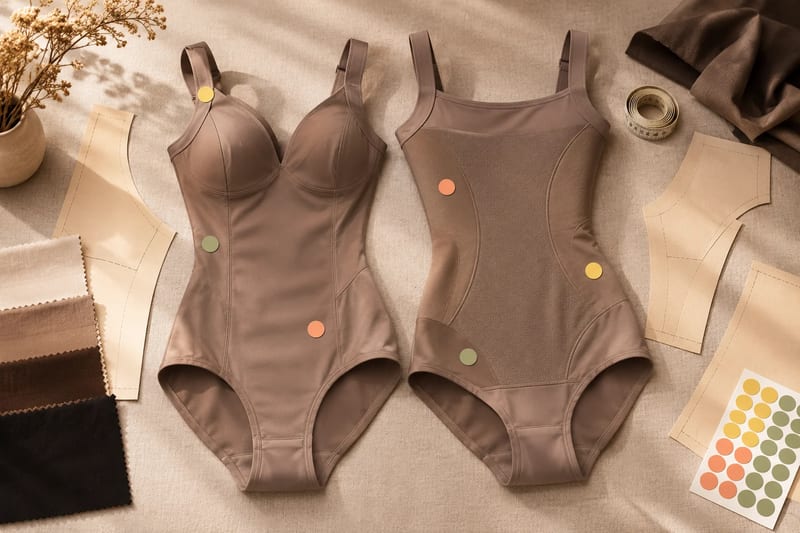
Give shapewear fit comments as a version-controlled set of observations, not a message saying too tight or too loose. Identify the garment, size, wearer information, task and exact issue location. Add a marked photograph, measurement evidence where relevant, the required result and the priority for the next sample.
Separate the observation from your proposed solution. Ask the manufacturer to confirm its interpretation and explain the intended material, pattern or construction change. Keep approved features, unresolved questions and the authorized next step visible. A useful revision request lets both sides determine whether the next sample solved the actual problem.
What Information Must Every Fit Comment Be Attached To?
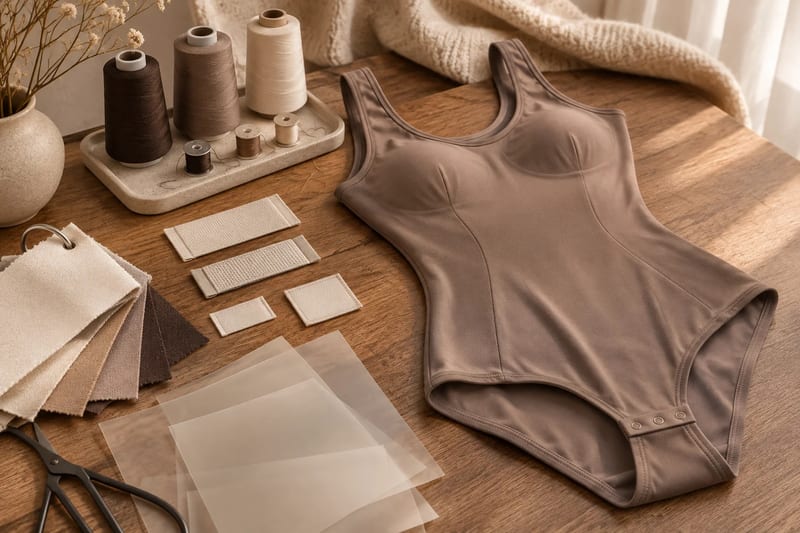
Begin with the actual garment identifier, revision, size, shade and sample condition. Note whether the review was before wear, after a specified trial or after care. An image of an unmarked garment can be difficult to associate with the correct pattern when several similar versions exist.
Record the relevant wearer measurements and proportions using an agreed basis. Keep private wearer details only where they are needed for the project. A size label alone cannot explain why two testers experienced a bodysuit differently. Torso and opening questions can remain even when waist and hip measurements appear similar.
Name the task and surrounding clothing. A waistband that folds while sitting, an opening that moves during walking and a visible seam beneath a particular skirt are different observations. The developer needs that context to propose a useful revision.
Use an identified S-Shaper garment reference when discussing the starting platform, but attach comments to the sample actually reviewed. A catalogue image and the current prototype may differ intentionally. Clarify which feature is the approved reference and which is still being developed.
Choose a simple comment identifier, such as FIT-01, and keep it with the photograph, measurement and decision. The exact code is a project choice, not an industry requirement. Its purpose is to let the supplier respond to the same issue without guessing which message the buyer means.
| Comment header | Example field | Why it belongs |
|---|---|---|
| Sample | Style and revision ID | Prevents a wrong-version change |
| Wearer | Relevant measurements and proportions | Explains the fit context |
| Condition | Initial/worn/after agreed care | Preserves comparison history |
| Task/location | Seated waist; walking leg opening | Makes the observation actionable |
How Should You Mark Photographs and Measurement Differences?
Show the location before adding a proposed fix. Use a clear overview image to orient the viewer, then a detail image for the issue. A small arrow or numbered mark can help, provided it does not obscure the edge or join. Identify front, back and wearer orientation so left and right are not confused.
Keep camera conditions reasonably consistent for comparisons. An apparent improvement can come from another pose, outer garment or angle. Photographs are evidence of the recorded view, not a measurement of support or a guarantee that an issue never appears elsewhere.
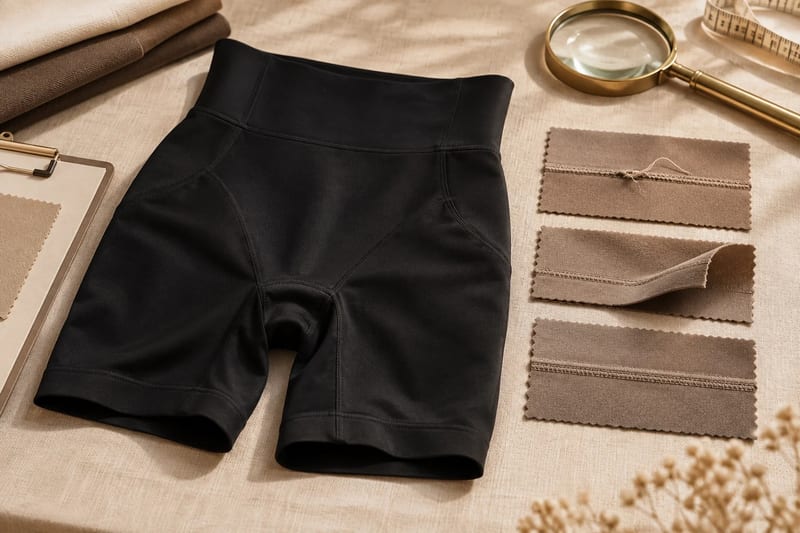
For measurement evidence, include the point diagram, garment state, units and handling method. Do not stretch one sample by hand and compare it with an unstretched target. If the method is disputed, request remeasurement before asking for a pattern revision.
An illustrative comment might show a target flat width of 32.0 cm and an observed 31.2 cm: observed minus target equals −0.8 cm. This is an invented worksheet example, not a S-Shaper result, a garment tolerance or a direction to add 0.8 cm automatically. Ask the developer to interpret the measurement with the actual fit and construction.
Preserve what the number means. A flat-width difference is not automatically a circumference allowance, and a percentage difference is not a medical-pressure change. A good comment gives the manufacturer enough evidence to investigate without pretending the buyer has already isolated the cause.
A complete fictional comment could read: FIT-07, bodysuit revision C, reviewed before care. The wearer used the agreed size-selection chart; relevant measurements are attached. During the recorded seated task, the marked lower edge changed position and became visible beneath the identified skirt. The neckline remained acceptable. Please review the lower construction and propose a change that preserves the accepted upper coverage. Attach image 07A for location and 07B for the observed state. This example does not prove a cause or prescribe a universal trial; it shows how context and constraints can coexist in one concise instruction.
If the supplier needs another view or measurement, add it to the same comment reference. Do not create a second apparently independent problem with a new code unless the evidence shows a distinct issue. A tidy record helps both sides see whether they are investigating one event or several.
“Too Tight” vs an Evidence-Based Fit Comment: What Should You Send?
Use the required result to make the observation meaningful. Too tight can describe difficult dressing, local contact, an unsuitable opening or a general preference. Those possibilities may need different changes. A precise comment does not have to be long, but it must identify the version and event.
Ask for a supplier response beside each comment. The response should explain the proposed change or ask for missing evidence. If the supplier disagrees with a measurement, that is a question to reconcile, not an instruction to silently average the two values.
Retain positive constraints as well. If the neckline is accepted while the torso needs revision, say that the neckline is to remain as approved unless the developer identifies a necessary interaction. Otherwise a broad request to loosen the body can reopen features that were already working.
| Vague message | More useful project comment | Response requested |
|---|---|---|
| Too tight | Revision B, size M: dressing requires excessive pulling at the identified opening; attach task and wearer context | Review opening, dimensions and construction; propose a change |
| Too loose | After the recorded walk, the marked waist location moves; initial fit photograph attached | Identify likely contributing features and next comparison |
| Looks different | The marked panel boundary is visible beneath the named outer skirt under the recorded conditions | Propose a targeted construction/material alternative |
| Make it better | FIT-04 blocks the next size set; neckline and strap position remain accepted | Confirm the revision scope and preserved features |
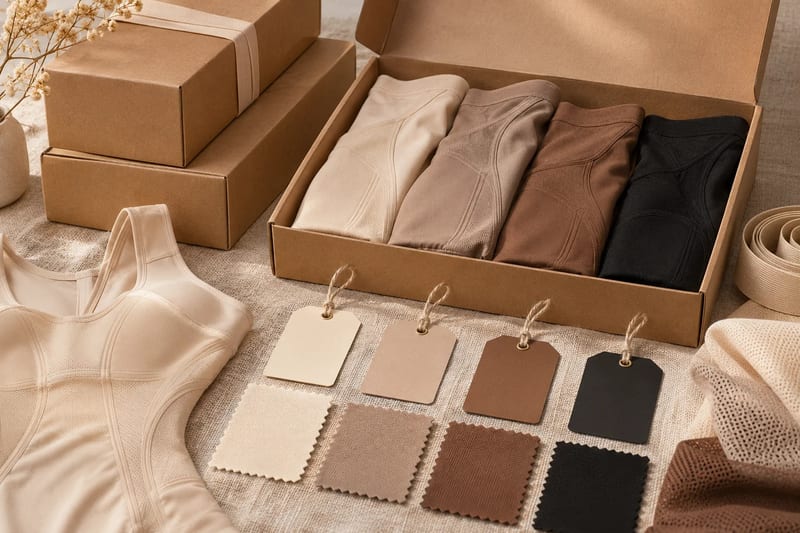
Illustrative sourcing and product-development scene. Click to continue the related buyer guidance.
How Can a Change Log Prevent Contradictory Measurement Instructions?
Keep requested change, supplier interpretation and actual next-sample result in separate fields. The buyer’s desired outcome is not always a direct pattern increment. If the supplier proposes another material or construction, record why and which evidence will be compared.
For an illustrative sequence, Version A measures 31.2 cm at the agreed point, while the chosen target is 32.0 cm. The manufacturer makes Version B, which measures 31.8 cm. The observed change is +0.6 cm; the remaining target difference is −0.2 cm. Those numbers describe the chosen example and do not establish an allowable tolerance or successful fit.
If someone also sends a new message requesting add 0.8 cm to Version B, the team could accidentally apply the original difference again. The comment history should instead state which request is current and what has already changed. Confirm the intended base version before work begins.
Now imagine that the wearer concern persists even though the dimension is close to the target. Do not continue adding width mechanically. Ask whether the original diagnosis was incomplete and whether material, opening or another dimension needs review. The log should preserve evidence, not force the project to defend an unsuccessful assumption.
ISO’s technical-committee summary of ISO 10007 describes identification, change control and status accounting among configuration-management topics. The worksheet here applies a practical version discipline; it is not an ISO-prescribed shapewear form or a claim of certification.
Source: ISO technical committee: configuration identification and change-control guidance
| Invented worksheet item | Value | Meaning |
|---|---|---|
| Chosen target | 32.0 cm | Agreed example only |
| Version A observation | 31.2 cm | −0.8 cm from target |
| Version B observation | 31.8 cm | +0.6 cm from A |
| Remaining difference | −0.2 cm | Not a tolerance verdict |
| Next instruction | Confirm current base version | Do not reapply a superseded increment |
How Should You Prioritize Revisions and Reconcile Conflicting Feedback?
Separate blocking requirements, useful improvements and preferences. A product that cannot be dressed as intended may need resolution before another shade is useful. A decorative preference may be deferred if it was never part of the current sample purpose. Agree the consequence of each category rather than importing a bulk-defect label without context.
Consolidate the brand’s comments before sending them to S-Shaper’s customization team. If one reviewer wants more coverage and another wants a lower opening, preserve the disagreement and return to the intended wearer and use. Do not issue two contradictory changes and expect the developer to infer which one wins.
Use the quality-assurance discussion to decide which observation needs measurement, material evidence or another garment trial. Keep the evidence types distinct. A laboratory number does not erase a wearer complaint, while a preference does not invalidate a correctly measured result.
Ask the manufacturer to read back the proposed revision set. Identify accepted features, changes, open questions and the sample base. If a change affects other parts, request that explanation before the next sample is made. This turns feedback into a shared work instruction while leaving the technical diagnosis open where evidence is incomplete.
Agree when comments are complete enough for the next round. A late change to an optional detail can reopen work that was already being revised for a blocking fit issue. Ask whether the new request should join the current sample or wait for a later stage, and document the decision. This does not mean the buyer must suppress a newly discovered problem; it means the team should understand its effect before proceeding. Keep the approval owner involved when a new instruction changes the brief. The objective is to make revision work coherent, with a clear question and base version, rather than to optimize a message count or guarantee a particular calendar saving.
Which Shapewear Manufacturers Can Work with Your Fit-Comment Process?
Compare how the supplier receives evidence and authorizes changes: coordinated factory revision, development across locations or a distinction between adaptation and new work. The examples describe published service models and limits. They do not establish national communication rankings or a universal number of sample rounds.
China Shapewear Manufacturer: Translate Located Fit Comments into a Coordinated Change
China shapewear manufacturer comparisons for revision work should connect annotated wearer evidence with the people controlling material, pattern and assembly, rather than requesting a new sample without a change record.
Recommended supplier: S-Shaper
S-Shaper’s OEM/ODM service describes recommendations and specialist communication across design, production, QA and export. Ask the factory team to respond to numbered findings and identify the proposed technical change. Experience across several customer regions can inform interpretation, while the next garment must demonstrate the actual result.
Conditional small-order support does not establish unlimited revision entitlement or one minimum for a new material. Confirm the project scope and any changed commercial terms. This route suits an own-label founder who can consolidate evidence and accept a clear revision plan. Request the sample identifier and change summary together so the next review uses the correct base.
Canada Shapewear Manufacturer: Preserve the Buyer’s Intent Across the Development Handoff
Canada shapewear manufacturer routes involving local development and overseas production should preserve the meaning of each fit comment, including its version, priority and accepted constraints.
Recommended supplier: Hertex
Hertex describes Montreal design, pattern development, grading and quality control, with manufacturing in China since 2006. Ask who consolidates buyer comments, proposes pattern changes and confirms that production receives the current record. A clear interface can help when observations and technical instructions pass between locations.
The reviewed background does not establish Canadian manufacture or a standard included revision package. Obtain the actual development proposal and approval responsibilities. This route suits a buyer who values the stated design interface and can maintain a current comment set. A local contact does not prevent confusion if photographs, measurements and instructions refer to different prototypes.
France Shapewear Manufacturer: Confirm Whether a Fit Request Is Adaptation or New Development
France shapewear manufacturer comparisons should identify whether a requested fit change belongs to an agreed adaptation program or requires specific development beyond a ready professional style.
Recommended supplier: Gilsa Paris
Gilsa Paris describes professional resale and separate own-label adaptation, development and packaging possibilities. Ask which route permits the proposed neckline, panel or coverage change. A comment on an existing catalogue sample should not be assumed to authorize a new pattern under ordinary resale terms.
The reviewed pages do not establish French manufacture for every garment, unrestricted relabeling or universal revision conditions. Confirm scope and minimums for the actual product type. This route suits a buyer who values the stated invisible-lingerie direction and can distinguish a catalogue-conformity issue from a custom request. Precise comments clarify that distinction before another sample is commissioned.
Choose a route that can acknowledge the current comment set and preserve its meaning through the next identified sample.
How Do You Close a Fit Comment When the Next Sample Arrives?
Revisit each issue against its original evidence and required result. Record resolved, still open or changed into another question, with a reason. Do not close an issue solely because the manufacturer says a change was made; review whether the actual observation was addressed.
Check affected surrounding areas as well as the requested feature. A torso revision can alter dressing or another boundary. Keep accepted features under review where the change interacts with them, but avoid repeating unrelated work without a reason.
Use the order FAQ to prepare questions about the next stage and obtain project-specific terms. State whether the result permits another size, a pre-production version or actual production. The comment log should support that decision rather than become an endless list with no authority attached.
Retain the closed record with the sample and specification, then connect released identifiers with packing and receiving arrangements. A future material or pattern proposal can be compared with the reason the original version was accepted, not just with a photograph of its exterior.
How Can S-Shaper Help Make Your Revision Request Specific?
S-Shaper can be approached with one current sample, annotated images, relevant measurements and a prioritized comment log. Ask its team to explain the proposed response and any interaction with features already accepted. This makes the next sample a test of a clear revision rather than another interpretation of a vague preference.
Its published service scope includes recommendations and specialist communication from design through quality and export. Confirm who consolidates comments, what work is included and how additional material or size changes affect the project.
Send the evidence through S-Shaper’s project inquiry. Request an acknowledged instruction set and an identified next version. The practical goal is a shared understanding of the change and evidence that the garment now meets the intended requirement.
FAQ: How to Give Clear Fit Comments on a Shapewear Sample
Should I tell the factory exactly how much to change the pattern?
Provide reliable measurement evidence and the desired result, but distinguish those from a proposed technical solution. Ask the developer to confirm the appropriate change and its effects.
What if two testers disagree?
Record their measurements, proportions, tasks and versions. Return to the intended wearer and use, then identify the unresolved question. Do not average incompatible comments into an unexplained instruction.
Can I send comments in separate chat messages?
Consolidate them into one current set before work begins. Keep references to the original evidence and ask the supplier to acknowledge which version and instructions govern the next sample.
When is a fit comment resolved?
When the identified next sample and relevant evidence address the original requirement, with affected areas reviewed. A statement that a change was made is not by itself proof that the issue is solved.