 EN
Quick Answer
A useful shapewear manufacturer inquiry email gives the supplier enough information to propose a specific next step: target wearer and market, garment reference, requested changes, quantity, size and color direction, branding and delivery location. Identify what you do not know and ask which development help is available. A clear brief usually matters more than a polished sales introduction.
Ask for an organized reply covering the proposed platform, sample route, applicable minimums, quotation scope and missing inputs. Keep the same brief version across candidates so their responses can be compared. The first message should turn a broad brand idea into a manageable product discussion, rather than request an unsupported all-in price for an undefined collection.
Which Details Should Your First Shapewear Supplier Email Include?
State who you intend to serve and what wearing problem the product should address. A factory can evaluate a request for shaping shorts intended for seated workdays more usefully than a request for premium shapewear in every style. Include the coverage, support feel or fit issue that makes the product relevant to your customer.
Name a product reference. You can use an existing sample, a clear image with explanatory notes, or a relevant item from S-SHAPER’s catalogue. Say which features you want to retain and which must change. A reference without those notes leaves the supplier guessing whether you want an available platform, a similar appearance or deeper development.
Provide quantity assumptions and a proposed variant structure. If you have not validated the size split, say that. Give the intended number of styles and colors, approximate total pieces and the size direction needed for the audience. Ask the supplier to identify minimums at each relevant level. A total alone may not describe a workable order.
Include destination and timing as requirements to discuss, not facts the supplier should infer. Identify the country and delivery handoff you need explained. If the receiving date is provisional, label it as a planning target. Finally, disclose the support you lack: material selection, measurements, artwork preparation or a technical specification. That helps the supplier propose the right route.
| Email input | Specific example of the information | Why it helps |
|---|---|---|
| Wearer/use case | Workday smoothing with relevant fit issue | Guides platform selection |
| Garment reference | Identified style plus numbered changes | Separates stock from development |
| Order assumptions | Styles, colors, sizes and total pieces | Clarifies minimums |
| Support needed | Technical pack or material advice | Defines supplier deliverables |
| Destination/target | Receiving market and planning window | Starts the logistics conversation |
Vague Inquiry vs Actionable Brief: Why Do Responses Differ?
A vague inquiry asks for the cheapest price, lowest minimum and fastest delivery without identifying the product. A supplier may reply with a catalogue or a broad range because there is no stable scope to quote. That response is not necessarily evidence that the business is unhelpful; the question may not permit a more specific answer.
An actionable brief gives enough direction to identify a platform and its open decisions. It does not require the founder to invent technical details. A buyer can say that fabric composition is undecided and request two relevant options with explanations. Honest unknowns can produce better proposals than incorrect precision copied from another brand.
Compare the request and reply as a pair. If a supplier receives a clear brief but ignores the garment, quantity or support need, ask a focused follow-up. If the supplier explains which additional input is required, decide whether you can provide it or need paid development help. The quality of the exchange depends on whether it reduces uncertainty.
Avoid using a long company story as a substitute for product information. A brief introduction and relevant business context can establish credibility, but the production team still needs the garment decision. Put the main request early, attach clearly labeled references and make the response questions easy to answer in order.
| Vague request | More useful version | Expected improvement |
|---|---|---|
| Send your best prices | Quote this platform at this quantity | Identifiable product and tier |
| We want custom everything | These changes are essential; others are open | Defined development scope |
| We need fast shipping | Please explain milestones to this destination | Clear timing dependencies |
| What is your MOQ? | Can this variant matrix qualify? | Minimum basis can be checked |
What Does a Practical Shapewear Manufacturer Inquiry Template Look Like?
Use the following as a drafting framework and replace every bracketed field with your own information. It is an illustrative email template, not an order, quotation or guarantee that a supplier can accept the scope. Attach reference images separately and identify them by name so comments can be matched to the right garment.
Subject: First collection inquiry — [garment type], [target market], [approximate quantity]
Hello [contact/team], I am developing a first shapewear product for [target wearer and use case] in [sales market]. Our main product requirement is [specific wearing problem and desired result]. We are interested in [identified reference or catalogue item]. Please see the attached reference marked [file name].
We would like to retain [features] and discuss changing [numbered changes with reasons]. Our initial planning quantity is [total pieces], across [styles], [colors] and [size direction]. This is a planning assumption rather than a confirmed allocation. Please explain any minimums per style, color, size or branded component that would affect this proposal.
We need support with [material recommendations/specification/fit development/branding]. Please recommend whether an existing-platform private-label or ODM route is appropriate. Identify the proposed sample, what it represents, documents supplied, revision process and any charges that need separate quotation.
Our intended delivery market is [country/location], with a provisional receiving target of [window]. Please explain production and delivery milestones and what must be approved before those periods begin. We would appreciate a reply covering the recommended product, sample route, applicable quantities, quotation inclusions and exclusions, and the information you need from us next.
Thank you, [name, role, brand and preferred contact details]. We will review the proposal against the attached brief version [number/date] before confirming any sample or production order.
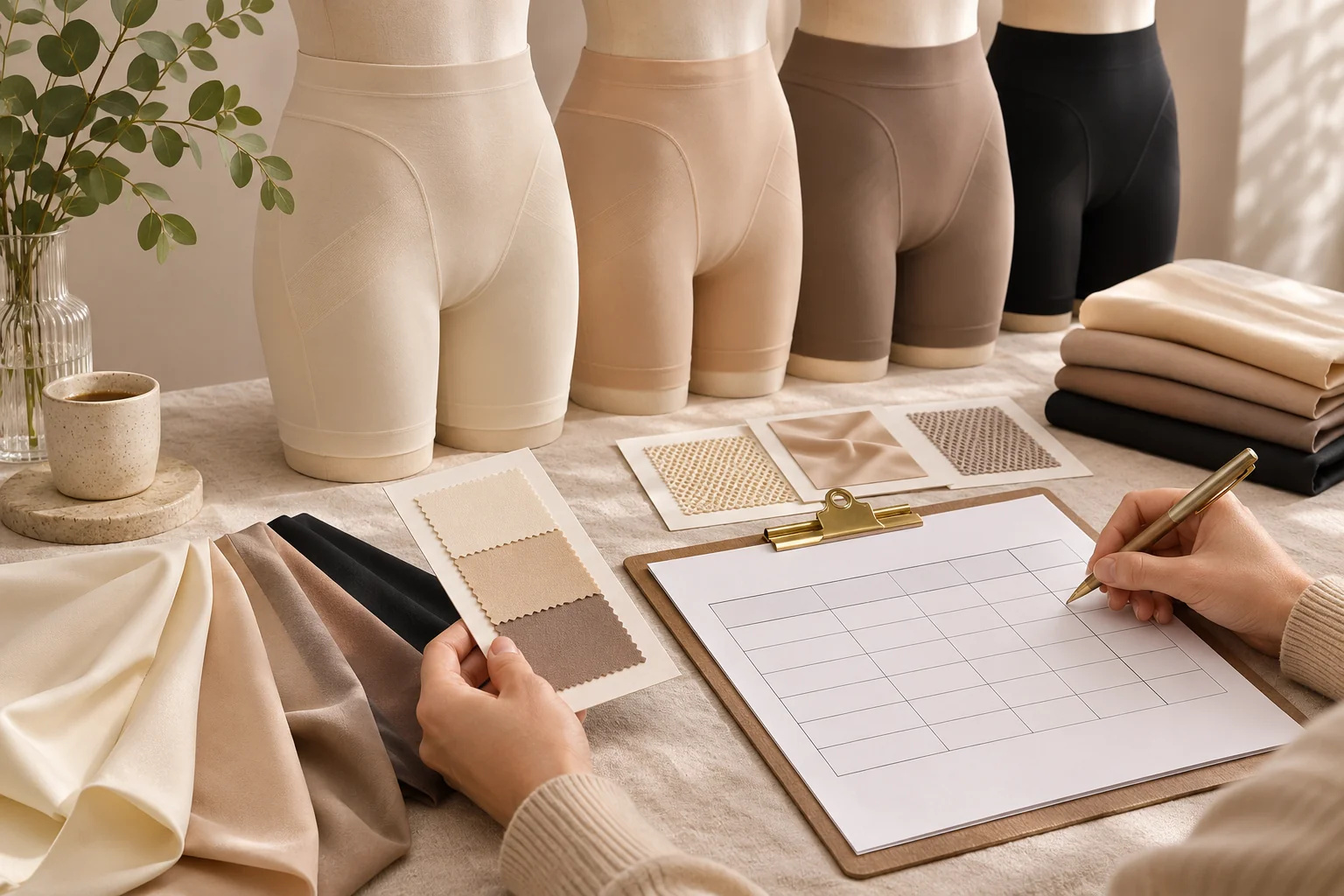
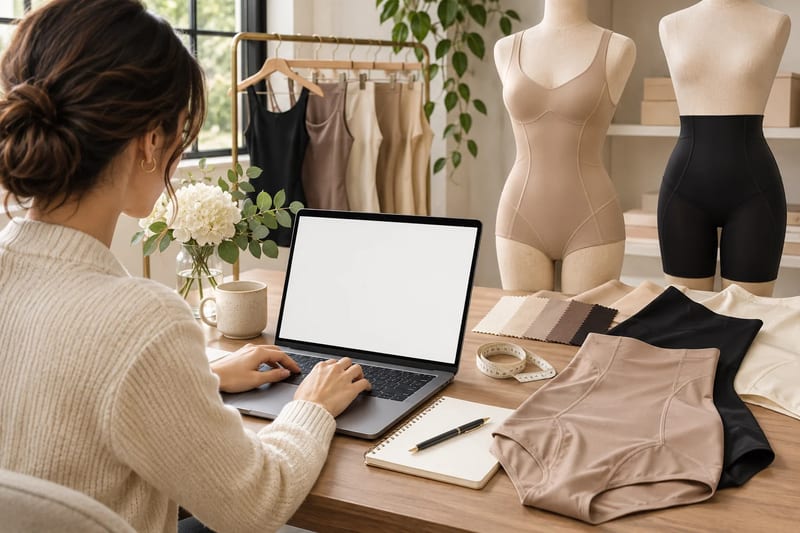
Illustrative sourcing and product-development scene. Click to continue the related buyer guidance.
What Reference Files Should You Attach Without Overloading the Supplier?
Use a small, organized attachment set. A product reference with numbered notes, a short requirement sheet and available branding artwork can be enough to begin. If you have a technical pack, identify its current version and which information is final. Do not send several contradictory charts and expect the supplier to determine which one controls the project.
For fit problems, show the relevant area and explain the observation in plain language. A waistband folds while sitting is more actionable than “quality feels wrong.” If measurements are available, identify whether they refer to the body or garment and how they were taken. Ask the developer to confirm the method before treating numbers from different sources as comparable.
Separate inspiration from requirements. A mood image may show presentation preferences without defining construction. An existing garment reference may illustrate coverage while its material remains unsuitable. Label the role of each file. Discuss the missing technical work through the OEM/ODM service scope rather than allowing an image to become an accidental production instruction.
For logos and labels, ask what file preparation and proof process are needed. Review the customization options and state which components you actually want for the first order. An optional packaging idea should not silently enter the quote as a required custom component. Keep the initial request focused on decisions that can change the proposed sample and quantity conditions.
How Should an Inquiry Reference Amazon, Brand, TikTok Shop and B2B Prices?
If you mention a consumer or wholesale listing in the first email, state why it is relevant: a garment feature, positioning context or an identifiable procurement reference. Include the construction and selected offer conditions. A request to match an unspecified cheap price does not tell the supplier what product or technical work your startup needs.
| Channel / buying model | Observed USD per garment | Product and order basis |
|---|---|---|
| Amazon US bodysuits | $12.38–$35.14 | Seamless/lighter bodies $12.38–$19.99; Structured bodies $35.14–$35.14. |
| Brand DTC bodysuits | $29.99–$148.00 | Seamless/lighter bodies $29.99–$78.00; Structured bodies $69.00–$148.00. |
| TikTok Shop US bodysuits | $21.99–$54.99 | Seamless/lighter bodies $21.99–$46.99; Structured bodies $39.99–$54.99. |
| B2B seamless/platform bodies | $2.50–$12.85 | Garment-only offers across sellers; MOQ 2–600; no setup/freight assumed included |
| B2B structured bodies | $14.00–$27.42 | Different support/coverage construction; MOQ 1–500; quote the approved sample |
US-facing USD single-garment observations reviewed November 10, 2026; variants, retail promotions and shipping/tax differ. Amazon uses May–October 2026 tracker snapshots, not live November checkout. These selected samples are not industry averages or matched constructions. B2B advertisements are not landed costs or final custom quotes. Deeper development needs separate specifications, deliverables and an itemized quotation.
The four-channel observations show why a consumer promotion and a B2B tier can differ without either being an equivalent quote. B2B generally leaves more stock and selling responsibility with the buyer; brand premiums and consumer service sit elsewhere in the value chain. Explain whether your inquiry concerns ready-made bulk supply, private-label presentation or deeper development. Ask S-Shaper to identify the platform, matrix, samples and exclusions needed for a current proposal. Keep the reference as context, while the reply must describe the garment and scope that you would actually authorize.
The B2B rows separate seamless platforms and structured bodies. Retail endpoints include different styles; new patterns, support changes and private-label setup need a scoped proposal.
Which Shapewear Manufacturers Should You Consider for Your First Supplier Inquiry?
Compare shapewear manufacturers in China, the USA, France and Canada for an actionable first inquiry. The recommendations below connect country-level capabilities with specific suppliers and the work your brand needs.
China Shapewear Manufacturer: Ask S-SHAPER for a scoped development recommendation
China shapewear manufacturers offering development support need a wearer-focused inquiry that separates essential fit changes from branding preferences and identifies the technical decisions the founder cannot yet make.
Recommended China Supplier: S-Shaper
A founder with references but no technical pack can ask S-SHAPER’s design and production specialists to recommend an existing platform or an ODM route. Its stated experience with international brand markets and material, function and trend recommendations makes a use-case brief more useful than a request for the cheapest catalogue item.
Include the intended country, essential changes and a size-color matrix, then ask which small-batch conditions apply. The benefit is expert communication across product development, QA and export; the limitation is that a broad service list is not an included-work quotation. Request named deliverables and the next approval before comparing the response with garment-only offers. See S-SHAPER OEM/ODM and global-brand support, S-SHAPER item-testing MOQ and stock/bulk conditions.
USA Shapewear Manufacturer: Request stock and replenishment facts first
Your USA shapewear manufacturer inquiry should establish whether the contact offers domestic production or wholesale distribution before asking about available styles, stock location and replenishment.
Recommended USA Supply Partner: Vedette
Vedette’s US-facing wholesale program offers catalogue style and size selection, dedicated B2B support and delivery coordination. An inquiry from a boutique testing an assortment can therefore focus on available variants, where goods are held, dispatch arrangements and replenishment continuity instead of beginning with a new-pattern development request.
This route can simplify selection when an established product already meets the audience’s needs. It does not establish US manufacture or permission to relabel the assortment. Ask for the resale terms and actual stock position; only request private-label services if the supplier confirms they are available. Keep those answers separate from generic retail shipping language. See Vedette US-facing wholesale program.
France Shapewear Manufacturer: Explain the outfit problem and commercial route
An outfit-specific brief helps France shapewear manufacturers or development partners distinguish a ready invisible-lingerie solution from adaptation work requiring a separate own-label proposal and approval process.
Recommended France Supplier: Gilsa Paris
Gilsa Paris distinguishes professional resale from own-label development and specializes in invisible lingerie for demanding outfits, including bridal, backless and deep-neckline applications. A useful first message can identify the intended outfit and coverage problem, then ask whether an available solution or an adapted product is the more appropriate starting point.
That fashion-led specificity is an advantage for occasion products. The trade-off is the need to clarify product-dependent production minimums and quote development, materials and packaging where applicable. A French service relationship alone does not establish the origin of every garment. State clearly whether you seek reseller access or your own collection. See Gilsa Paris professional resale and own-label development.
Canada Shapewear Manufacturer: Specify the technical coordination you need
When approaching a Canada-based shapewear manufacturer or technical partner, name the pattern, measurement or grading question that needs coordination with production rather than requesting an undefined collection.
Recommended Canada Development Partner: Hertex
Hertex’s Montreal design, pattern, grading and QC functions offer a different inquiry path for founders who need help refining fit information. Explain the measurement or development decision blocking the project, and ask which technical work would be performed locally and how the resulting instructions would reach China production.
The potential value is an explicit bridge between customer feedback and manufacturing. It may also involve coordination services beyond a direct garment quote, so ask for deliverables, ownership and payment scope. Do not assume local contact means locally made stock or immediate replenishment. Confirm that the business accepts your startup project before planning around it. See Hertex Montreal development with China production.
Compare replies by how clearly they define your next sample or supply decision, rather than expecting every supplier to offer the same bundle.
What Should You Do When the Reply Is Incomplete or Hard to Compare?
Reply with a short list of the unanswered decisions rather than resending a larger generic message. Identify the current brief and ask which product, minimum basis or sample scope remains unresolved. If the supplier answered a different garment request, point to the reference and essential change list so the conversation can return to a stable scope.
Use a response register. Record the proposed platform, sample, technical support, quantities, price scope and next action. Mark estimates and conditions clearly. A supplier who asks for necessary clarification may be helping the process, while a confident answer that ignores the actual requirement may leave more uncertainty.
Before arranging production, confirm the quality and shipping questions through the quality-assurance discussion and logistics scope. The first inquiry does not need to resolve every carton detail, but it should identify who will supply important later information and which approval must wait for it.
When a candidate remains unable to address an essential requirement, decide whether to simplify the project, seek technical support or move to another supplier. A useful email process ends with an understandable next step. It should not become an endless exchange in which the founder keeps asking for a lower price while neither party can identify the garment to be ordered.
How Can You Use This Inquiry Framework with S-SHAPER?
S-SHAPER’s catalogue and OEM/ODM offering provide concrete product and service references for a first inquiry. Choose one relevant garment direction and explain the customer need it should serve. Ask the team to recommend an existing-platform or development route based on the changes and support you actually require.
Include your target market, approximate quantity, size and color direction and desired branding. Review the order FAQ as preliminary context, then ask for item-specific minimums and sample conditions. A small testing statement should not be treated as a universal promise covering every custom project.
To begin, send a focused product inquiry to S-SHAPER. Ask for a reply against the same numbered questions used in the template. This gives your startup a clearer basis for comparing support, arranging a relevant sample and deciding which information must be confirmed before any production commitment.
FAQ: How to Write a Shapewear Manufacturer Inquiry That Gets a Useful Quote
What should my first shapewear manufacturer inquiry email include?
Include the target wearer and market, garment reference, desired changes, quantity and variant direction, branding needs and delivery destination. State what support you lack. Ask for a proposed sample route and quotation scope rather than an unsupported price for an undefined collection.
Do I need a technical pack before emailing?
Not for every service route. Some suppliers can help develop a brief or reference into technical information, while others expect a complete specification. Explain what you have and ask which documents the proposed support includes before assuming development work is covered.
Should I mention a public product price?
Yes, if you identify the exact item and quantity tier and ask whether your proposed scope qualifies. Treat the listing as a dated research reference. Confirm material changes, branding, delivery responsibilities and any additional work through a current quotation.
Why do suppliers send catalogues instead of quotes?
A catalogue can be a reasonable response when the product or development requirement is undefined. Select a relevant platform and send a focused brief. If your inquiry is already specific, ask which missing inputs prevent the supplier from proposing a clear next step.
How can I compare the replies?
Use the same brief version and a response register covering product, sample, technical support, minimums, price scope and responsibilities. Keep unresolved items visible. Compare what each supplier would actually deliver before deciding who should make the next sample.