 EN
Quick Answer
Source private label shaping shorts by defining the rise, inseam, coverage, leg opening, gusset and intended outer clothing before comparing suppliers. Request an identified garment platform, material proposal, size plan and wear-test sample. A low advertised unit price does not establish that its construction or customization rights fit your launch.
For a first collection, compare a small number of purposeful options and validate rolling, migration, visibility, dressing and care behavior with the intended wearers. Confirm the actual quantity by size and color, approved sample and delivery terms before placing the order. There is no universal inseam or fabric blend that works for every wearer.
What Should Your Private Label Shaping Shorts Brief Define First?
Begin with the clothing and use occasion: a short skirt, fitted dress, work trousers or everyday layering. Describe the coverage customers need and the outer hems beneath which the short must stay concealed. A product intended for several uses should identify the priority rather than promise to disappear under every garment.
Choose an initial reference from S-Shaper’s product catalogue and mark what you want to retain or change. Specify rise and inseam as separate decisions, identify where measurements are taken and ask the developer to provide finished-product measurements. Do not copy a competitor’s size label and assume it describes the same dimensions.
Describe the waist, abdominal area, seat, thigh and opening requirements in observable terms. If the aim is smoothing beneath a particular dress, preserve that reference for the sample trial. Avoid unmeasured medical-pressure numbers or a claim that tightness alone proves a better product.
Include practical details such as the gusset, seams, proposed labeling, color, packaging and care. Ask which choices are part of an existing platform and which require development. A compact first brief makes the proposal comparable without pretending the founder already knows the correct engineering answer.
| Brief field | Buyer input | Supplier response requested |
|---|---|---|
| Use | Priority outer clothing and movement | Suitable platform and limitations |
| Coverage | Waist position and desired leg coverage | Measured rise and inseam proposal |
| Opening | Visibility and migration concerns | Edge construction and review plan |
| Launch | Sizes, shades and labeling goal | Actual quantity and sample scope |
How Do Rise, Inseam and Leg Openings Interact in a Sample?
Rise determines where the short is intended to sit, while inseam determines part of its leg coverage. Their effect depends on the garment’s overall proportions and the wearer. A higher rise can be useful for one outfit but meet a different torso or seated posture poorly. Review the actual version rather than treating higher as automatically better.
The leg opening needs its own evaluation. Record where it sits at the start, whether it moves during walking or sitting and how its edge appears beneath the chosen clothing. A short can have adequate thigh coverage while its opening still creates an unwanted line. Changing only the inseam may not resolve an edge issue.
Ask how the fabric, local construction and fit work together. A different material may need pattern or edge adjustments. If two versions differ in several ways, document them as complete garment alternatives. Do not attribute every change in rolling or comfort to the fiber blend alone.
Keep the trial tied to the intended wearer range. One founder’s comfortable sample is a useful observation, not approval of all proportions or sizes. Include representative body proportions and record which configurations remain unreviewed. The first order should not rely on a successful middle-size photograph as proof of the complete range.
Shorter vs Longer Shaping Shorts: Which Version Fits the Launch Brief?
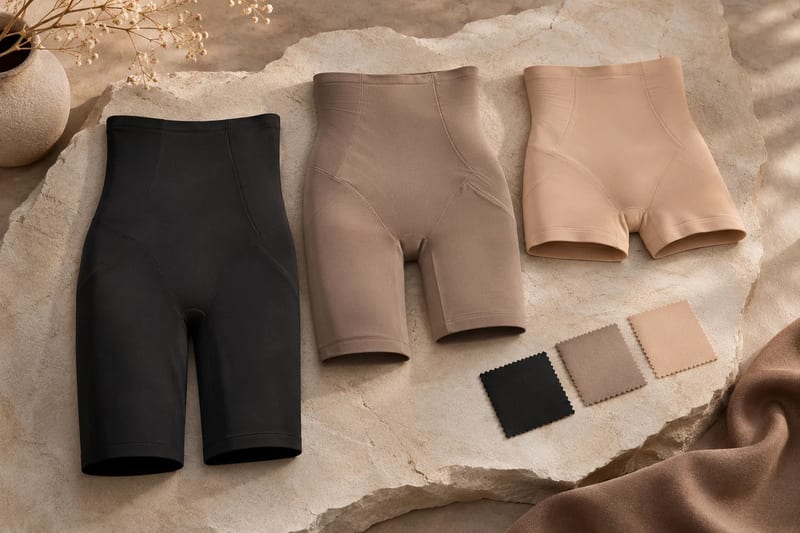
Compare length options against the same customer use. A shorter leg may conceal beneath a shorter hem, while a longer leg changes coverage and the location of the opening. These are design trade-offs to evaluate, not a universal comfort ranking.
Use a controlled review where feasible: identify the platform and material, explain intentional length changes and preserve the same outer-clothing and task references. If the supplier also changes the opening or pattern, record that difference. The purchase can still compare complete solutions honestly.
For an illustrative planning matrix, two length options × three sizes × two shades gives 12 product configurations. Adding initial and after-care review states gives 24 review cells. Those are chosen planning inputs, not a minimum order or a prescribed number of garments. Agree which physical samples cover the cells and state the remaining gaps.
| Decision | Shorter option | Longer option |
|---|---|---|
| Outer hem | Check concealment beneath priority clothing | Check whether the leg remains hidden |
| Opening position | Review contact and movement at that location | Review contact and movement at the new location |
| Coverage | Confirm that the customer need is still met | Confirm additional coverage is useful |
| Sample workload | Identified material, size and tasks | Same decision criteria; changes documented |
| Chosen matrix | 2 × 3 × 2 = 12 configurations | 12 × 2 states = 24 review cells |
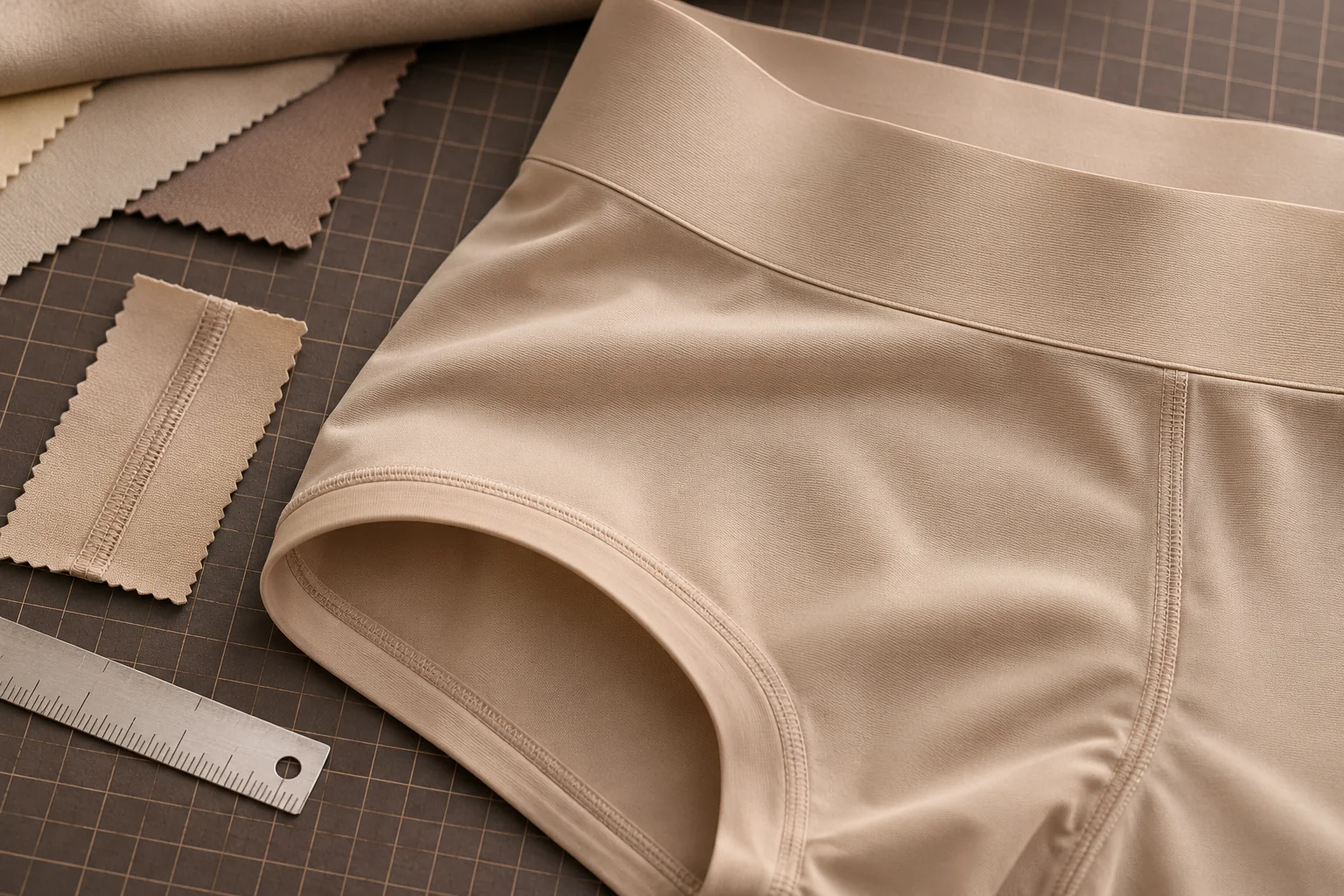
Illustrative sourcing and product-development scene. Click to continue the related buyer guidance.
What Do Shaping Shorts Cost Across Retail and B2B Buying Channels?
Use the observed prices below to understand positioning and prepare a quotation request. Compare the construction before treating a low entry offer as the cost of your own short. For this product, inseam, gusset, opening finish and any added closure are part of the commercial scope.
Product-specific price check: shaping shorts. US-facing USD per single garment. Research reviewed November 10, 2026; underlying snapshot dates differ. These selected listings show channel positioning, not an industry average or a matched-quality price experiment. Single observations are marked as examples.
| Channel / model | Observed USD per garment | Scope and order basis |
|---|---|---|
| Amazon US | $9.99–$28.60 | Nebility, Maidenform and Shapermint; dated Aug–Sep 2026 tracker offers |
| Brand DTC | $28.99–$81.00 | Selected Shapermint, SKIMS, SPANX and Honeylove single shorts; sale/regular offers differ |
| TikTok Shop US | $19.99–$65.98 | FeelinGirl/YIANNA; basic shorts versus lace/zipper constructions |
| B2B garment offers | $1.99–$3.96 | Three sellers; MOQ 50/500/1000; Senfeng lists polyester, so material equivalence is unverified |
A basic knitted short, a lace-trim short and a zipper-crotch short carry different components. Compare inseam, edge construction, gusset and approved material before treating an advertised offer as a sourcing target.
B2B normally spreads ordering or production work across a quantity and leaves the consumer-brand layer to the buyer. Retail also funds customer acquisition, content, platform or creator fees, fulfillment, returns and overhead. The startup still pays for samples, development, quality checks, freight, tax and inventory. The retail–factory gap is neither pure brand premium nor net profit; a small custom run can cost more than a retail promotion. Existing-stock, light-label and full OEM development must be quoted separately.
Prices are indicative public observations, not final S-Shaper quotations. Confirm material, variant, MOQ, customization rights, packaging and delivery terms through a product-specific S-Shaper inquiry. Tax and shipping are not normalized; US examples are not local UK/EU/Australian tax-inclusive prices.
View the price observations and dates
- Nebility — High-waisted shaping shorts: $9.99; 2026-08-21; Dated offer snapshot; not a standing price for all variants.
- Maidenform — High-waist thigh slimmer: $25.99; 2026-08-29; Displayed price 25.99; conditional 5.20 coupon gives 20.79, excluded from base range; indexed August version used, direct June version excluded.
- SHAPERMINT — High-waisted shaping shorts: $28.60; 2026-09-03; Dated tracker snapshot; ASIN B09NL669JK; selected shorts variant; not live checkout.
- Shapermint Essentials — High-waisted shaping shorts: $28.99; public snapshot reviewed November 10, 2026 (checkout not verified); Sale price; MSRP48 not the sale price.
- Shapermint Essentials — Empower high-waisted shaper shorts: $39.99; public snapshot reviewed November 10, 2026 (checkout not verified); Sale price.
- SKIMS — Seamless Sculpt mid-thigh short: $44.00; public snapshot reviewed November 10, 2026 (checkout not verified); USD indexed collection snapshot; two-item offer not applied.
- SPANX — Invisible mid-thigh short: $58.00; public snapshot reviewed November 10, 2026 (checkout not verified); USD displayed regular listing.
- Honeylove — SuperPower Short, Runway: $81.00; public snapshot reviewed November 10, 2026 (checkout not verified); Color-specific sale81 vs original89; not all colors.
- FeelinGirl Shop — High-waisted shaping shorts: $19.99; public snapshot reviewed November 10, 2026 (checkout not verified); Limited-time deal; no gift/giveaway listing used.
- YIANNA Shapewear — Tummy-control shaping shorts with zipper crotch: $45.99; public snapshot reviewed November 10, 2026 (checkout not verified); Flash sale price; compare49.99.
- FeelinGirl Shop — Lace-trim branded-waist shaping shorts: $65.98; public snapshot reviewed November 10, 2026 (checkout not verified); Limited-time storefront listing; different construction from19.99 short.
- Ningbo Youkiunite — High-waisted shaping shorts: $1.99–$2.90; public snapshot reviewed 2026-11-10; Advertised FOB; material/quality/custom scope need approval; listed MOQ 50.
- Shantou Junying Clothing Co., Ltd. — Seamless shaping safety short: $2.50–$2.90; public snapshot reviewed November 10, 2026 (checkout not verified); Single Seamless Safety Shorts Shaping Butt-Lifting listing; not a multi-seller whole-industry shorts range; listed MOQ 500.
- Dongguan Senfeng — Breathable shaping shorts: $3.96; public snapshot reviewed 2026-11-10; Public listing says 100% polyester; verify composition, no claim of equivalence to nylon/elastane shorts; listed MOQ 1000.
For the first-order comparison, request a quote for the approved short, not simply a seller’s cheapest thumbnail. Keep existing-stock resale, permitted label adaptation and original development separate. Ask which price includes your size mix, packaging and actual material, then add your delivery and launch costs before judging the retail opportunity.
How Should You Test Rolling, Visibility and Fabric Pairing?
Use a repeatable trial sheet with garment version, size, relevant wearer measurements, outer clothing and tasks. Record the waist and leg positions before and after dressing, sitting and walking. Do not invent a universal wear duration or pass score; agree a product-specific review with the developer.
Check the main fabric with the proposed lining, waist and edge construction. A pleasant swatch does not approve a finished opening. Discuss identified alternatives through S-Shaper’s customization service and ask which revision is intended to address an observed problem. Avoid changing material, rise, length and opening simultaneously without documenting the reasons.
Review appearance under relevant stretch and lighting. If a shade or size is not tested, mark it unreviewed. Keep subjective feedback separate from laboratory measurements and do not turn a smooth photograph into a quantified support claim.
Agree after-care and production-related checks through the quality-assurance discussion. Reassess relevant dimensions, edges and wearer behavior after the proposed routine. Preserve the sample and change record so the next version can be compared with the actual problem rather than a vague request for better quality.
Which Shaping Shorts Manufacturers Fit Your First Collection Model?
Decide whether you need a new own-label short or a ready wholesale style. The following examples distinguish coordinated factory sampling, catalogue resale and an integrated seamless route. They describe published models and limits, not national price or fit rankings. Confirm the current program for the exact construction.
China Shaping Shorts Manufacturer: Build the First Order Around an Approved Platform
China shaping shorts manufacturer comparisons should connect rise, inseam and opening choices with an available platform, then confirm which changes remain practical for the first quantity.
Recommended supplier: S-Shaper
S-Shaper’s OEM/ODM service describes material and style recommendations with design, production, QA and export specialists. A founder can ask the factory team for short options that address a specific outer-clothing use and wearer problem. Its work across several customer regions provides context, while identified samples must establish the fit and finish.
Conditional small-order support can be useful, but it is not one minimum for every custom knit, shade or edge. Request the actual material and quantity terms, and price the approved size mix. This route suits an own-label startup seeking coordinated sampling and production advice. Keep the first proposal focused enough to test rather than adding several inseams and colors before the core opening works.
USA Shaping Shorts Manufacturer: Evaluate a Wholesale Catalogue Without Assuming Private Label
USA shaping shorts manufacturer inquiries can lead to wholesale catalogues; distinguish a ready style from original production before planning label changes or a local replenishment promise.
Recommended supplier: Vedette
Vedette publishes a wholesale route with catalogue products and buyer support. For a short, ask which style, sizes and shades are currently orderable and how repeat supply is handled. An established catalogue can provide a concrete construction reference when the buyer wants resale rather than a new development project.
The reviewed wholesale information does not establish US manufacture, unrestricted relabeling or a guaranteed domestic stock position. Confirm dispatch location, current availability and the selling rights in writing. This route suits a boutique or reseller whose customer need matches an existing short. It is not evidence that a founder can change inseam, material or brand identity under the same wholesale terms.
Turkey Shaping Shorts Manufacturer: Match the Leg and Waist Brief to a Seamless Workflow
Turkey shaping shorts manufacturer routes involving integrated seamless production should show how the proposed knit, waist and openings address coverage and movement before extra styles are added.
Recommended supplier: SML Seamless
SML describes integrated Turkish private-label shapewear and activewear production from yarn through packed goods, with dedicated communication. Ask how its proposed short platform handles the required length, waist and leg opening, and which material and sample records identify the approved version.
Its published scope does not establish a universal startup minimum, a standard inseam or a guaranteed lower cost. Confirm yarn, shade, development and quantity conditions for the actual short. This route suits a brief aligned with seamless construction and a buyer ready to evaluate complete garment options. Integration helps define the workflow; it does not replace wear trials or prove that every opening will remain stable on every body.
Choose the route that can supply the required short with clear rights, sample evidence and a manageable first size-and-color matrix.
What Should Be Approved Before Ordering Private Label Shaping Shorts?
Approve the garment identifier, material, finished measurements, rise, inseam, openings, gusset, seams, labels and proposed care. Attach the reviewed size and shade coverage and note any unresolved fit questions. A buyer and factory should be able to distinguish the final version from a similar-looking development sample.
Create the size-and-color order grid separately from the sample plan. Multiplying configurations does not prove demand, and a low total quantity may leave too few units in each cell. Use your actual audience evidence and budget rather than inventing a universal first-order size ratio.
Read the published order FAQ as context, then confirm item-specific quantity, sampling and timing. Ask which changes or substitutions require another approval. Retain the rejected versions with reasons so an old short is not accidentally released.
Connect the selected identifiers with packing, dispatch and receiving arrangements. Confirm how sizes and colors will be marked and what receiving checks refer to. On a reorder, compare any proposed material or edge change with the retained sample instead of relying on the name of the style.
How Can S-Shaper Help Develop a Practical First Shaping Short?
S-Shaper can be approached with the priority outer clothing, wearer profile and a marked garment reference. Ask its team to recommend an identified platform and explain the rise, length, material and opening options. Request samples that answer a small number of specific fit questions before expanding the range.
Its published service scope includes recommendations and specialist communication through design, production, QA and export. Confirm the exact development work and commercial terms for the chosen short. Conditional low-quantity possibilities should be checked for the material, shade and customization rather than assumed from a general description.
Send a focused brief through S-Shaper’s project inquiry. Request a quote for the approved version and its actual order grid. The useful outcome is a short that meets the wearer need and can be reproduced, supported by a clear sample record rather than a generic promise of stronger shaping.
FAQ: How to Source Private Label Shaping Shorts for a First Collection
What inseam should a first shaping short use?
There is no universal answer. Choose the priority outer clothing and desired coverage, then compare measured options with representative wearers. Review concealment, opening position and movement together.
Does a longer short prevent rolling?
Length alone cannot establish that result. Material, fit, opening and body proportions also require review. Record where migration appears and ask for a targeted revision rather than assuming extra length fixes every issue.
Can an advertised B2B MOQ cover full customization?
Not automatically. A stock or limited-label offer differs from a new material, knit or pattern project. Confirm the actual development scope, rights and minimum for the selected version.
What should the final sample record include?
Keep the garment and material identifiers, measurements, rise, inseam, openings, gusset, labels, care proposal and relevant trial evidence. Identify which sizes and shades were reviewed and what changes require fresh approval.