 EN
Quick Answer
A private label shapewear manufacturer can help you select a suitable garment platform, define the changes, prepare your brand components and supply an approved product under your own identity. Begin with the wearer problem and physical sample, then connect the garment, labels, size identifiers and packaging to one current specification before production release.
The main buying distinction is between changing presentation and changing the product. A new hangtag or packaging concept does not automatically require a new pattern, while a different fit, material or construction may create development work and new quantity conditions. Ask the supplier to identify those boundaries and quote the actual route. Your brand still approves the customer promise, fit and finished presentation.
How Should You Select the First Private-Label Shapewear Platform?
Choose a platform that can answer a real customer need. A workday shaping brief, an occasion bodysuit and a fashion-led shaping dress create different fit and service questions. Use S-Shaper’s product catalogue to identify references, then explain which feature makes each relevant to the intended audience. Avoid selecting solely because a photograph suits the brand mood.
Describe the wearer, use case, desired coverage and the experience you want to improve. A reference can communicate silhouette, but it should not become an accidental instruction to copy every detail. Mark the elements you want to preserve and those you need to change, with a reason for each essential request.
Ask what the existing platform already defines. Request the material reference, size chart, construction information and current variant availability. A catalogue name does not establish that every size, color or logo method is available in the proposed program. The quotation should identify the specific garment version being considered.
Trial the platform before investing heavily in brand components. A label cannot fix an unsuitable torso length or a waistband that fails the intended seated use. If a product change is necessary, obtain a development proposal before assuming the existing-style unit price still applies.
Keep the selection decision in a short record: reference, customer problem, essential changes, sample status and unresolved questions. This gives the factory a stable brief and lets the founder compare alternatives on their ability to serve the audience. A focused first platform can be easier to validate and explain than an assortment chosen mainly to fill a website.
Light Private Label vs Product Development: Where Does the Scope Change?
Light private label generally starts from an existing product and adds an agreed brand presentation. Product development changes the underlying garment or prepares a new solution. Supplier terminology varies, so compare the work and approval records rather than relying on the words light, full or custom alone.
Discuss the S-Shaper OEM/ODM service scope when the brief changes fit, construction or material. Ask who prepares the specification, what sample represents the proposed change and which revision work is included. A founder without a technical team can request help, while still making the final product decisions.
For presentation changes, identify the component and application method. A woven label, print, tag and box can involve different preparation and minimums. The same logo may require a different physical execution on a different material. Ask which proof is needed to approve the proposed method.
Do not assume private label provides an exclusive pattern. Your brand identity and the underlying garment platform are separate subjects. If restrictions on other buyers matter, identify them explicitly and obtain an appropriately reviewed agreement rather than treating a logo approval as a design-rights arrangement.
| Decision | Existing-platform presentation | Product-development route |
|---|---|---|
| Starting record | Identified garment and current size chart | Brief and proposed technical changes |
| Main approvals | Brand components and platform suitability | Developed sample and complete specification |
| Quantity question | Garment and component conditions | Material, construction and development conditions |
| Buyer trade-off | Less new product work; potentially shared platform | More product decisions and validation |
| Rights question | Branding permission | Ownership and any separately agreed restrictions |
What Should You Approve for Logos, Labels and Size Identification?
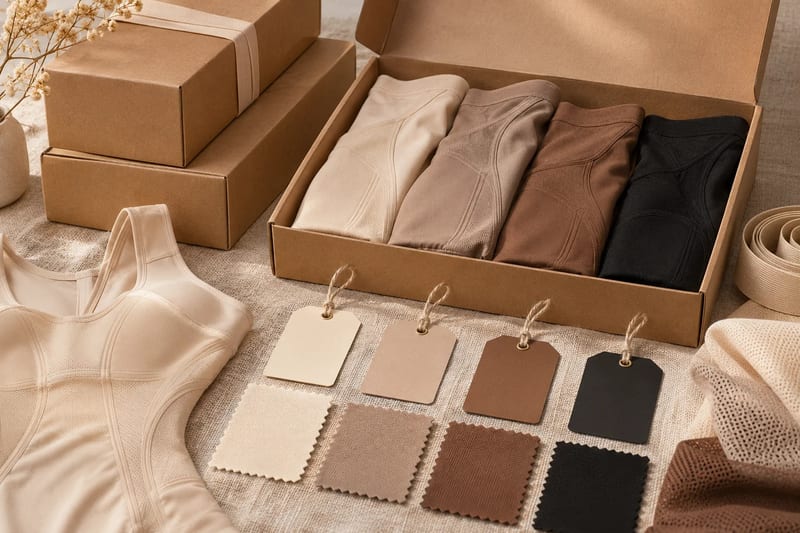
Create a component list before sending artwork. Identify the brand label, size identifier, care information, hangtag and packaging elements actually needed for the first order. Separate required information from optional visual ideas. This prevents every early design concept from entering the quotation as a custom-production requirement.
Use S-Shaper’s customization options to discuss suitable methods, then request the preparation and proof scope for the selected garment. Confirm dimensions, placement, color reference and material compatibility. A digital mockup can communicate intent, but it may not establish the feel or application result on a stretch garment.
Match the size information to the approved product. The label, store variant, purchase order and packing list should identify the same size. If the brand uses a customer-facing conversion guide, validate it against the garment rather than copying a chart from another business.
Assign responsibility for the component text. Ask who supplies and checks each item, and verify the information appropriate to the intended market before release. A factory applying a file does not mean every statement in it has been independently validated. Keep final artwork versions and approvals with the order.
Confirm component quantities and unused-stock arrangements. If the packaging lot exceeds the garment count, record the full purchase, ownership and storage conditions. A small garment test can still carry a larger branding commitment. Approve that commitment deliberately instead of discovering it after the components have been ordered.
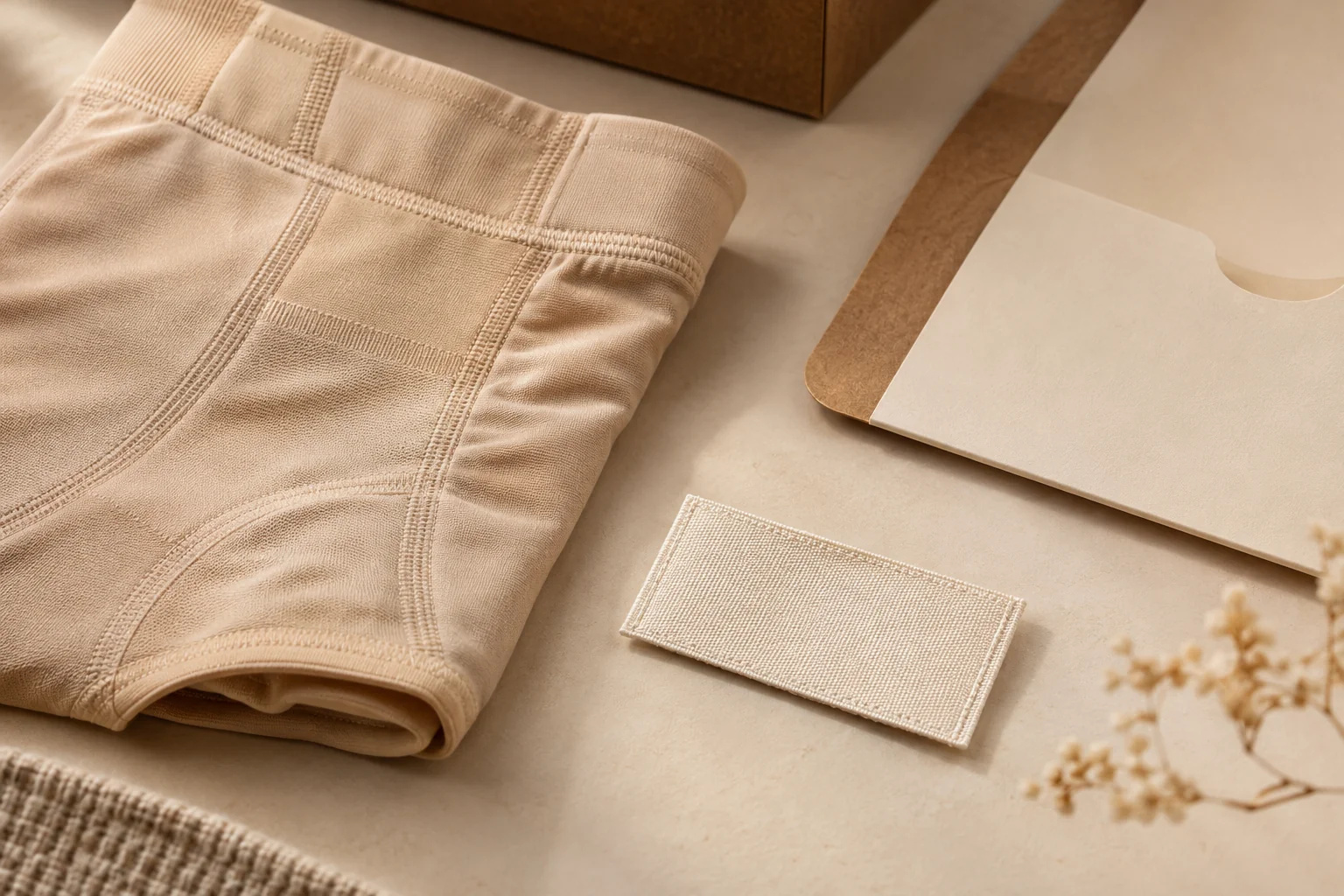
Illustrative sourcing and product-development scene. Click to continue the related buyer guidance.
How Do You Connect Garment Fit and Brand Presentation in One Approval?
Identify what the sample represents: existing platform, revised garment, branding proof or the combined production version. These are different approval purposes. A fit sample with temporary labels does not prove the final branded garment is correct, while a neat packaging proof cannot authorize an unresolved fit change.
Use relevant wearing tasks for the platform. For shorts, review rise, thigh opening and behavior while sitting and walking. For bodysuits, include torso proportions, straps, coverage and closure access. Record the sample size, material and the tester’s relevant measurements so comments can be interpreted.
Review the intended care routine and compare the sample afterward. Agree the methods and acceptance criteria appropriate to the construction rather than inventing universal tolerances. If a branding method affects the fabric or comfort, include that part in the combined review.
Discuss S-Shaper’s quality-assurance process and translate the relevant checks into the order’s acceptance record. Confirm which sizes need physical verification and what documents support the rest of the range. One mid-size fitting cannot establish every body proportion.
Finish with an identified approval or a numbered revision list. Keep superseded versions out of the live production instructions. The manufacturer should be able to identify the approved garment and components without reconstructing decisions from a long chat history. That clarity is valuable even when the initial order is modest.
For example, a fit revision that changes the waistband or torso proportion may also change where a label can sit comfortably and whether existing product photographs remain accurate. Treat those effects as linked tasks. Ask the team to identify which component proofs and customer-facing records need reconfirmation after the garment changes. This is more reliable than approving the product and presentation in separate conversations that never reconnect. Retain one final review showing the physical garment, correct size identification and intended package together so the production and receiving teams can recognize the complete approved offer.
What Do Four-Channel Prices Tell You About a Private-Label Package?
Separate the garment acquisition decision from the branded package and the consumer offer. This snapshot contrasts consumer offers with small-order and higher-volume B2B platforms; TikTok includes basic and structured styles, requiring an item-level comparison. A simple stock piece cannot price a developed faja. The relevant private-label amount is the accepted scope, including separately purchased components.
| Channel / buying model | Observed USD per garment | Product and order basis |
|---|---|---|
| Amazon US retail bodies | $12.38–$35.14 | Seamless/lighter bodies $12.38–$19.99; Structured bodies $35.14–$35.14. |
| Value/mid-tier brand DTC bodies | $29.99–$49.00 | Shapermint/Shapellx sale prices; no multi-pack or order code |
| TikTok Shop US bodies | $21.99–$54.99 | Seamless/lighter bodies $21.99–$46.99; Structured bodies $39.99–$54.99. |
| B2B small-order platform bodies | $3.18–$10.00 | Tianchen, Junmao and S-Shaper; listed minimums 5/2/10; not deep-custom eligibility |
| B2B higher-volume platform bodies | $2.50–$12.85 | Listed minimums 100–600; different garments, not a same-SKU volume discount |
B2B finished-garment bands are generally below consumer tickets, but labels, artwork, packaging, development and delivery may be additional. Amazon and TikTok Shop can show promotion-led prices; B2C brand sites may deliver another product, content and service proposition. The retail-to-B2B difference therefore cannot be assigned entirely to branding or assumed to survive as profit once your logo is applied.
Ask for one quote connecting the approved garment, matrix and components. Confirm unused packaging ownership and the proofs required before procurement. Use the consumer observations to test positioning and customer value separately. A coherent brand package matters, but its commercial value must be demonstrated rather than calculated from two unrelated product tickets.
US-facing USD per single garment, reviewed November 10, 2026. Amazon uses dated May–October 2026 third-party PriceHistory snapshots, not live November checkout. These selected-seller observations are not industry averages or matched-quality comparisons. Variants and promotions change; shipping and tax are not normalized. B2B bands describe advertised garments, not landed costs or a final custom-development quote. Sources: dated PriceHistory Amazon records, official brand/TikTok Shop pages and Made-in-China supplier listings.
Which Shapewear Manufacturers Should You Compare for an Own-Label Collection?
Compare the manufacturing route behind each country option. An own-label project needs permission, technical records and component coordination; a finished wholesale assortment may meet another business model but is not automatically the same service.
China Shapewear Manufacturer: Link Platform and Brand Approvals
China shapewear manufacturers offering development and production can help connect the first platform with its branding requirements, provided the product and component conditions are defined together.
S-Shaper
S-Shaper describes design, QA and export specialists plus material and function recommendations informed by international-brand work. That makes it relevant to a founder needing help distinguishing an existing style from an ODM change. Its item-specific testing options and current product-specific proposals give starting references, not universal full-custom minimums. Ask the OEM/ODM team to identify the garment version, sample route and component approvals. Confirm stock availability and dispatch dependencies before planning the launch.
France Shapewear Manufacturer: Begin with Occasion Suitability
France shapewear manufacturer and development proposals can be compared through the outfit problem they address, separating an existing invisible-lingerie solution from a newly adapted brand product.
Gilsa Paris
Gilsa separates professional resale from own-label adaptation, development and packaging, with a focus on bridal and difficult-neckline applications. That design context can help a founder avoid developing features an appropriate platform already supplies. The trade-off is product-dependent minimums and unquoted development or component work. Confirm the specific commercial route and replenishment arrangement. A French service relationship does not establish that every garment is fabricated in France.
Turkey Shapewear Manufacturer: Examine Seamless Brand Execution
For Turkey shapewear manufacturers with integrated seamless production, evaluate how garment development, color and branded finishing are coordinated before assuming a logo change is the only preparation needed.
SML Seamless
SML describes private-label shapewear and yarn-to-packed facilities. A compatible seamless platform can offer a connected route for discussing knitting, dyeing and final supply. Confirm the material, grading, finish and branding records for your particular garment; integration does not establish its MOQ, cost advantage or quality. It suits founders whose construction fits the capability, with current production and dispatch conditions quoted rather than inferred from the country.
Canada Shapewear Manufacturer: Clarify the Technical Handoff
A Canada-based shapewear manufacturer comparison should identify which local design and grading work supports the brand product and how approved changes reach an overseas production team.
Hertex Lingerie
Hertex identifies Montreal design, pattern, grading and QC functions with manufacturing in China. That hybrid route can be useful when interpreting fit requirements is the founder’s main gap. Ask who maintains the final specification and approves branded components, then quote the coordination scope separately where appropriate. Startup suitability must be confirmed; a Canadian technical contact does not imply Canadian-made stock or immediate local replacement supply.
Choose the route that can maintain one approved garment-and-brand record through supply, with the work and commitments your first collection actually needs.
What Should the Final Packaging and Dispatch Handoff Include?
Make packaging an operational instruction as well as a visual approval. Record the garment identifier, size, color, component version and packing arrangement. Your receiving partner should be able to reconcile the shipment with the purchase order rather than identify variants by guesswork after cartons arrive.
Ask for a packing list with quantities by variant. Check that size labels, tags, store records and carton information agree. If a component changes after approval, record the change and its effect before authorizing application. A correct logo on the wrong size identifier still creates a customer problem.
Review the S-Shaper supply-chain and logistics scope and confirm the actual destination and delivery responsibilities. Factory completion, dispatch and warehouse readiness are different milestones. Ask which documents and carton information will be provided and what your receiving partner must prepare.
Confirm how findings block or release shipment. If inspection identifies a labeling or garment issue, establish the correction and evidence needed before dispatch. Keep the accepted reference available for comparison. A startup should not approve a shipment only because the launch campaign is scheduled.
After receiving, retain the final records for reorders. Compare customer questions with the product and presentation delivered. If the next order changes the platform or measurements, update the packaging and customer guidance as part of the same change. Private label becomes more dependable when the brand can repeat a clear product experience, not simply reorder a familiar logo.
How Can S-Shaper Support Product Selection Through Packaging?
S-Shaper presents a catalogue of shaping garments alongside OEM/ODM, customization, quality and supply-support services. For a startup, the useful discussion connects those services to one garment and a defined brand presentation. The public pages provide starting context; the actual deliverables and conditions belong in your project proposal.
Share the wearer problem, reference, essential changes, target market and proposed size-color matrix. Ask the team to distinguish existing-platform supply from development, identify the branding components and explain which approvals authorize each stage. Use the order FAQ for preliminary questions, then confirm the conditions for the selected item.
To begin, request a private-label scope from S-Shaper. Compare the proposal with your fit evidence and receiving needs. A useful partner helps make the garment, brand components and delivery handoff reviewable, while the founder remains responsible for the final product promise and launch decision.
FAQ: Private Label Shapewear Manufacturing from Product Selection to Packaging
What can I customize when ordering private-label shapewear?
Depending on the agreed platform, options may include brand components and selected material, color, size or style changes. Ask which are available for your item, quantity and approval route. A general customization list is not an all-inclusive quotation for every product.
Does private label require a new pattern?
Not necessarily. An existing suitable platform may accept scoped brand presentation changes. A change to fit or construction can require development, additional samples and a revised specification. Ask what physical work the proposed change introduces rather than judging it only by its appearance.
Does my logo make the garment exclusive?
No automatic design exclusivity follows from branding. Clarify the underlying platform, artwork rights and any separately agreed restrictions. Keep the actual arrangement with the order rather than inferring it from the term private label.
Should I approve packaging before the fit sample?
You can prepare concepts in parallel, but final product-dependent details should match the approved garment and size information. Avoid committing components that would become obsolete if fit or identification changes. Define which proof authorizes component production and which approval releases the garment.
What should I send in the first private-label inquiry?
Send the intended wearer and market, product reference, essential changes, quantity matrix and branding needs. Identify the support you lack. Ask for a sample route, component conditions, quote inclusions and a clear approval process before committing to production.