 EN
Quick Answer
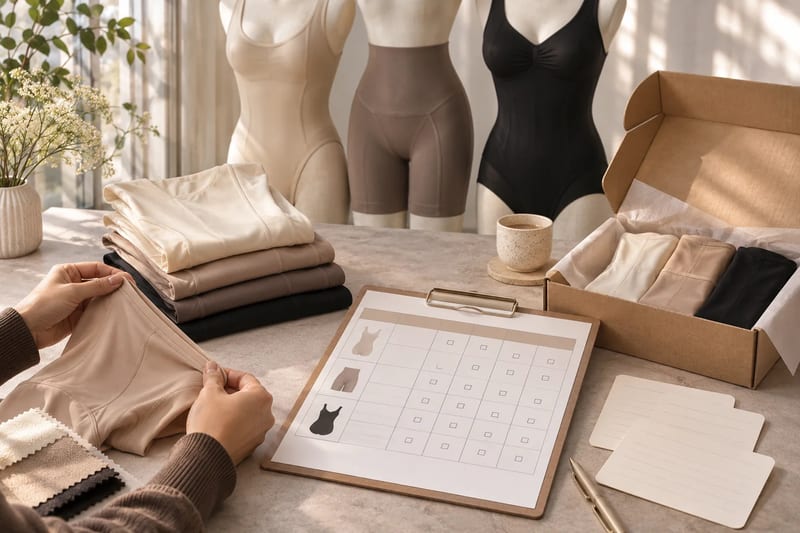
A shapewear pilot order checklist should define the product version, customer questions, size-color allocation, acceptance checks, receiving process and review date before stock is ordered. The pilot should answer a specific decision: whether to repeat the platform, revise it, change the allocation or stop. A small order without a learning plan is simply a smaller inventory commitment.
Agree the specification and commercial scope with the supplier, then collect fit, quality and buying evidence separately. Record the number and context of observations without presenting a small group as a representative market survey. Scale only after reviewing what the pilot actually demonstrates and which uncertainties remain.
What Should a Shapewear Pilot Order Be Designed to Learn?
Start with the next decision rather than the number of units. A founder may need to test whether the chosen platform solves a waistband problem, whether customers understand the size guide or whether the intended channel can sell the offer. Those questions require different evidence. Write them separately so a positive result in one area cannot conceal a failure in another.
Define the target use case and customer group. A garment intended for long seated workdays should be evaluated in that setting. A product intended for a particular outfit needs relevant outerwear trials. Recruit people whose measurements and behavior relate to the range you plan to supply, and state where important coverage is still missing.
Set a decision rule in words before attaching numerical targets. For instance, a repeated functional failure may require revision even when some participants like the appearance. A confusing size guide may need improvement even if the garment itself fits the testers. Avoid a single overall satisfaction score that hides the issue most likely to undermine the product.
Document the limits of the pilot. A small founder-recruited group can identify concrete problems and useful language, but it cannot establish a national preference share. A limited sales test can reveal response to one offer, audience and period, while leaving repeat demand unresolved. The value comes from a well-defined next action.
Give every question an owner and a review date. Identify who records fit comments, who checks received quantities and who summarizes commercial results. A pilot ends with a buying decision and updated product record, not merely with a collection of messages that nobody has compared.
| Pilot question | Evidence to collect | Decision it supports |
|---|---|---|
| Does the garment address the use case? | Structured wear observations | Keep or revise the platform |
| Can buyers choose a size? | Questions and size-selection outcomes | Improve guidance or grading review |
| Does supply match approval? | Receiving and inspection records | Correct discrepancy or accept supply |
| Does the offer attract buyers? | Defined channel and order data | Revise offer or plan a controlled reorder |
Samples vs Pilot Inventory: Which Product Version Should You Test?
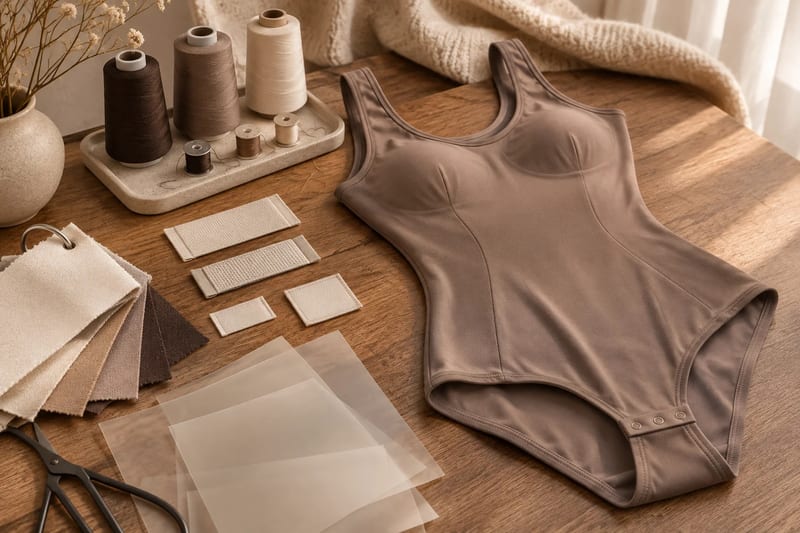
Use a version you can identify and realistically reorder. Start from S-SHAPER’s product catalogue or a development proposal, then confirm the material, construction and size chart. A collection of assorted samples may help early exploration, but it does not form a single interpretable production pilot unless the versions are recorded separately.
Complete essential fit revisions before ordering the pilot. If the known problem is central to the product promise, producing stock to see whether customers tolerate it is a weak substitute for development. Ask the OEM/ODM team which sample stage will represent the intended manufacturing specification.
Preserve the approved reference and specification together. Include measurement methods, material identifiers, colors, branded components and any permitted variation. If different sizes are represented by separate samples, record the relationship between them. The factory and founder should be working from the same current version.
Keep changes during the pilot visible. If a second material or revised waistband is introduced, assign a new version and identify affected units. Combining the feedback from changed products into one result can make both the supplier and customer evidence difficult to interpret.
Plan what the customer sees. Photographs, size guidance, care information and descriptions should represent the pilot product accurately. If something is provisional, explain it appropriately rather than presenting a future feature as part of available stock. A transparent pilot tests the actual offer your business is prepared to deliver.
| Comparison | Exploratory samples | Pilot inventory |
|---|---|---|
| Primary purpose | Compare platforms or a defined revision | Evaluate a repeatable product and supply scope |
| Quantity basis | Specific development question | Accepted allocation and learning plan |
| Approval record | Identify what each sample represents | Link the approved version, quote and receiving checks |
How Do You Select Sizes and Colors Without Turning the Pilot into a Broad Launch?
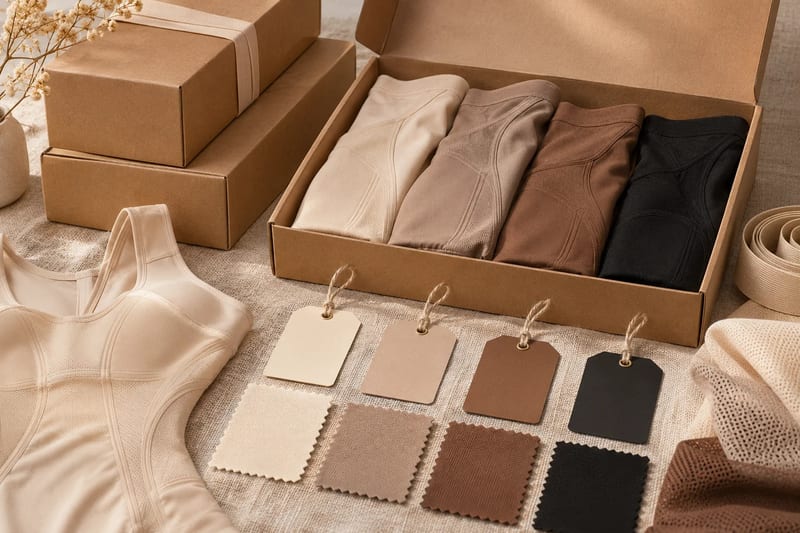
Begin with the measurements and use cases needed for a credible test. Select the necessary sizes, then ask which optional colors or extra styles would add useful evidence. Avoid reducing essential fit coverage merely to include more visual variety. The allocation should reflect what you want to learn and the supplier conditions that can support it.
One style in two colors and five sizes produces 10 SKUs. With a hypothetical 100 units, an equal split averages 10 units per SKU. Three styles with the same color and size structure produce 30 SKUs, averaging about 3.3 units each at the same total. These figures are planning arithmetic, not recommended quantities or demand ratios.
Ask the supplier to confirm the exact matrix, including any pack requirements. A headline low MOQ does not prove every small cell is available. If a proposed matrix is infeasible, request alternatives and evaluate their effect on the pilot question. A different mix may be acceptable, but the limitation should be acknowledged.
Set aside the units needed for product checks before treating the whole order as sellable stock. Identify which garments are used for fit review, care observations or reference retention. This prevents the sales plan from assuming that every ordered piece is available for customer dispatch.
Keep the allocation rationale. When reviewing results, compare the actual requests and fit findings with the assumptions that created the order. A pilot should improve the next size and color decision, not freeze the first guess into a permanent reorder template.
| Illustrative range | SKU count | 100-unit average | Limitation |
|---|---|---|---|
| 1 style × 2 colors × 5 sizes | 10 | 10 per SKU | Not an allocation recommendation |
| 3 styles × 2 colors × 5 sizes | 30 | About 3.3 per SKU | Actual quantities must be whole units |
| Commercial acceptance | Supplier-specific | Written matrix needed | Arithmetic does not establish MOQ eligibility |
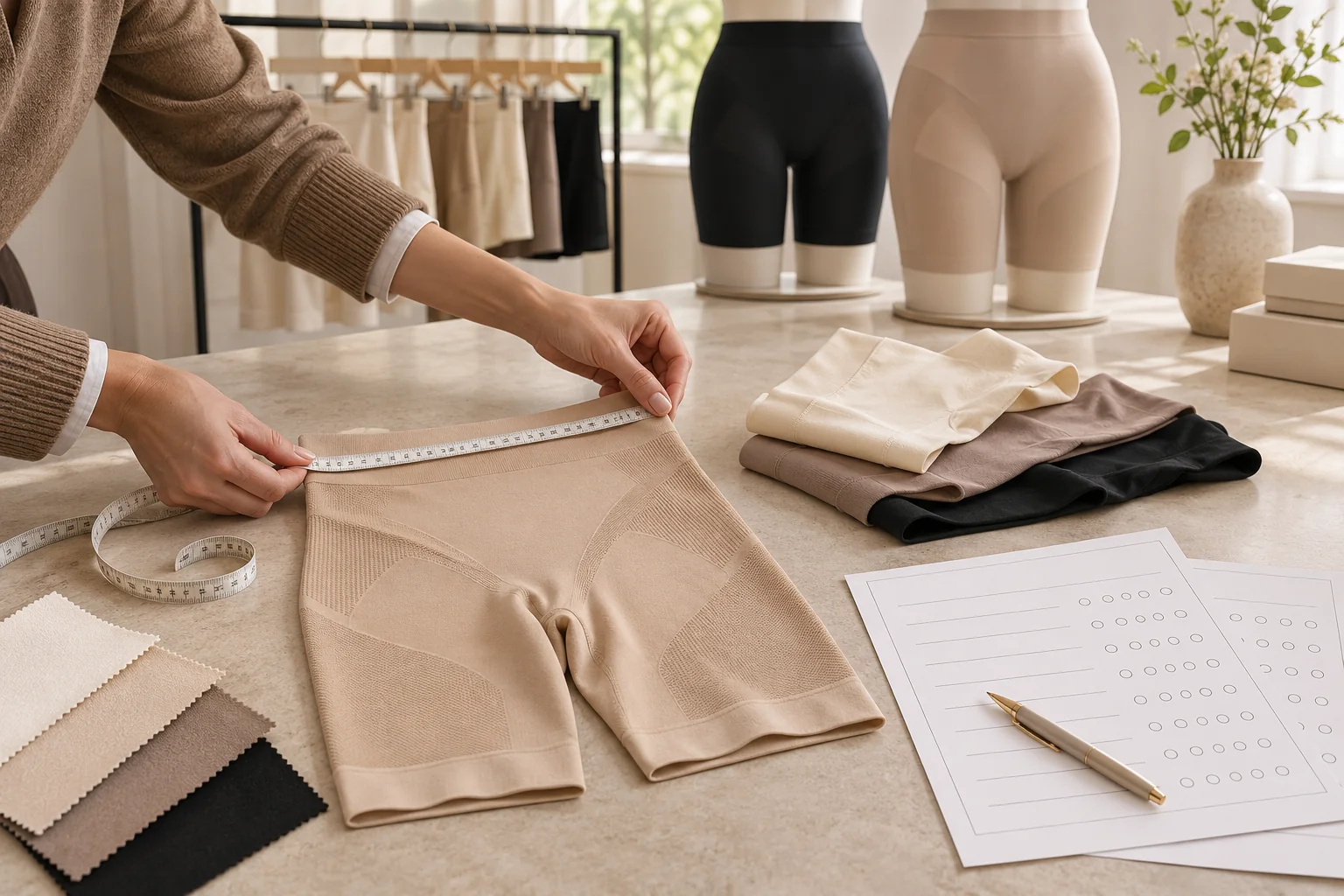
Illustrative sourcing and product-development scene. Click to continue the related buyer guidance.
What Quality and Receiving Checks Belong in a Pilot Order Checklist?
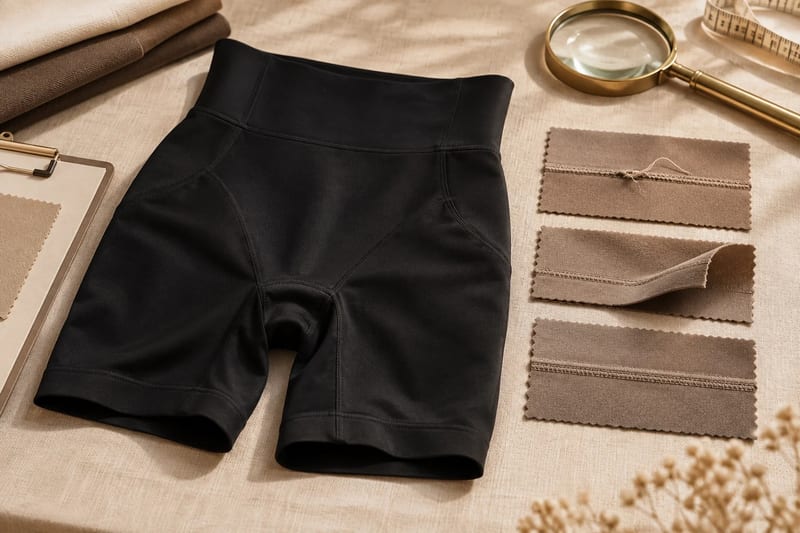
A pilot should test the supply process as well as the product idea. Agree how the received goods will be compared with the approved specification. Include relevant measurements, construction, appearance, labels, variant identification and quantities. Ask which records the supplier will provide and how a discrepancy should be reported.
Use S-SHAPER’s quality-assurance overview to frame questions about the process, then define order-specific criteria. A broad quality claim is not the acceptance record for your garment. If you use independent inspection, establish its timing, access and scope before dispatch and leave a process for addressing findings.
Prepare the receiving partner with the SKU list and expected packing information. Ask for quantities by variant rather than only carton totals. Check that the purchase order, garment label and packing list use consistent identifiers. A mixed-size pilot loses value if the stock cannot be reliably assigned to the correct variant.
Distinguish a production discrepancy from a design issue. If garments differ from the approved reference, compare the evidence with the agreed acceptance criteria. If they match the reference but the wearer need is not met, development may be required. These situations need different corrective actions.
Keep issue records specific: affected version, size, quantity, photographs, measurements and the observed problem. A concise evidence record is more actionable than describing the whole shipment as poor quality. The pilot can establish a useful communication pattern for resolving issues before future orders become larger.
How Should a Pilot Budget Compare Amazon, B2C, TikTok Shop and B2B Prices?
A pilot needs a sourcing budget and a consumer-offer test, which are different decisions. Use the four-channel snapshot to understand the type of ticket customers encounter and the procurement basis a supplier is proposing. Record the garment family before interpreting the gap: a basic seamless piece and a structured faja are not interchangeable trial products.
| Channel / buying model | Observed USD per garment | Product and order basis |
|---|---|---|
| Amazon US retail bodies | $12.38–$35.14 | Seamless/lighter bodies $12.38–$19.99; Structured bodies $35.14–$35.14. |
| Value/mid-tier brand DTC bodies | $29.99–$49.00 | Shapermint/Shapellx sale prices; no multi-pack or order code |
| TikTok Shop US bodies | $21.99–$54.99 | Seamless/lighter bodies $21.99–$46.99; Structured bodies $39.99–$54.99. |
| B2B small-order platform bodies | $3.18–$10.00 | Tianchen, Junmao and S-Shaper; listed minimums 5/2/10; not deep-custom eligibility |
| B2B higher-volume platform bodies | $2.50–$12.85 | Listed minimums 100–600; different garments, not a same-SKU volume discount |
B2B finished-garment listings usually show lower acquisition prices because the buyer orders quantities and carries stock, shipping, selling and service responsibilities. That is not the price of every new development. Amazon, B2C brand sites and TikTok Shop can include differing promotions, presentation and customer services; the difference cannot all be attributed to branding or assumed to be available profit.
For this pilot, request a quote for the approved version and matrix, separate development and components, and record the delivery endpoint. Then test a clearly described offer with the intended audience. A low acquisition figure does not validate sizing or demand, while an attractive retail ticket does not prove the startup can sustain it.
US-facing USD per single garment, reviewed November 10, 2026. Amazon uses dated May–October 2026 third-party PriceHistory snapshots, not live November checkout. These selected-seller observations are not industry averages or matched-quality comparisons. Variants and promotions change; shipping and tax are not normalized. B2B bands describe advertised garments, not landed costs or a final custom-development quote. Sources: dated PriceHistory Amazon records, official brand/TikTok Shop pages and Made-in-China supplier listings.
Which Shapewear Manufacturers Should You Consider for Your Pilot Order?
Compare shapewear manufacturers in China, Canada, the USA and Portugal for a controlled pilot order. The recommendations below connect country-level capabilities with specific suppliers and the work your brand needs.
China Shapewear Manufacturer: Connect the pilot question with production-ready evidence
China shapewear manufacturers can support a more interpretable pilot when the sample identity, accepted allocation and inspection criteria are linked to the same proposed production version.
Recommended China Supplier: S-Shaper
S-SHAPER’s material and function recommendations can help a founder choose a platform that actually represents the intended wearing benefit. Its design, QA and export specialists provide different roles to question when defining sample identity, production acceptance and the receiving handoff for an international launch.
Item-specific testing options can make a focused first commitment worth investigating, while the current item-specific proposals help anchor the goods budget. Confirm the exact matrix and branded scope before using either reference. This route suits a founder who needs expert communication from concept to supply, provided the pilot still collects its own customer and commercial evidence. See S-SHAPER OEM/ODM and global-brand support, S-SHAPER item-testing MOQ and stock/bulk conditions.
Canada Shapewear Manufacturer: Make the fit-feedback handoff explicit
Where local grading and overseas manufacturing are combined, a Canada-based shapewear manufacturer comparison should identify who consolidates pilot fit feedback and approves the revised technical record.
Recommended Canada Development Partner: Hertex
Hertex’s design, pattern, grading and QC work in Montreal, paired with China production, offers a technical coordination model for a fit-led pilot. The useful advantage is a defined place to consolidate measurement observations and translate them into product instructions rather than leaving the founder to send disconnected comments to several parties.
Confirm who owns the revision record and which production version enters the pilot. Technical services and manufacturing may create separate commitments, and startup acceptance is not established by the public description. This arrangement is relevant when fit interpretation is the main gap; it does not automatically provide Canadian-made goods or locally held replacement stock. See Hertex Montreal development with China production.
USA Shapewear Manufacturer: Test the established assortment and service experience
A USA shapewear manufacturer shortlist that includes wholesale distributors can support an assortment pilot, provided the founder distinguishes product resale evidence from validation of a future custom garment.
Recommended USA Supply Partner: Vedette
Vedette’s wholesale catalogue, size selection and B2B support can suit a pilot concerned with curating and selling an established range. Confirmed availability and a useful replenishment route may let the founder investigate customer selection and service without developing every garment feature first.
The limit is the nature of the evidence: selling wholesale goods does not validate an untested own-label replacement. Confirm where the goods are held, the dispatch conditions and resale terms. US wholesale access does not establish US manufacture or relabeling rights. Choose this model when the pilot’s real question concerns assortment and offer, rather than a unique construction. See Vedette US-facing wholesale program.
Portugal Shapewear Manufacturer: Align technical validation with the pilot purpose
Research-led Portugal shapewear manufacturers become relevant when a pilot must resolve material or construction uncertainty, with sample development and test work scoped before the commercial trial.
Recommended Portugal Supplier: Impetus
Impetus describes research capability and physical or chemical testing across textile inputs and finished parts. A founder whose pilot depends on a new material or construction can investigate how those functions would support the sample and the evidence needed before limited supply.
Quote the development, material and relevant test work before treating a small finished count as the whole pilot budget. No verified startup minimum is available here, and process capability is not a product-specific test result. This route is most useful when the technical question genuinely requires investigation; a suitable existing platform may be a more direct commercial test when it does not. See Impetus research and development, Impetus quality control.
Match the partner to the question the pilot must answer, then keep product, supply and customer findings separate in the review.
What Should the Pilot Review Decide Before You Place a Reorder?
Create a review pack with the product version, original questions, observed results, receiving issues and commercial response. Report the counts and recruitment context where relevant, but avoid presenting a small group’s preferences as a market benchmark. Include negative or contradictory evidence that might change the next order.
Compare fit, operational and buying findings separately. Good fit with weak offer response may call for clearer positioning or another customer test. Strong interest with repeated functional failure calls for product work. Correct garments delivered in the wrong size quantities call for a supply-process correction. One overall pass-or-fail score can conceal these distinctions.
Choose a specific next action: reorder the same platform with an improved allocation, revise a defined feature, obtain additional size evidence or pause the product. Assign owners and the evidence required to close each remaining issue. The review should produce an updated brief and purchase decision.
Discuss changes through S-SHAPER’s customization options and obtain a revised quote when the specification changes. Use the logistics discussion to prepare the next receiving handoff. A successful pilot makes the next order more informed; it does not eliminate the need to confirm current scope and supply conditions.
How Can S-SHAPER Support a Learning-Focused Pilot Order?
S-SHAPER presents a catalogue of shaping garments, OEM/ODM development, customization and manufacturing-related support. Those services can help a founder connect a testable wearer requirement to a feasible sample and order scope. The useful starting point is a concrete brief rather than a request for an undefined trial collection.
Send the selected reference, primary market, intended measurements, pilot questions, size-color matrix and branding needs. Ask the team to confirm the product version, applicable minimums, quotation inclusions and acceptance documents. Request the information needed to make the pilot interpretable and repeatable.
Then contact S-SHAPER with your pilot-order checklist. Compare the proposed route with what your test must establish. A supplier can clarify product feasibility and production responsibilities, while your customer trials and commercial review determine whether the brand should scale the garment.
FAQ: How to Plan a Shapewear Pilot Order That Produces Useful Feedback
What belongs in a shapewear pilot order checklist?
Include the customer question, product version, sample approval, allocation, quote, acceptance criteria, receiving plan and review date. Give each item an owner and a record. The checklist should explain what decision the pilot will support and what evidence remains outside its scope.
Is a pilot the same as ordering a few samples?
Samples can explore products or validate a revision. A pilot is a defined limited order with an operational and learning plan. It should represent a supply route and product version you could evaluate for repeat production, with appropriate customer and receiving evidence.
How many units should a pilot contain?
The sources do not establish one universal size. Balance the test’s needs, credible fit coverage, supplier conditions and cash commitment. The 100-unit examples here illustrate arithmetic only. Confirm the actual allocation and reserve any units required for reference or review.
What if the garments match the sample but customers dislike them?
That may indicate a product or positioning issue rather than a production discrepancy. Compare the feedback with the intended use case and approved requirement. Decide whether to revise the platform, improve guidance or test another proposition before reordering.
When is a pilot ready to scale?
After the review identifies a supported next-order decision and addresses important fit or operational issues. Confirm the current specification, quote and allocation. A lower bulk unit price alone does not establish demand for a larger commitment.