 EN
Quick Answer
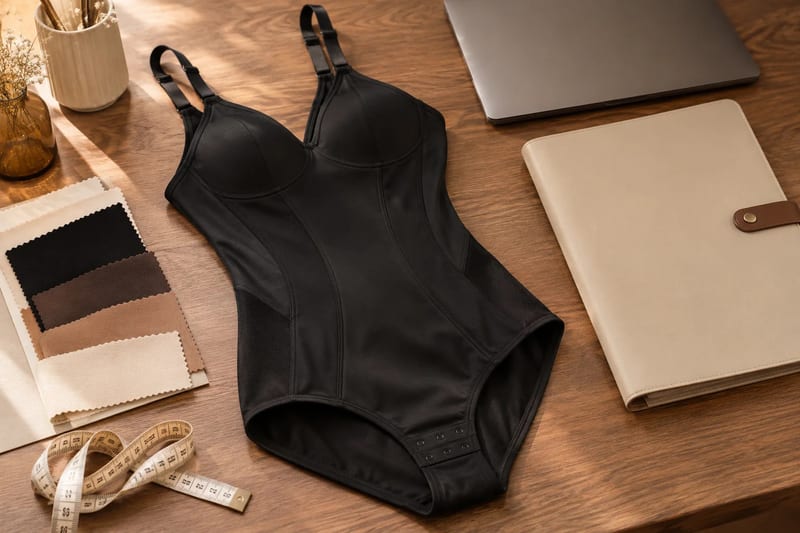
A complete shapewear RFQ identifies the garment and approved specification, size and color matrix, quantities, required development, branding, quality checks and delivery responsibilities. Ask the supplier to return the price, currency, validity, inclusions, exclusions, payment milestones and any conditions still preventing a firm quotation. An RFQ is a request for comparable proposals, not automatic authorization to manufacture.
Use one current version across candidates and require alternatives to be shown separately. Published product tiers can provide a useful reference, but your actual proposal must identify whether the selected materials, variants and components qualify. The most useful first-order quote makes both the commitment and the remaining decisions visible.
What Product Information Should Your Shapewear RFQ Define?
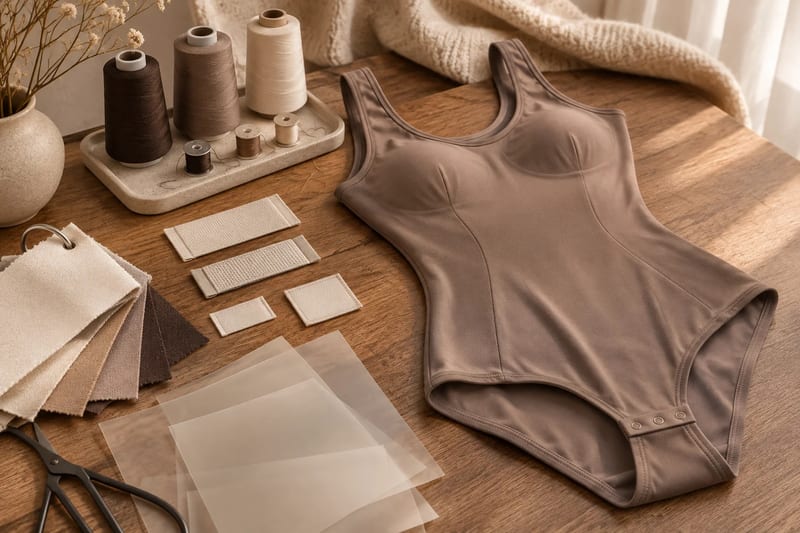
Begin with the garment’s purpose and an identifiable platform. The supplier needs to understand what the customer should experience, not only a silhouette. Choose a reference through S-Shaper’s product catalogue or attach your own current specification, then explain which features are essential and which are optional. An inspiration image should not silently become an instruction to copy every detail.
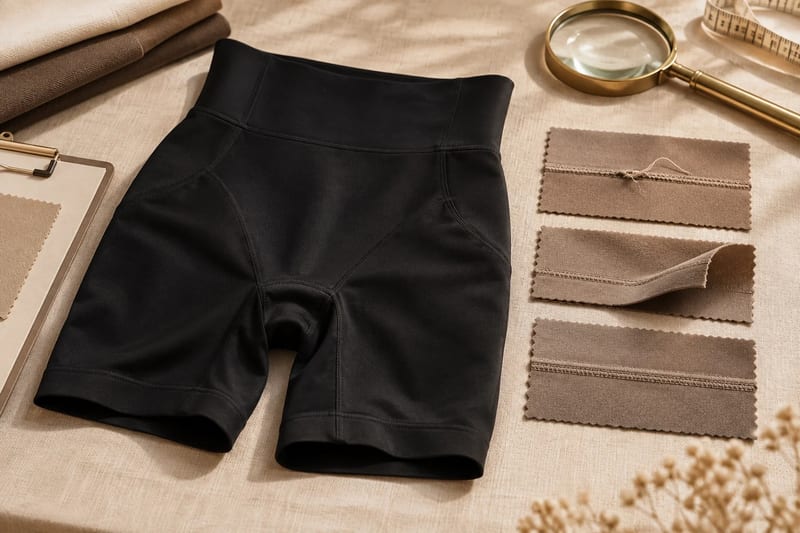
Identify material references, construction requirements and the status of measurements. If you do not have a complete technical pack, state that you need development support. Review the OEM/ODM service scope and ask which documents the proposed route will provide. Incorrect precision borrowed from another garment creates a worse RFQ than an honest unresolved field with a named next action.
Attach a versioned change list. Separate the supplier’s existing platform from your requested waistband, coverage, closure or fit changes. For each change, explain the wearer reason and whether it is required for the first order. This helps the supplier identify which decisions affect sampling, minimums or the quoted product.
Finally, state what sample and approvals already exist. If a fabric or measurement has not been approved, ask the supplier to identify its pricing assumption and the event that will confirm the amount. The RFQ should let every candidate understand the same project stage rather than quote a different interpretation of production-ready.
| RFQ product field | What to provide | If unresolved |
|---|---|---|
| Garment/platform | Identified item or current design | Request relevant options |
| Materials | Reference and approval status | Request scoped recommendations |
| Measurements | Chart, method and version | Identify technical support needed |
| Changes | Numbered essential and optional requests | Ask effect on sample and quote |
| Approval state | Sample IDs and current records | Define prerequisite for firm pricing |
How Should the RFQ Show Sizes, Colors and Order Quantities?
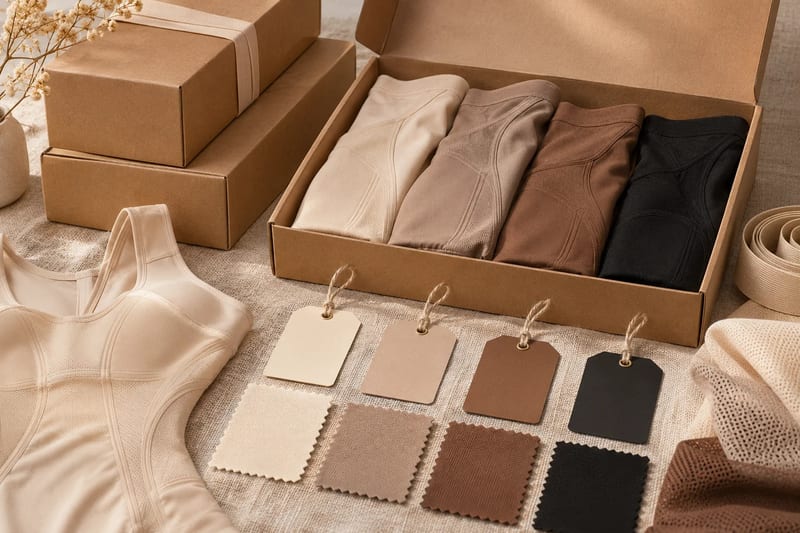
Give the complete proposed matrix, not only a total. One style in two colors and five sizes creates 10 SKUs. At 100 pieces, an equal allocation would be 10 per SKU, but that is arithmetic rather than a recommended ratio. Use your actual customer and fit evidence to propose the split, and disclose where the allocation remains preliminary.
Ask the supplier to confirm the minimum basis for that matrix. A rule per style, color, size or branded component can change the commitment. Request a response against your proposed combinations so a generic low minimum does not conceal a larger total once variants are applied. Keep any suggested alternative in a separate column.
If you want prices at several quantities, hold the essential specification constant. A 50-piece standard garment and a 500-piece revised fabric order do not isolate the quantity effect. Ask the supplier to identify which conditions change between options, including material sourcing, color work and component preparation.
Avoid using the RFQ to request every possible style and tier without a decision purpose. A focused first-order comparison should show the quantity you can plausibly test and one or two relevant alternatives. The supplier can then explain the trade-offs, while your brand retains responsibility for whether the additional inventory is justified.
Headline Price vs Complete RFQ Response: What Must Be Comparable?
A headline price identifies a number attached to a product or service claim. A complete RFQ response identifies the product, quantity and responsibilities behind that number. Before ranking suppliers, check whether each has priced the same material, construction, size matrix, branded components and delivery boundary. A lower amount with missing work is not yet a cheaper complete proposal.
Ask for included and separately quoted items. Development, samples, artwork preparation, component setup and inspection arrangements may be handled differently by different candidates. Do not force those differences into an invented universal fee. Show the scope, obtain the missing provider amounts and compare what remains with the founder.
Keep timing conditions beside price validity. A firm offer may depend on approved files, material availability or a defined order window. Ask which changes require a refreshed quotation. A correct old unit price applied to a revised garment can produce a misleading comparison even when the spreadsheet calculations are accurate.
Treat suggested alternatives as proposals to evaluate, not hidden substitutions. If a supplier recommends a different material to meet the budget, ask what changes in feel, performance, approval work and minimums. Compare the sample before considering the alternative equivalent. An RFQ should make product choices more transparent instead of allowing different requirements to disappear behind one price column.
| Comparison item | Headline alone | Complete response |
|---|---|---|
| Product | Broad garment name | Identified specification and version |
| Quantity | Tier or generic minimum | Acknowledged variant matrix |
| Services | May be unclear | Inclusions and exclusions |
| Timing | Attractive lead-time statement | Start events and dependencies |
| Approval | Not established | Required records before release |
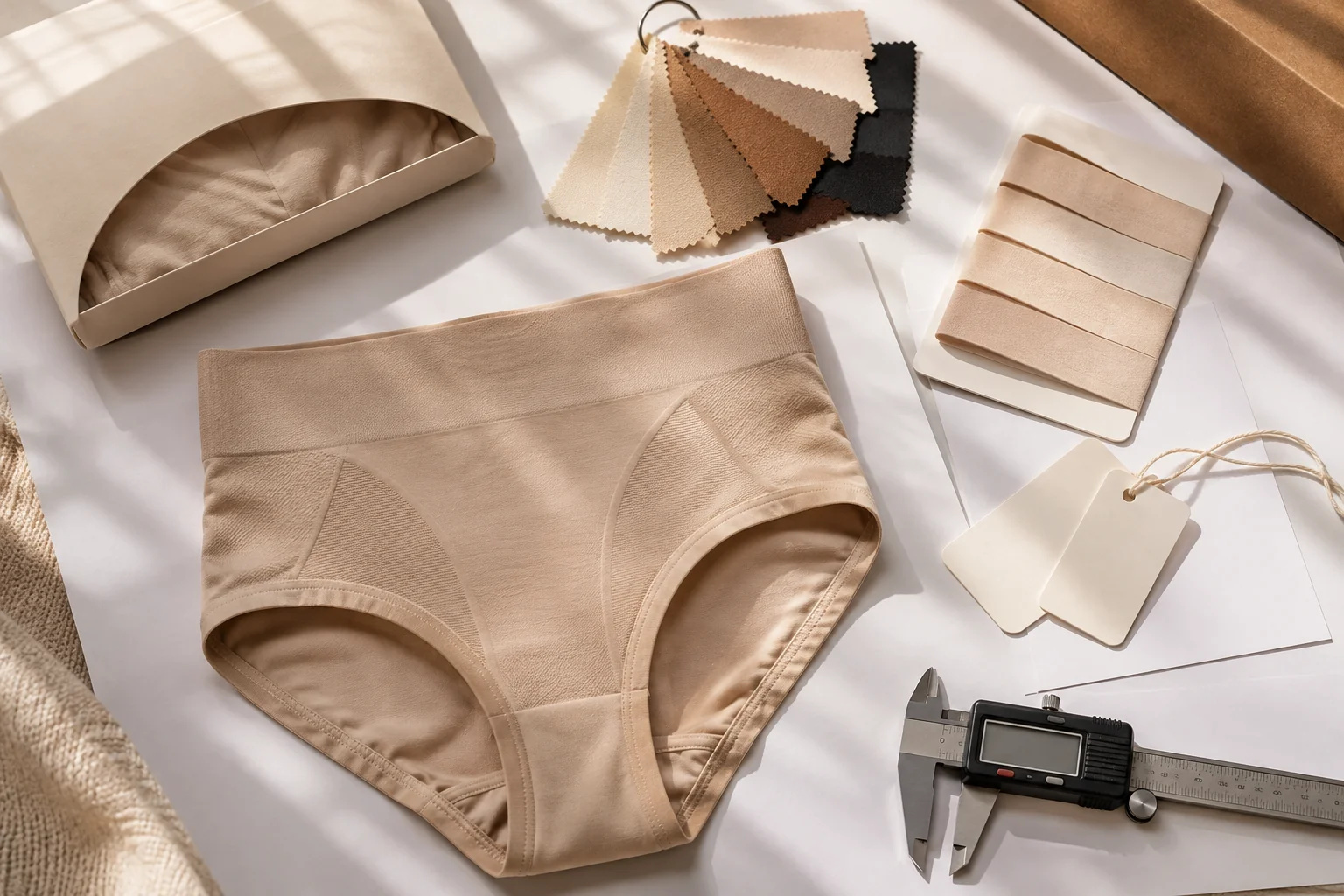
Illustrative sourcing and product-development scene. Click to continue the related buyer guidance.
Which Four-Channel Price References Belong in a Shapewear RFQ?
Use channel observations to explain your product and market context, then ask the manufacturer to quote a defined scope. A consumer ticket is not a target factory invoice, and a bulk listing is not a complete developed-product offer. Separate basic seamless products from structured fajas before naming any comparable reference in the request.
| Channel / buying model | Observed USD per garment | Product and order basis |
|---|---|---|
| Amazon US retail bodies | $12.38–$35.14 | Seamless/lighter bodies $12.38–$19.99; Structured bodies $35.14–$35.14. |
| Brand DTC bodies | $29.99–$148.00 | Seamless/lighter bodies $29.99–$78.00; Structured bodies $69.00–$148.00. |
| TikTok Shop US bodies | $21.99–$54.99 | Seamless/lighter bodies $21.99–$46.99; Structured bodies $39.99–$54.99. |
| B2B advertised OEM bodies | $4.25–$8.30 | Rihope/Shangyou garment offers; listing MOQ 600/100; own-design terms reconfirmed |
| B2B custom shiny-fabric example | $22.00–$23.00 | Hucai FOB garment example, MOQ 200; a different fabrication; development fees unconfirmed |
The sampled B2B finished-garment ranges are generally below consumer channels because procurement and resale assign different responsibilities. Amazon and TikTok Shop can show promotion-led tickets; B2C brand sites may reflect another material, construction or service promise. A founder should not ask a factory to match an unrelated lowest number while quietly retaining a more demanding design and full-package expectation.
An actionable RFQ identifies the chosen platform, quantity matrix, required changes, branding and receiving destination, then requests current inclusions and exclusions. Ask whether an advertised B2B band covers the proposed item and order conditions. Keep development and sample work separately scoped instead of treating the table as a substitute for a quotation.
US-facing USD per single garment, reviewed November 10, 2026. Amazon uses dated May–October 2026 third-party PriceHistory snapshots, not live November checkout. These selected-seller observations are not industry averages or matched-quality comparisons. Variants and promotions change; shipping and tax are not normalized. B2B bands describe advertised garments, not landed costs or a final custom-development quote. Sources: dated PriceHistory Amazon records, official brand/TikTok Shop pages and Made-in-China supplier listings.
What Should a Practical First-Order Shapewear RFQ Template Contain?
Use the fields below as a working request, completing them from the current brief and attaching the relevant files. Label assumptions and ask the supplier to identify missing inputs. This is an editorial template, not a purchase order, manufacturing instruction or commitment to the quantities shown elsewhere in this guide.
Ask for a response organized in the same order. Require any alternative platform or changed quantity to be identified separately, with its own scope and consequences. If the project needs customization support, specify which material, color, logo, label or packaging decisions are part of the request instead of relying on a general private-label label.
Include quality and delivery responsibilities explicitly. The quality-assurance discussion should identify relevant checks and inspection arrangements; the logistics scope should identify the handover and destination needs. Unknown carton dimensions may be a legitimate later input, but responsibility for supplying them should still be assigned.
End by asking what the next payment would authorize and what evidence must be approved first. The RFQ should make it possible to distinguish sampling, component preparation and full production. Preserve the reply and attachments together so the eventual order can refer to the same understood scope.
| Template section | Fields to complete |
|---|---|
| Project | Buyer, target market, wearer problem, brief version |
| Product | Platform, materials, measurements, construction, change list |
| Variants | Style/color/size matrix and total units |
| Development | Sample purpose, documents, revisions and approvals |
| Branding | Artwork, labels, packaging and proof requirements |
| Quality | Acceptance reference, checks, inspection and findings process |
| Delivery | Destination, handover scope, packing information and target window |
| Commercial reply | Currency, tier, inclusions, exclusions, validity, payment milestones |
Which Shapewear Manufacturers Should Receive Your RFQ?
Choose the supplier route before normalizing the RFQ. Factory development, available wholesale supply and occasion-led design require different deliverables. These examples show which responsibilities should enter the request; they do not establish that every supplier in a country offers the same minimum or commercial terms.
China Shapewear Manufacturer: Request a Platform-Specific Factory Proposal
China shapewear manufacturers offering OEM/ODM can connect a quoted platform with design and production inputs; request an acknowledged garment version rather than an undefined custom collection.
Recommended supplier: S-Shaper
S-Shaper’s service offering describes material and style recommendations with design, production, QA and export specialists experienced with several global client regions. For an RFQ, ask the team to identify the proposed platform, essential changes and sample records. Direct coordination is useful when several technical and commercial fields remain connected.
Published quantity tiers and conditional small-order statements provide initial reference points, not complete custom terms. Confirm variant and component minimums, price exclusions and the approvals required before production. This route suits an own-label founder who can supply a clear wearer brief but needs help converting it into a sample and manufacturing record. Keep the factory recommendation tied to your requirement rather than assuming market experience proves the product will sell.
USA Shapewear Manufacturer: Distinguish a Wholesale Order Request
USA shapewear manufacturer comparisons involving available wholesale assortments need stock and resale fields in the RFQ; local commercial access does not establish domestic fabrication or private-label rights.
Recommended supplier: Vedette
Vedette describes catalogue style and size selection, dedicated B2B support and wholesale delivery. If the first launch uses finished goods, request the selected item codes, sizes, stock position and replenishment conditions. This can create a more useful response than sending an open-ended request for a garment the program does not claim to develop.
Confirm where the selected goods are held and the actual B2B dispatch arrangement. The reviewed offering does not prove US manufacture or authorize replacing labels. This route suits a retailer testing a curated assortment with appropriate fitting guidance. Keep it in a finished-supply comparison lane, since a wholesale response cannot be assumed equivalent to a factory proposal containing new patterns, revised measurements and your own branding.
France Shapewear Manufacturer: Define Adaptation and Design Deliverables
France shapewear manufacturer routes with occasion-led lingerie development require an RFQ that separates available resale products, style adaptation and new design work before prices are compared.
Recommended supplier: Gilsa Paris
Gilsa Paris documents professional resale and own-label adaptation, development and packaging for invisible-lingerie needs. A founder targeting a particular outfit can ask which platform or development route addresses the coverage and finish required. Define the sample result and whether product guidance or presentation work is also being requested.
Own-label minimums depend on product type and the reviewed source does not publish the price of your development project. Ask for the actual garment, material and component commitments rather than assuming that a finished assortment includes design services. This route suits an occasion-focused RFQ when the product’s relationship to outer clothing justifies specialist work. A French service contact does not by itself establish where every garment is manufactured.
Send the right request to the right commercial route, then compare acknowledged deliverables and open conditions before ranking the replies.
How Should You Review and Clarify the Supplier’s RFQ Response?
Check the reply against the baseline field by field. Has the supplier identified the selected product, addressed essential changes and acknowledged the matrix? Are development and branded-component charges included, excluded or pending? Highlight missing answers rather than treating a prompt reply as a complete proposal.
Ask focused follow-up questions. If the sample route is unclear, request its purpose and relation to production. If the price basis differs, ask for the reason and the scope that would apply to your quantity. A supplier may reasonably need additional information, but the conversation should move toward an identifiable next decision.
Record a current proposal and withdraw obsolete assumptions from the live comparison. Keep older files for history, but do not let an earlier garment version continue controlling price or approval. If a commercial offer expires or the specification changes, request confirmation before authorizing work.
Finally distinguish quotation acceptance from technical production release. The parties should understand which records are approved and what the payment milestone authorizes. A strong RFQ process ends with a clear scope and next action, not a large folder of incompatible prices that the founder cannot explain.
How Can S-Shaper Help Turn Your RFQ into a Reviewable Proposal?
S-Shaper’s catalogue and OEM/ODM services provide identifiable products and development routes for a first RFQ. Select the garment, describe the customer need and identify required changes. Ask the team to respond with a proposed sample, technical deliverables and item-specific quantity conditions rather than a broad price for an undefined collection.
Review the published FAQ for preliminary order context and confirm the applicable terms directly. Include the destination and current approval state so the proposal can separate production from development and dispatch responsibilities. Keep the same brief version when comparing other candidates.
To begin, send S-Shaper your completed first-order RFQ. The useful response should identify what is quoted, what remains unconfirmed and which evidence is needed for the next approval. That gives a startup a concrete basis for deciding whether to arrange samples or progress toward production.
FAQ: A Shapewear RFQ Template for Your First Production Order
What should a shapewear manufacturer quote request include?
Include the product version, materials, construction, size/color matrix, units, development, branding, inspection and delivery scope. Request currency, validity, inclusions, exclusions and payment milestones. The response should identify any assumptions preventing a firm quote.
Is an RFQ the same as a purchase order?
No. It requests a defined proposal for review. Make clear what later approval or payment would authorize. Do not let an inquiry containing planning quantities become an unintended instruction to manufacture an unresolved garment.
Can I use a public price in the RFQ?
Yes, when the item and tier are identified. Ask whether your matrix and customization qualify and what is additional. A listing is a research reference, while the actual transaction needs current confirmation of the selected scope.
What if a supplier suggests another fabric?
Keep the alternative separate from the baseline and ask what changes in product behavior, sampling, quantity and price. Review a relevant sample before treating it as equivalent. A lower quote for a different garment is a new product decision.
How do I compare replies with missing costs?
Mark unresolved fields and ask the relevant provider to complete them. Do not enter zero for unknown work or assume every service label means the same scope. Compare the proposal once the differences affecting the buying decision are visible.