 EN
Quick Answer
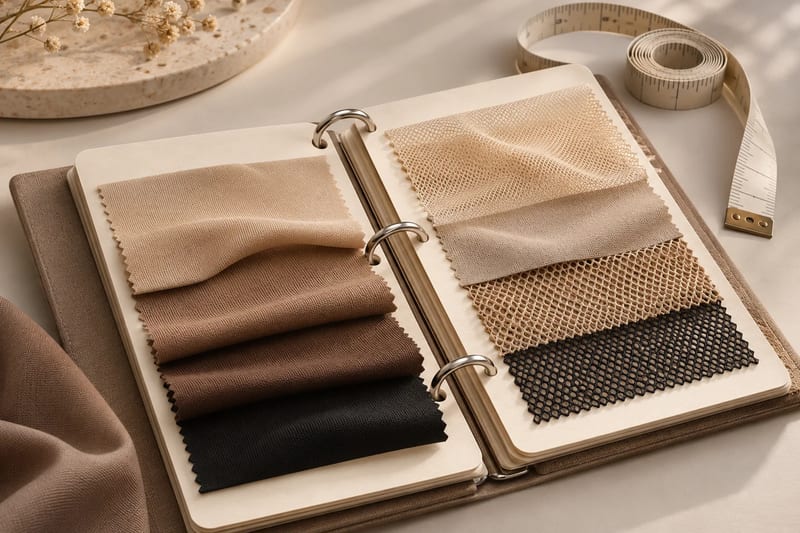
Request a shapewear swatch pack with traceable material codes, composition, construction, nominal GSM, usable width where relevant, available colors, finish, lot information and the conditions for obtaining production quantities. Ask for relevant test reports, their specimen identity and a statement of what is currently available versus proposed development.
Specify enough material for the agreed review rather than assuming a tiny card can support every test. Mark fabric direction and intended skin-facing side where needed. Keep an unaltered reference and record which pieces are used for handling, washing, lab work or garment development.
A swatch pack helps choose candidates; it does not approve the finished product or reserve bulk supply. Your startup should leave this stage with a documented shortlist, clear questions for sampling and confirmed material procurement conditions. Treat it as the beginning of a controlled buying record, not a collection of attractive colors.
What Information Should Accompany Every Shapewear Fabric Swatch?
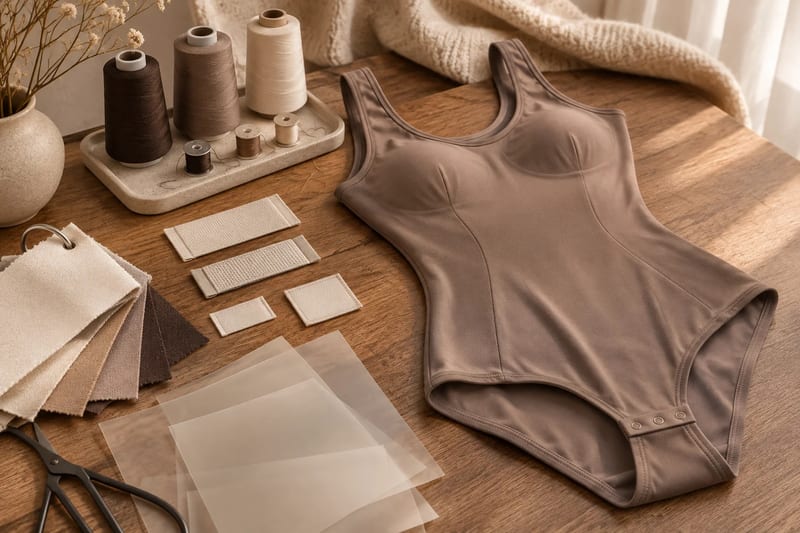
Give each candidate a unique reference before comparing it. The supplier’s material code should appear on both the physical swatch and the information sheet. Add your own internal ID if useful, but retain the original reference so the factory can identify it without translating a nickname such as soft nude fabric.
Request composition and construction separately. A fiber blend does not fully describe how a material is made or finished. Ask for nominal weight in g/m² and, for cut-and-sew procurement, usable width and the basis on which material is supplied. A seamless garment platform may need a different material and knitting record rather than a conventional roll-width field.
List the proposed application. The main body, control panel, gusset, lining and binding can need different evidence. If one swatch is intended for several uses, identify those uses explicitly. A comfortable hand feel on a desk does not establish that it is suitable against the skin at every edge.
Ask S-Shaper’s customization team to distinguish available colors from shade development. A color card can include possibilities that are not held in the required production quantity. Record whether the material has a special finish and whether the tested and offered versions share it.
Finally, connect the evidence. A report should identify the relevant material and conditions, not merely a supplier company name. The public ASTM D3776 scope concerns mass per area; ISO 20932-1 concerns elasticity testing. Naming a method does not prove that your particular swatch was tested or accepted.
| Swatch field | What to request | Buying reason |
|---|---|---|
| Identity | Supplier code / buyer ID / lot or sample status | Avoid confusing similar candidates |
| Material | Composition / structure / finish | Connect appearance and performance |
| Physical basis | Nominal GSM / relevant usable width | Understand procurement units |
| Application | Panel / face / direction | Evaluate the intended use |
| Evidence | Report ID / specimen / method / date | Check relevance to the offered version |
Swatch Card vs Development Cutting: Which One Should You Request?
A presentation card is useful for initial color and touch review. A development cutting provides more material for a defined investigation. They are different deliverables, so tell the supplier what you intend to do before accepting whichever piece is easiest to send.
A small swatch may be insufficient for laboratory sampling, comparative care checks or a garment panel. Ask the laboratory and sample room to state their requirements. Do not invent a universal cutting length: the necessary amount depends on the test, material width, garment size, repetitions and whether an untouched reference must remain.
If the supplier offers a garment made from the candidate fabric, request the garment version and material ID as well. It can help evaluate construction and feel, but it may contain other layers or finishes. A finished piece does not replace the information needed to source the intended material consistently.
Avoid exhausting the only reference. Allocate pieces for separate purposes and photograph the received pack before destructive work. If a material must be returned, record that condition before cutting. A replacement ordered later might come from another lot and introduce a variable into the comparison.
Discuss whether the development cutting is production-representative. A specially prepared showroom sample can be useful, but its status must be understood. Before committing to bulk, confirm that the candidate can be obtained in the actual shade, finish and quantity required by the approved garment.
| Deliverable | Useful for | Limit to acknowledge |
|---|---|---|
| Small card | Initial appearance and handling | May not support test specimens |
| Development cutting | Defined lab or panel work | Quantity and identity must be agreed |
| Existing garment | Assembly and wearing reference | Other components may differ |
| Production-lot reference | Bulk comparison and retention | Does not replace finished-garment approval |
How Can You Plan Enough Swatch Material for a Controlled Review?
Use a specimen allocation plan before requesting the pack. Separate reference retention, lab evaluation, care comparison and sample-room use. Ask each party for its required amount and whether results can share material. The plan should prevent a founder from sending away the only untouched comparison piece.
Consider a deliberately hypothetical exercise with four candidate materials. Suppose your internal review allocates six marked pieces to each: one retained reference, two for initial comparisons, two for care-related comparisons and one reserve. Four multiplied by six gives 24 pieces. This is record-planning arithmetic, not a laboratory sampling requirement or a recommendation for specimen dimensions.
If two candidates are later tested in two colorways under that same chosen allocation, their material-color combinations total four again and still need 24 pieces. They are not interchangeable with four unrelated fabrics: the record must show whether the question concerns material or color processing.
Use actual laboratory requirements to replace the illustrative plan. Some tests may need a larger cutting or more specimens, while other reviews need a complete garment. The supplier should know whether fabric can arrive as one identified cutting or needs separate labeled pieces.
Maintain a simple consumption record. Note which portion went to whom, what action occurred and which report or sample resulted. That chain lets the founder connect a later preference with the material actually used rather than a similar-looking piece left on the desk.
| Hypothetical allocation | Pieces per candidate | For four candidates |
|---|---|---|
| Untouched reference | 1 | 4 |
| Initial comparisons | 2 | 8 |
| Care comparisons | 2 | 8 |
| Reserve | 1 | 4 |
| Chosen total | 6 | 24; not a test-method requirement |
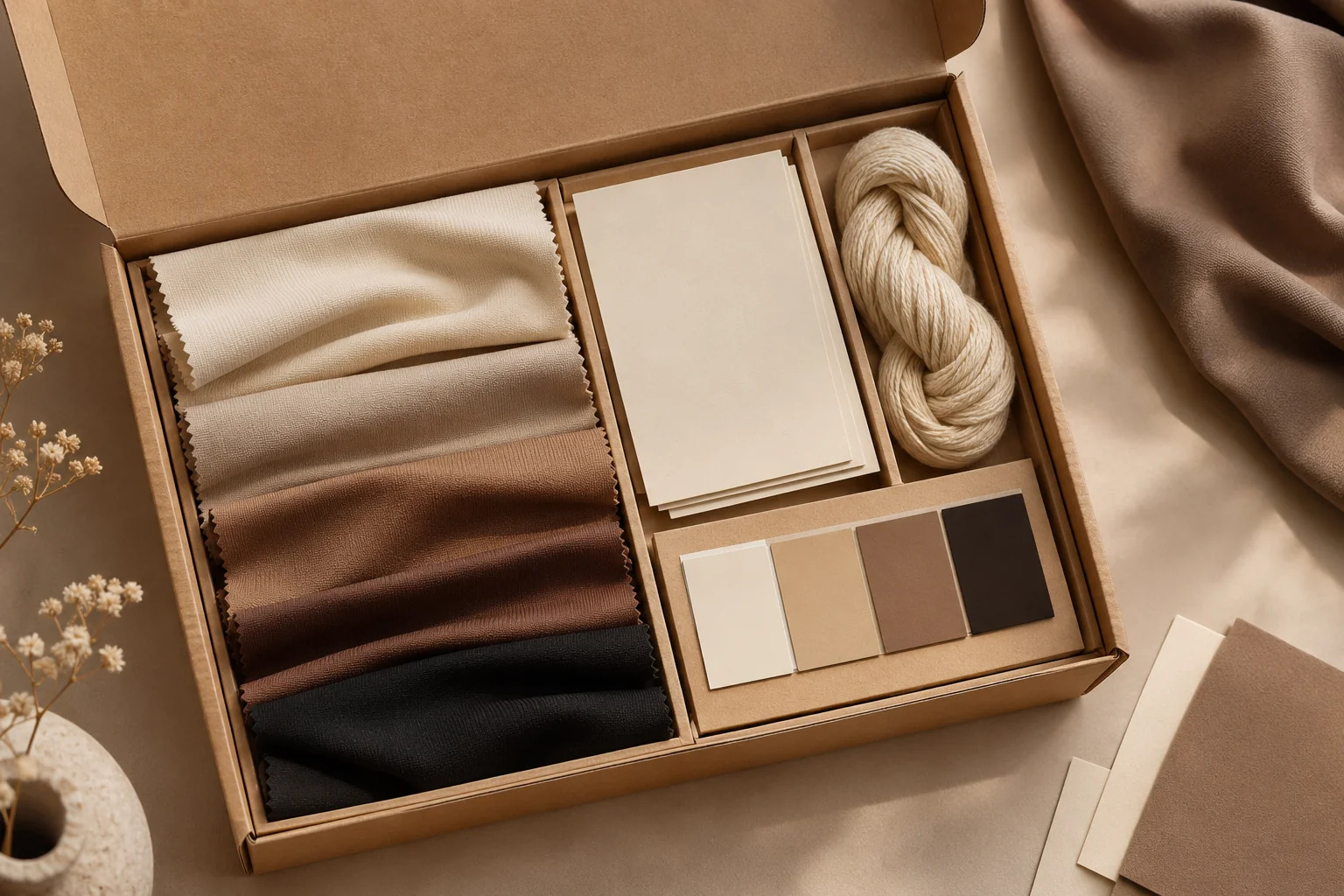
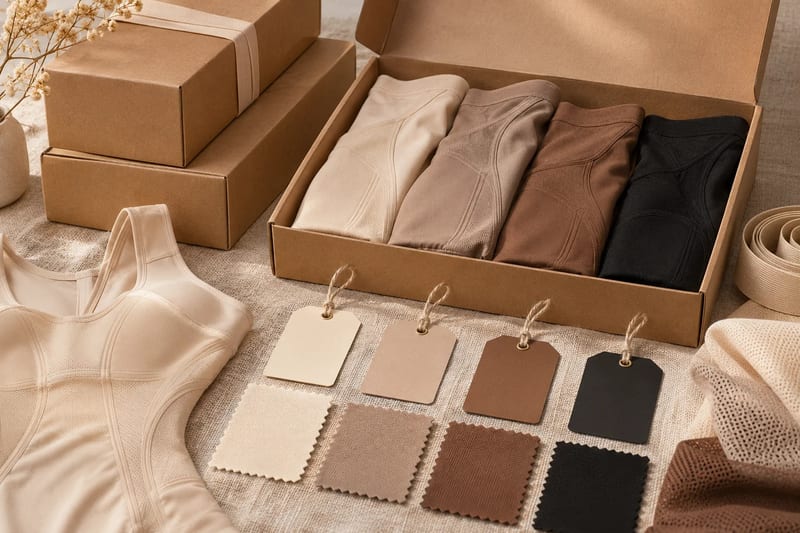
Illustrative sourcing and product-development scene. Click to continue the related buyer guidance.
How Should Buyers Compare Swatches Before Paying for Garment Samples?
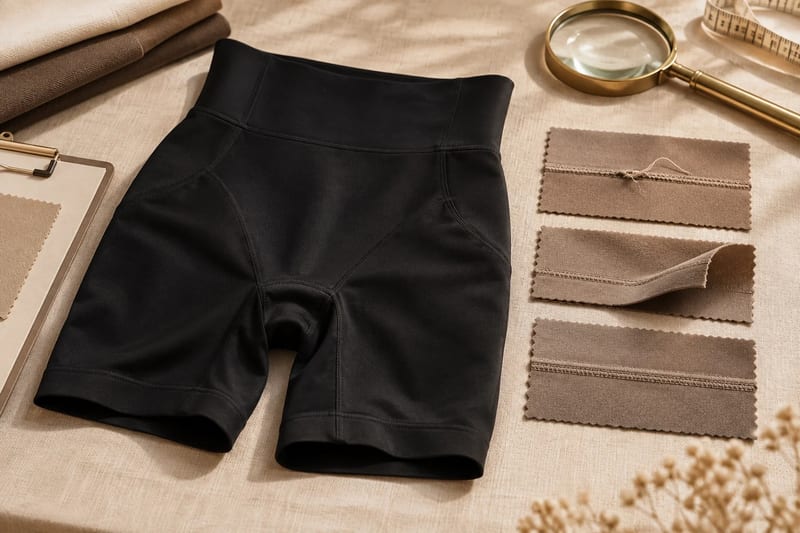
Begin with the product brief and the properties that could reject a candidate. For a discreet under-dress body, appearance at the intended extension may be essential. For another platform, edge behavior or recovery may be the deciding question. Avoid evaluating every candidate against a vague premium feel.
Mark directions before stretching a fabric by hand. Handling can help generate questions, but it is not a controlled strength or recovery test. Record what you observed without converting a hand pull into a numerical performance claim. Request appropriate measured evidence for a decision that depends on mechanical behavior.
Keep lighting and the backing surface consistent for initial shade and transparency comparisons. Review the intended skin-facing side and any visible difference between faces. A desk comparison can narrow the shortlist, while the sample must establish the result at the wearer’s actual fit and under the intended clothing.
Ask which candidate is compatible with the existing platform in S-Shaper’s product range. If a fabric needs another seam, reinforcement or pattern adjustment, note the extra development work before treating its material specification as a drop-in alternative.
Record a reason for retaining or rejecting each option. Missing evidence is a question to resolve, not proof that the fabric is unsuitable. A disciplined shortlist may include one familiar material and one controlled alternative, allowing the next sample to test a clear hypothesis instead of changing everything at once.
Which Material Availability and Purchase Conditions Must You Confirm?
A swatch demonstrates that a sample exists; it does not reserve production stock. Ask what quantity is currently available in the required color and finish, where it is held and how availability is confirmed when the project is ready. Distinguish an existing lot from a proposed new production batch.
Record the purchasing unit and minimum conditions. A garment minimum can differ from fabric, dye-batch, elastic or component minimums. Ask who buys the material, who owns surplus and what happens if the eventual size mix changes consumption. No public general rule supplies those answers for your project.
If the candidate needs development, request the work and approval points separately. A shade, finish or new blend may require trials before the sample room can use a production-representative cutting. Ask what triggers procurement and which changes would need another quotation.
Use the S-Shaper OEM/ODM discussion to connect material selection with the actual platform and sampling route. A low-quantity garment test may be feasible with an available material while a newly developed alternative carries different conditions. The relevant comparison is complete scope, not the smallest number appearing on a general supplier page.
Review timing as a sequence of dependencies: evidence received, candidate selected, material confirmed, garment sampled and production approved. Obtain current estimates from the responsible provider. Sending a swatch quickly does not establish when the resulting finished order can be dispatched.
Which Shapewear Manufacturers Can Supply a Useful Swatch-Comparison Process?
Choose countries and supplier models according to the work needed after the pack arrives. A material library, a technical interpretation service and an integrated seamless platform can provide different routes to the first garment sample.
China Shapewear Manufacturer: Link the Pack to an Available Platform
China shapewear manufacturers with product and material development support can make a swatch pack useful when every candidate is connected to a proposed garment, available quantity and approval route.
Recommended China Supplier: S-Shaper
S-Shaper describes material and function recommendations informed by international-brand work, supported by design, production, QA and export specialists. Ask the material team for coded candidates and an explanation of which are existing options versus new development. Applicable small-order opportunities depend on the item and changes; a swatch does not establish a universal custom minimum. Confirm material stock and any dye or component dependencies before planning dispatch. This route suits a founder needing the supplier to connect selection, documentation and sampling rather than simply send a color book.
Turkey Shapewear Manufacturer: Identify the Finished-State Knit Reference
Turkey shapewear manufacturers using integrated seamless production can be assessed through how they identify knitted, dyed and finished references, so a founder knows which specimen represents the proposed production garment.
Recommended Turkey Supplier: SML Seamless
SML describes private-label shaping products and yarn-to-packed facilities. Ask whether the supplied material or garment cutting represents the intended final processing state and how its code follows into sampling. Integration can reduce handoffs, but it does not establish the amount needed for tests or the conditions for a new color. Confirm the relevant knitting platform, processing minimums and sample responsibilities. It suits compatible seamless development; availability and dispatch still require a current project-specific answer rather than an inference from the country.
Canada Shapewear Manufacturer: Translate Swatch Findings into Pattern Work
A Canada-based shapewear manufacturer shortlist can prioritize technical interpretation when the founder can describe a swatch preference but needs help turning it into material, pattern and sample instructions.
Recommended Canada Supplier: Hertex Lingerie
Hertex identifies Montreal design, pattern, grading and QC work with production in China. Its hybrid model can be relevant when a material alternative changes the intended cut or panel. Ask who maintains the original material ID and how the technical decision reaches the production team. Coordination and sampling need a scope and startup eligibility check. Canadian development does not establish locally made stock or immediate replacement fabric. This route suits a founder seeking documented interpretation, provided responsibilities and handoff timing are clear.
Portugal Shapewear Manufacturer: Connect Candidate Identity with Testing
Portugal shapewear manufacturer candidates with research and quality functions can be compared through the chain between a supplied swatch, the evaluation specimen and the material eventually entering the garment.
Recommended Portugal Supplier: Impetus
Impetus describes research collaboration and physical or chemical checks on materials and finished parts. Ask whether the requested swatch evaluation fits its development program and what material quantity, reports and retained references it can provide. Technical capability does not imply every candidate has already passed your requirement. Development, laboratory and material commitments need a quote; no verified public minimum establishes automatic startup suitability. It can suit a defined investigation, with material readiness and the next sampling stage confirmed before purchase.
Select the route that can preserve candidate identity and answer your next sample question; the most impressive pack is not necessarily the most usable procurement record.
What Should Happen After You Select the Swatch Shortlist?
Convert preferences into a sample brief. Identify the chosen material, proposed panel, garment platform, relevant size and the question the prototype must answer. Keep alternative candidates in the record so the team understands why the selection was made and which backup remains acceptable for investigation.
Confirm the sample material against the retained reference before interpreting its fit. If the sample room substitutes another fabric to demonstrate construction, label the prototype accordingly. It may be useful for that purpose but cannot approve the original material’s assembled behavior.
Discuss the S-Shaper quality-assurance process and the evidence required to move from sample selection to bulk. Define who checks material identity, which report is relevant and what constitutes an unresolved issue. A founder’s favorite swatch should not bypass a failed garment check.
Keep the approved material record with the order and the supply and logistics handoff. Receiving teams need the final garment and variant information; a swatch courier tracking number is not evidence that production materials are secured.
For reorders, verify continuity rather than relying on an old card alone. Confirm whether the material, finish or lot has changed and which comparison is needed. A retained reference is useful because it can expose a difference that a familiar supplier code or product photograph does not explain.
How Can S-Shaper Help Turn Swatches into a Reviewable Sample Brief?
S-Shaper’s catalogue and OEM/ODM services provide a starting point for discussing material selection in relation to an actual shaping product. Its customization and quality support can help a startup identify which information is needed before moving from a small cutting to a garment. The project proposal should state the exact deliverables and conditions.
Send the intended product, wearer need, target measurements and the properties you need to compare. Ask for coded materials, availability status, relevant evidence and a proposed sample route. Review the S-Shaper order FAQ for preliminary questions, then confirm conditions for the selected material and item.
To proceed, request a documented shapewear swatch pack and sampling scope. A useful first pack leaves your team able to explain what it received, what remains untested and why the next sample is worth funding.
FAQ: What to Request in a Shapewear Fabric Swatch Pack
What is the minimum information a swatch needs?
Keep its supplier code, material description, nominal weight, finish, color and sample or lot status. Add the intended use, relevant test references and material availability conditions. A generic fiber percentage and color name are insufficient to identify a production candidate reliably.
How large should each swatch be?
Ask the laboratory and sample room for the amount needed for the actual work. Allow for an untouched reference and separate care or destructive comparisons. There is no universal cutting size that covers every fabric test and garment panel.
Does receiving a swatch mean the material is in stock?
No. Confirm the actual production quantity, color and finish availability, purchasing unit and reservation arrangements. A showroom reference, development cutting and available production lot can have different statuses and timing.
Can I approve shapewear from a fabric pack alone?
A pack can shortlist materials and clarify questions. The complete garment still needs review of fit, seams, panels, edges, care behavior and intended use. Clearly label samples made with substitute material so construction approval is not confused with final-material approval.
What should I retain after choosing a fabric?
Keep an identifiable untouched reference, information sheet, relevant reports and the decision record. Link them to the sample and order. On reorder, confirm changes rather than assuming that a familiar code guarantees identical material and finishing.