 EN
Quick Answer
A practical shapewear business plan template should connect your customer, first product, sourcing route, sales channel, complete cost assumptions, cash milestones and launch risks. Keep the initial plan short enough to update when interviews, samples and quotations change your assumptions. Every major section should lead to a decision or a piece of evidence you still need.
For a startup, begin with one launch market and one focused product direction. Use researched multi-channel prices as references, then replace them with current quotes for the exact garment and quantity. Separate a plan from a forecast: a clear template organizes the business, while validated demand and actual operating results determine whether the assumptions hold.
What Should Your First Shapewear Business Plan Include?
Build the plan around the first order rather than an imagined future catalogue. Describe the wearer, the problem, the garment and the evidence that connects them. Then identify the people and partners required to deliver it. A founder should be able to explain how the proposed product moves from supplier brief to a supported customer purchase.
The U.S. Small Business Administration distinguishes detailed traditional plans from shorter lean-startup plans and emphasizes using a format that fits the business’s needs. Its planning guidance also connects customer research, competitor analysis and startup-cost preparation. The framework below adapts that general planning approach to shapewear procurement. Source: U.S. Small Business Administration: business planning, research and startup costs
Treat each row as a prompt to complete in your own words. Add the evidence location and next review date. If you cannot yet fill in a field, write the research or supplier question needed to resolve it. An honest open item is more useful than a polished sentence that hides an assumption.
Use one current version. Record the decisions changed after a sample round or quote update and explain why. The plan should help the founder and partners work from the same understanding, not become a presentation that is never consulted after it is written.
| Plan module | Complete this statement | Supporting evidence |
|---|---|---|
| Customer and problem | We serve [wearer] in [situation] who struggles with [problem]. | Interviews and existing alternatives |
| First product | Our first garment is [style] with [testable benefit]. | Product brief and sample results |
| Manufacturing route | We need [standard/private label/ODM/OEM] support. | Comparable supplier scope and quotation |
| Range and order | We will test [sizes/colors/units] because [reason]. | Variant allocation and quantity rules |
| Sales and service | Customers discover, choose and receive through [process]. | Channel test and support materials |
| Costs and cash | We pay [confirmed amounts] at [milestones]. | Provider quotes and payment terms |
| Risks and decisions | We stop or revise if [condition]. | Risk owner and next review |
Lean Plan vs Detailed Business Plan: Which Format Fits an Early Brand?
Use a lean internal plan when the immediate goal is deciding what to test and buy next. Its value is visibility: the core assumptions, evidence and next actions can be reviewed together. Expand the detail where the project genuinely needs it, such as a complex development route or several partners sharing responsibilities.
A detailed plan may be appropriate when another party needs a fuller explanation of the business. The audience should determine the depth. Do not spend weeks adding unsupported market-share forecasts simply because a long document appears more serious. Detail is useful when it explains an actual decision, responsibility or financial assumption.
Keep a concise decision summary even if the supporting plan becomes extensive. State the chosen customer, first garment, launch country, proposed order, major unresolved issues and next approval gate. Link the underlying research and quotations. This makes the plan usable during supplier discussions without losing the evidence behind it.
Review the plan after meaningful information arrives: customer interviews, a sample failure, a revised minimum or a new delivered-cost quote. Changing an assumption is not automatically a planning failure. Failing to update the order decision after the assumption changes is the more serious problem.
| Planning need | Lean internal plan | Detailed supporting plan |
|---|---|---|
| Immediate use | Guide next tests and buying decisions | Explain the business to additional stakeholders |
| Main content | Assumptions, evidence and next actions | Expanded research, operations and documented projections |
| Update approach | Revise after each major finding | Keep summary aligned with detailed records |
| Risk to avoid | Too little evidence behind a short claim | Too much unsupported detail behind a long document |
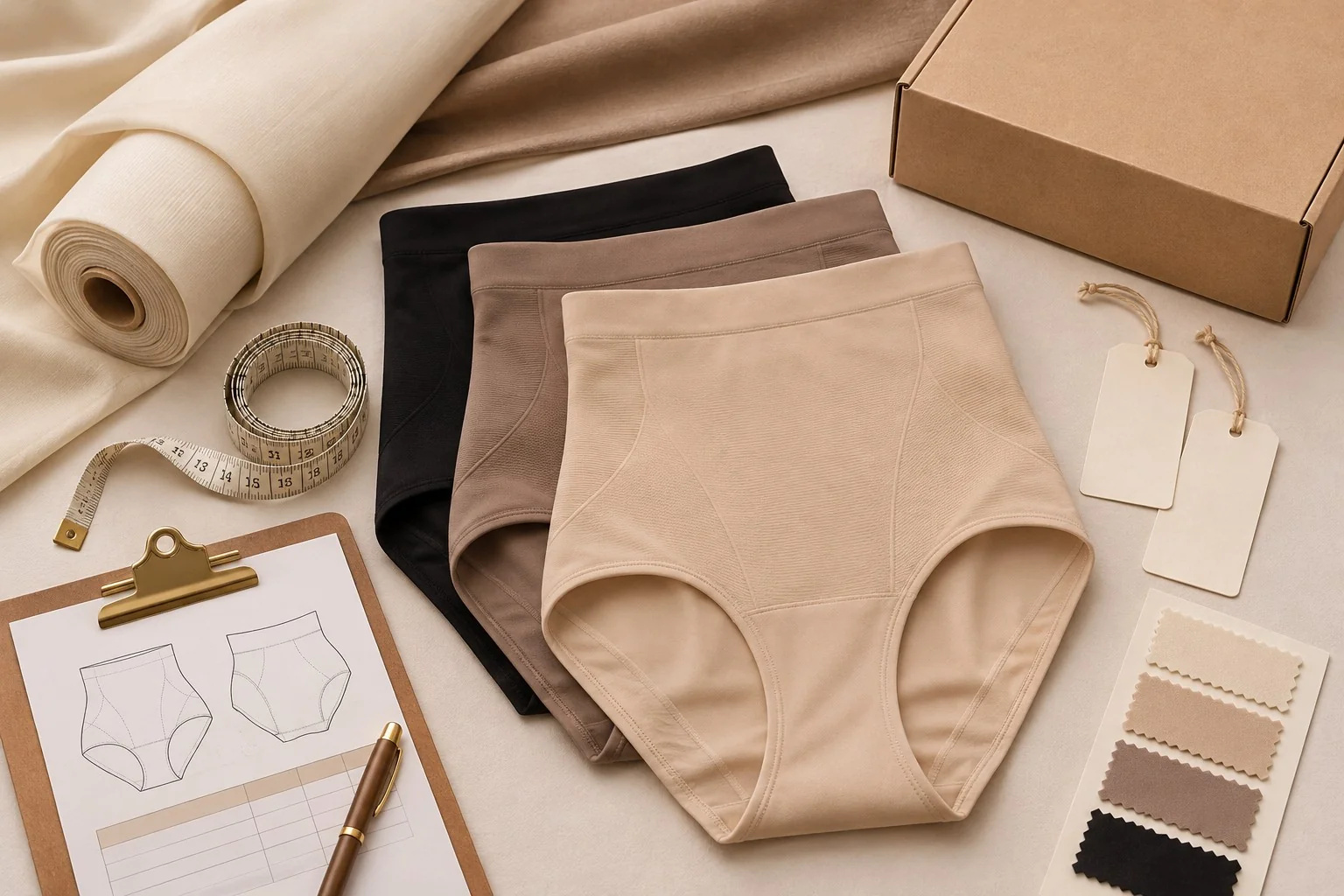
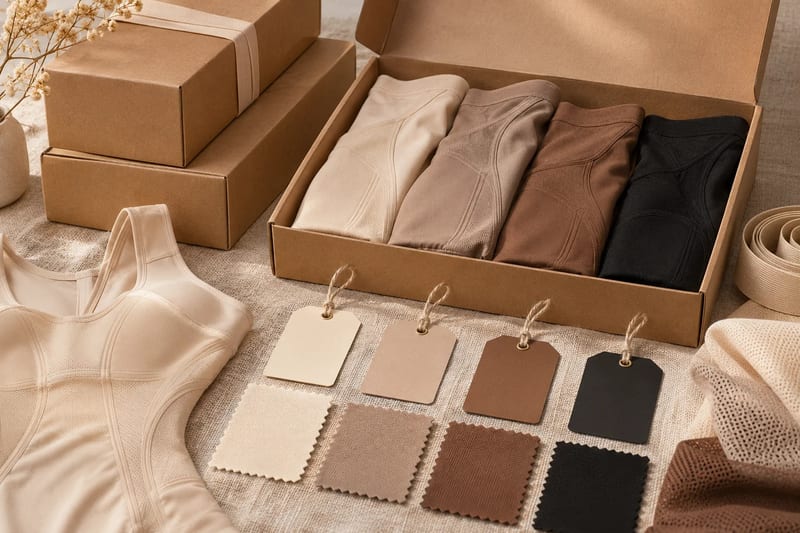
Illustrative product-cost inputs. Build a cost section around a defined garment and supplier scope.
Which Channel Price Assumptions Belong in a Shapewear Business Plan?
Put channel evidence and the supplier quotation in separate parts of the plan. Consumer prices inform competitive context and an offer hypothesis; a B2B price informs only the specified procurement scope. The observed ranges below are not a forecast for your brand or an industry average. Construction, promotion, quantity and included work all matter to the comparison.
| Channel / buying model | Observed USD per garment | Product and order basis |
|---|---|---|
| Amazon US retail | $9.99–$43.99 | Seamless/lighter bodies $12.38–$19.99; Structured bodies $34.88–$43.99; Shorts $9.99–$28.60. |
| Brand websites / B2C | $26.99–$148.00 | Seamless/lighter bodies $29.99–$78.00; Structured bodies $69.00–$148.00; Shorts $28.99–$81.00; Briefs $26.99–$38.00. |
| TikTok Shop US / B2C | $19.99–$65.98 | Seamless/lighter bodies $21.99–$46.99; Structured bodies $39.99–$54.99; Shorts $19.99–$65.98. |
| B2B existing-platform garments | $2.50–$12.85 | Seamless/body-shaping offers; listed minimums 2–600 pieces; custom scope varies |
| B2B structured bodies / fajas | $14.00–$27.42 | More elaborate body shapers; listed minimums 1–500 pieces; specification-dependent |
US-facing USD single-garment observations reviewed November 10, 2026; variants, retail promotions and shipping/tax differ. Amazon uses May–October 2026 tracker snapshots, not live November checkout. These selected samples are not industry averages or matched constructions. B2B advertisements are not landed costs or final custom quotes. Deeper development needs separate specifications, deliverables and an itemized quotation.
Explain what your business supplies between those layers. A brand premium can involve positioning, product development, content and service that the startup must fund and validate. B2B is generally cheaper per piece because it often excludes that downstream selling layer, yet private-label components and custom development can create separate commitments. Ask S-Shaper for current product and preparation proposals, then enter confirmed delivery and operating costs. Keep the proposed selling price conditional on customer tests rather than using the gap between a consumer listing and a wholesale offer as the profit forecast.
Seamless bulk supply and structured fajas have different specifications. Neither B2B row establishes a final price for deep development, samples or tooling.
What Should the Marketing, Sales and Customer-Service Section Explain?
Describe the entire buying journey. How will the intended customer discover the garment, understand its benefit, choose a size, place an order and obtain help? A channel name such as social media or online store is only the starting point. The plan needs to explain what information and service make the purchase workable.
Connect the message to the product evidence. If the proposition emphasizes seated comfort, the content should show the relevant fit and use context accurately. If it emphasizes a particular neckline or coverage, photographs and descriptions should demonstrate that feature. Avoid adding performance claims simply because they might attract more attention.
Plan customer guidance as an operating task. Assign responsibility for the measurement chart, size questions, care information and feedback collection. Use the final approved product data. If a sample revision changes torso length or fit, update the customer-facing information before launch rather than letting the marketing files diverge from the garment.
Define a channel test that can change the plan. Record the audience, offer, price and result, with the limitations of the test. Interest, purchases and post-purchase feedback answer different questions. Do not turn a few enthusiastic comments into a confident sales forecast. The first channel plan should create useful evidence as well as exposure.
Finally, explain how feedback returns to procurement. Repeated sizing questions may require better guidance; repeated wear complaints may require development; demand concentrated in certain variants may change the next order. A business plan becomes practical when the sales process informs the buying process.
How Should a Startup Map Cash Commitments and Inventory Decisions?
Place confirmed payments against project milestones. Development may be paid before the garment is approved; components may be ordered before final assembly; shipping and receiving may occur before customer receipts arrive. Ask each provider for the actual payment arrangement and put those dates into the same calendar.
The goods-only scenarios below use a deliberately chosen $10 unit input at every quantity. They demonstrate inventory commitment arithmetic, not supplier quantity tiers or a researched channel price. No deposit percentage, selling price, freight charge or profit margin is assumed. Replace the chosen input with the accepted product-specific proposal before approving an order.
| Brief-order scenario | Chosen hypothetical unit input | Calculated goods value | Planning question |
|---|---|---|---|
| 50 units | $10 | $500 | What can this pilot teach you? |
| 100 units | $10 | $1,000 | Which size and color allocation is justified? |
| 200 units | $10 | $2,000 | Does evidence support the extra stock? |
| 1,000 units | $10 | $10,000 | Can you manage the inventory and cash exposure? |
Map remaining commitments beside these goods values. Request the relevant support scope through S-SHAPER’s customization service and confirm transport responsibilities through the logistics discussion. Keep unquoted amounts visible rather than hiding them inside an invented all-in estimate.
Build a delayed-sales case by changing the timing and quantity of sales assumptions in your own model. Identify which payments still occur and what decisions remain available. Do not present a best-case sell-through assumption as guaranteed cash recovery. A workable plan should explain how the founder will respond if the first order learns more slowly than expected.
Which Shapewear Manufacturers Should You Consider for Your Business Plan?
Compare shapewear manufacturers in China, France, Canada and Turkey for a workable sourcing plan. The recommendations below connect country-level capabilities with specific suppliers and the work your brand needs.
China Shapewear Manufacturer: Plan an Own-Label Supply Chain Around a Factory Proposal
China shapewear manufacturers offering development and production together can anchor an own-label operating plan; separate garment quantities, technical deliverables and export responsibilities instead of combining unquoted commitments.
Recommended China Supplier: S-Shaper
S-SHAPER’s OEM/ODM offering describes material and style advice alongside design, production, QA and export specialists serving clients across several global regions. That gives a startup a practical starting point for the supplier section: selected platform, essential changes, sample evidence and responsibilities. Ask for one proposal connecting those activities to your intended market.
Published brief price tiers and conditional small-batch options can anchor planning, but additional development, components and delivery require confirmation. Do not translate a public goods price into a complete startup budget. This route suits an own-label plan with clear approval owners and a manageable first inventory assumption. Record payment milestones and unresolved scope so the business plan remains usable when the product changes.
Source: S-SHAPER OEM/ODM and global-brand support.
France Shapewear Manufacturer: Separate Resale Revenue Assumptions from Design Development
France shapewear manufacturer programs spanning resale and occasion-led development imply different business models; show which garment work, component commitments and customer proposition the plan actually funds.
Recommended France Supplier: Gilsa Paris
Gilsa Paris documents professional finished assortments and own-label adaptation, development and packaging for invisible lingerie. A business plan can compare these as two different models: curated resale or a differentiated occasion-led line. State which product benefit and customer service justify the route rather than combining both into one vague supplier budget.
Own-label minimums depend on product type, with no verified public wholesale range for your project. Design and component work need quotations before entering the cash plan. This route fits an occasion or fashion proposition when the garment’s relationship to the outfit matters. It may add unnecessary early work if the business is only testing whether it can acquire customers for an established finished assortment.
Source: Gilsa Paris professional resale and own-label development.
Canada Shapewear Manufacturer: Budget Technical Coordination and Production Separately
Canada shapewear manufacturer models separating local technical services from overseas fabrication require two visible responsibilities; budget coordination deliverables and production rather than assuming the office covers both.
Recommended Canada Development Partner: Hertex
Hertex describes Montreal-based design, pattern work, grading and quality control, with China production. For the business plan, this illustrates a technical coordination layer that should have defined deliverables and handoffs. Ask who prepares the final specification, approves fit changes and communicates the released version to manufacturing.
The reviewed description does not establish startup eligibility, fees or a locally stocked fast-replenishment program. Request the combined project proposal instead of assuming a local office replaces the manufacturing budget. This route suits a founder who needs specialist technical communication and can plan for that work before production. Document both responsibilities so the operating plan does not hide a critical approval between organizations.
Source: Hertex Montreal development with China production.
Turkey Shapewear Manufacturer: Test the Operating Fit of Integrated Seamless Supply
Turkey shapewear manufacturer routes with integrated seamless supply can clarify the operating chain; base the plan on quoted yarn, color and order conditions rather than hypothetical integration savings.
Recommended Turkey Supplier: SML Seamless
SML describes integrated private-label shapewear production in Turkey, covering yarn through packed goods, with dedicated communication and European and American customer experience. For a seamless-focused business, this provides a useful operating alternative to coordinating separate textile and garment stages. Ask how the actual product moves through that structure.
No universal low MOQ or country price advantage is established by the reviewed source. Obtain yarn, color, sample and order conditions for your plan, then verify finish and grading physically. This route fits a business whose initial garment matches the seamless capability. Integration can clarify responsibilities, but it should not become an invented saving or schedule guarantee in the financial projection.
Source: SML Seamless integrated private-label manufacturing.
Choose a base-case route and keep alternatives as explicit scenarios. Replace assumptions with current proposals while preserving the product and customer evidence behind the plan.
Which Risks and Review Gates Should Your Plan Make Explicit?
List risks in terms of a decision trigger, owner and response. “Supplier risk” is too broad. “The selected material is unavailable before sampling” identifies a problem you can discuss. Decide whether the response is an approved alternative, a revised schedule or a different platform. Ask the supplier to confirm changes before they enter production.
Set a fit gate, a commercial gate and a receiving gate. The fit gate requires an approved sample and relevant size evidence. The commercial gate requires a defined specification, quantity split and quotation. The receiving gate requires inspection and fulfillment readiness. Discuss checks through S-SHAPER’s quality-assurance overview and translate them into your order’s acceptance record.
Review the demand assumption separately. If the priced offer or pilot does not support the next order, identify what needs further testing. A production-capable supplier cannot validate your sales channel on your behalf. Keep the commercial learning linked to the quantity decision.
End each review with a short update: what changed, what is now supported, what remains open and who owns the next action. That is the business plan’s operating rhythm. The document earns its value when it helps the founder choose a responsible next step under uncertainty, rather than merely describing an attractive future brand.

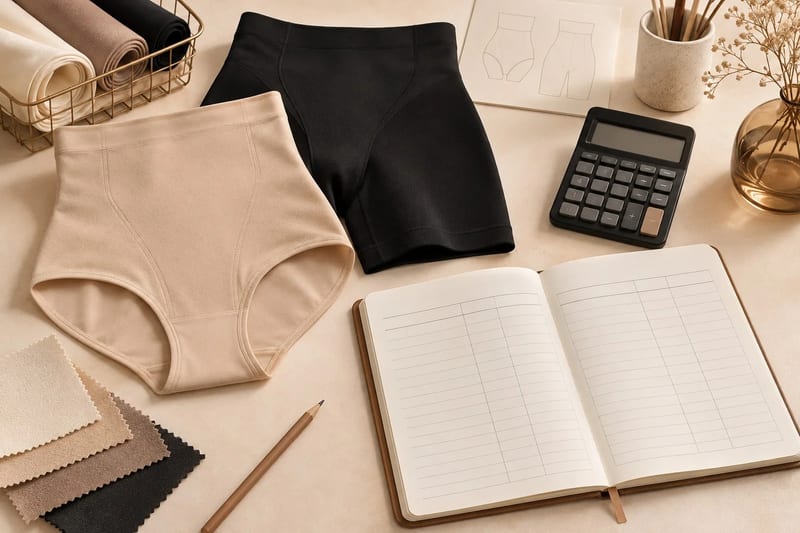
Illustrative operating-plan review. Request the supplier evidence needed for your business plan.
How Can S-SHAPER Contribute to the Supplier Section of Your Plan?
S-SHAPER’s public offering includes shapewear products, OEM/ODM development, customization and manufacturing-related support. Those pages provide a starting point for documenting a potential supplier route, while the actual plan should use a proposal for the specific garment, quantity and destination you intend to pursue.
Provide the team with the product brief, first-order assumptions, required development help and target receiving date. Ask for the sample route, responsibilities, applicable minimums and quotation scope. Review the order FAQ as preliminary context, then record the confirmed answers in the supplier section rather than copying broad website promises.
To prepare that section, request a scoped proposal from S-SHAPER. Use it alongside your customer research, channel tests and other provider quotes. A manufacturing proposal can improve the accuracy of your sourcing assumptions; your business plan still needs evidence for demand, operating costs and the customer experience.
FAQ: Shapewear Business Planning
What should a shapewear business plan template include?
Include the target customer, problem, first product, manufacturing route, range, sales process, costs, cash milestones and major risks. Add evidence and an owner for unresolved assumptions. A startup plan should help decide what to test and approve next.
Do I need a long business plan before contacting a manufacturer?
Not necessarily. A concise product brief and clear order assumptions can support the first discussion. Expand the business plan according to its audience and purpose. The supplier needs enough detail to propose a relevant sample route and scope.
Can I use public supplier prices in my plan?
Yes, as dated product-specific references. Confirm the exact specification, quantities, inclusions and delivery responsibilities through a current quotation before ordering. Do not treat a listed garment price as the complete startup cost or a guaranteed custom price.
How should I estimate profit for a new brand?
Do not infer profit from the gap between a selling price and a public garment listing. Build the model from your actual validated offer and complete relevant costs, using documented assumptions. Keep uncertain sales and expense inputs visible and update them after real operating evidence arrives.
When should the plan be updated?
Update after a meaningful change in customer evidence, sample results, supplier scope, price, quantity or schedule. Record the changed assumption and its effect on the next decision. Keep the concise decision summary aligned with the detailed research and quotes.