 EN
Quick Answer
A plus-size shapewear manufacturer should be able to discuss the intended body measurements, pattern and grading, material behavior, coverage and fit validation across the proposed range. Do not approve an inclusive collection by enlarging one smaller sample and adding size labels. Confirm the actual size limit and development conditions for each style.
Begin with a specific customer and wearing problem. Test relevant body proportions, not only a numerical size, and review abdomen coverage, waist stability, bust or strap demands, thigh openings and dressing access as appropriate. Ask how findings become measurable pattern or construction changes before bulk release.
For a startup, a focused product with a defensible measurement range is more credible than an extensive size list that has not been tested. Use sample and size-set evidence to decide whether the platform can serve the intended audience, needs further development or should be replaced.
What Should a Plus-Size Shapewear Development Brief Define?
Write the intended wearing situation and the coverage the customer needs. Everyday smoothing, occasion wear and a fashion bodysuit can create different torso, bust and opening requirements. A supplier needs those distinctions before it can recommend a platform or quote the work.
Describe the target body measurements and relevant proportions. Waist and hip girths matter, but abdomen shape, torso length, bust relationship and thigh dimensions can also affect a particular garment. ISO 8559-1 supplies a body-measurement vocabulary; it does not decide your brand’s target customer or guarantee fit.
Keep body measurements separate from finished-garment measurements. A stretch garment can measure smaller when relaxed, but that difference is a design decision needing material and wearer evidence. Do not convert a customer circumference directly into a flat pattern dimension without technical interpretation.
Ask S-Shaper’s sizing and material customization team which existing platform is closest to the brief and which changes require development. A style available in a large label size is not necessarily suitable for your intended proportions. Request the actual chart and relevant samples.
Define the boundaries of the first release. Identify the sizes you intend to validate, what remains untested and the information customers need to choose. A future expansion plan should not become a current claim that every silhouette and size already works.
| Brief element | Question to answer | Evidence to request |
|---|---|---|
| Audience | Which measurements and proportions? | Defined body-measurement profile |
| Use | What outfit and daily tasks? | Relevant wear plan |
| Coverage | Which abdomen, torso and thigh areas? | Drawing and physical sample |
| Range | Which sizes on this specific style? | Chart, grading and size-set records |
| Commercial scope | Existing platform or new development? | Current sample and production proposal |
Larger Size Labels vs Inclusive Development: What Is the Difference?
A larger label reports a place in a sizing system. Inclusive development asks whether the garment works for the people represented by the intended range. The two can align, but the label is not evidence that they do.
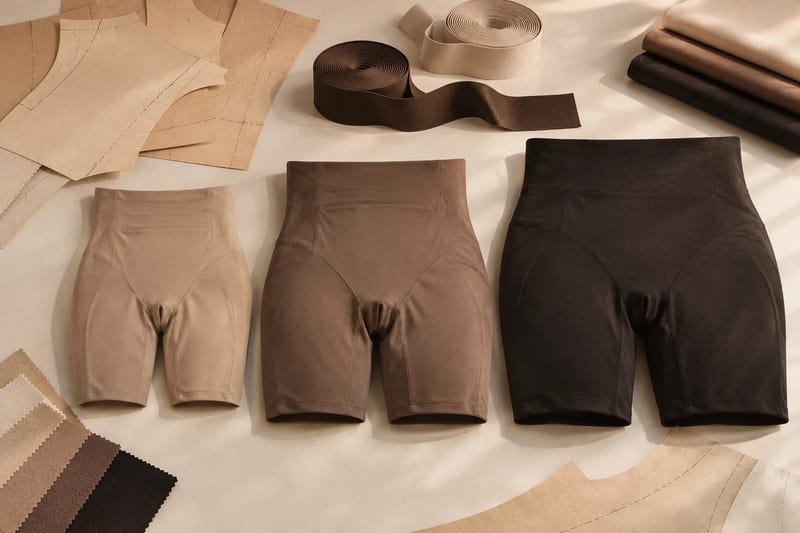
Review how shapes change across the range. Adding the same amount to every point can leave the waistband, lower abdomen, leg opening or bust relationship poorly placed. Ask the technical team which dimensions and construction zones change and why. The answer should be reviewable in measurements, drawings and samples.
Real brand guides illustrate why a label needs context. The SKIMS public shapewear guide lists its M waist as 29–31 inches and hips as 39.5–41.5, while its 4X row lists waist 46–49.5 and hips 55.5–59. These are that brand’s published guide values, not S-Shaper specifications, a universal plus-size definition or an instruction to copy its system.
Those two rows also do not establish a grading formula between sizes. Body ranges, relaxed garment measurements and pattern increments are different records. Your own product needs a chart connected to actual fitting and the proposed material.
Ask whether the development program permits separate changes at critical sizes rather than only extending a spreadsheet. That may require additional samples and technical work. Quote the scope deliberately; the cheapest path to more labels can be expensive if the underlying product still fails the intended wearer.
| Review area | Label extension alone | Inclusive-development evidence |
|---|---|---|
| Size range | Additional names in a catalogue | Style-specific measurements and validation |
| Pattern | Uniform enlargement assumed | Reviewed increments and local shape changes |
| Fit | One central sample accepted | Relevant sizes and proportions tried |
| Customer promise | Fits all bodies | Defined range and honest guidance |
Which Construction Details Deserve a Dedicated Plus-Size Review?
Start with abdomen coverage and waist placement. Check where the upper edge sits while standing, seated and moving. Ask whether rolling reflects height, tension, panel placement, edge construction or another factor. The corrective action should follow the finding rather than assuming more compression fixes everything.
Review the lower abdomen and gusset relationship where applicable. A garment can appear smooth at the waist while pulling elsewhere. Record the location of pressure, movement and coverage concerns. A photograph without the wearer’s relevant measurements and sample version is difficult to interpret.
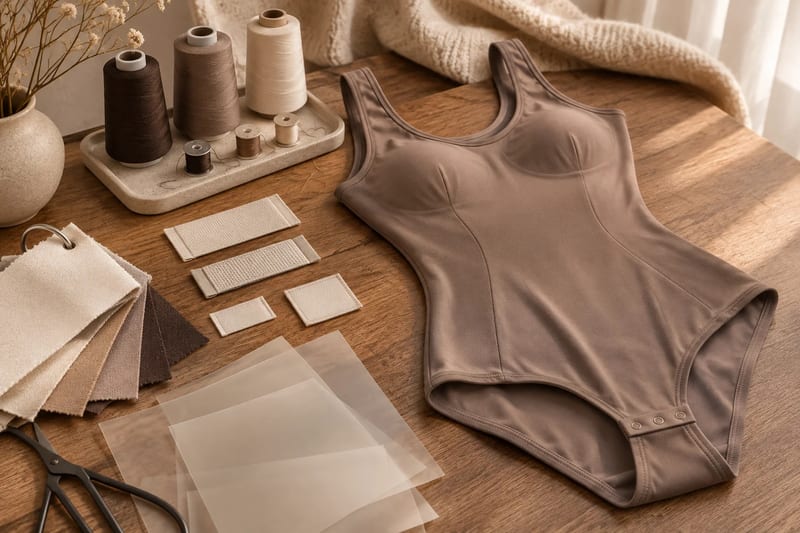
For bodysuits, assess bust coverage, straps and closure access. Strap width or adjustability may be relevant, but a strap cannot correct every torso or bust-placement issue. Keep the fit decision separate from a generic preference for wider or stronger components.
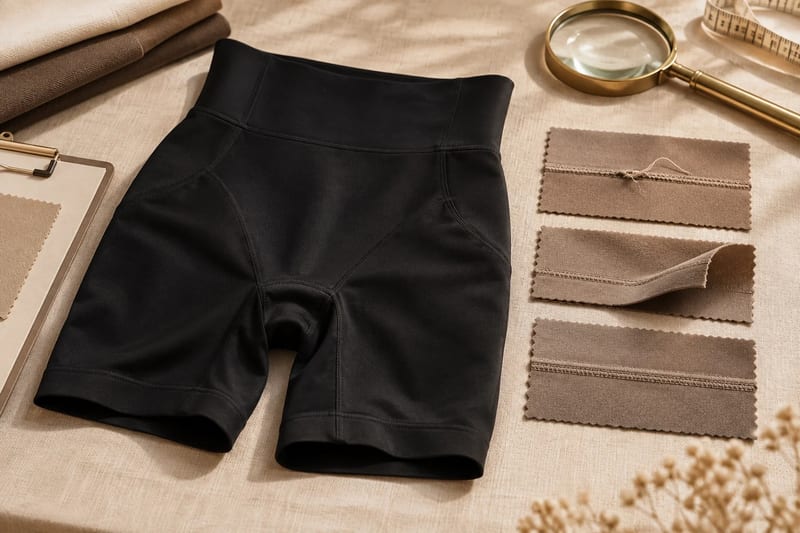
For shorts, check thigh opening, rise and movement. An opening can feel acceptable while standing yet create a localized issue during sitting or walking. Ask participants to describe the task and location instead of grouping all complaints under too small.
Use S-Shaper’s garment references to identify which features belong to your chosen platform. Changes to panels, material or finishing can affect appearance under clothes and care behavior as well as support. Evaluate the complete proposed assembly before deciding that an existing large-size listing is ready for your brand.
Review component supply across the intended range as well. A closure, elastic or strap that works on the base sample may need a different length, width, placement or application in another size. Ask the team to identify which parts remain shared and which have separate references. Confirm that the proposed production bill of materials includes those size-dependent choices. If a component is substituted because the intended item is unavailable, compare the affected sample again rather than assuming that similar appearance preserves fit. This creates a concrete procurement question and prevents a carefully reviewed pattern from being paired with an unreviewed edge or fastening.
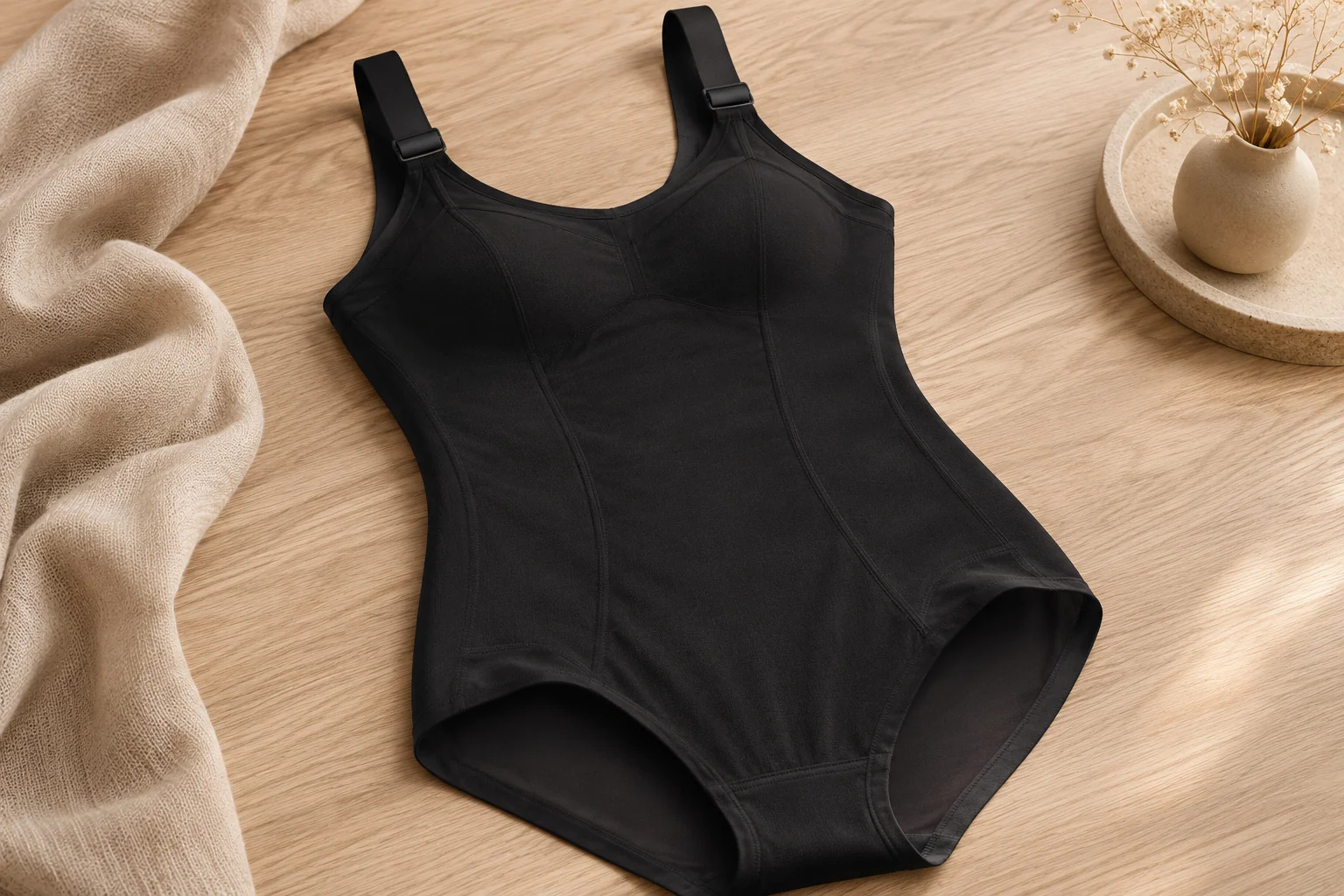
Illustrative sourcing and product-development scene. Click to continue the related buyer guidance.
How Can a Startup Build a Useful Plus-Size Sample Plan?
Choose participants against the intended product dimensions and proportional questions. A small team can learn from targeted cases if it records what those cases represent and what they do not. Do not describe a convenience panel as representative of the entire plus-size market.
For a deliberately hypothetical planning matrix, select three size locations: the base, a larger critical transition and the intended upper limit. Within each, seek two relevant proportional cases, and prepare two versions for comparison. Three multiplied by two multiplied by two gives 12 fit sessions if each case tries each version once. It does not mean 12 people, statistically adequate coverage or a prescribed minimum sample plan.
The two versions should answer an explicit question, such as a revised upper edge on the same platform. If every material and pattern feature changes, the session becomes a broader alternative-product comparison. Record that difference honestly rather than attributing the result to one feature.
Obtain consent, use anonymous IDs and allow participants to decline photographs or stop wearing an uncomfortable sample. Keep body measurements and identifying information handled appropriately. Product feedback should not require a participant to tolerate painful restriction.
Review missing cases before approval. If the upper size or a relevant torso proportion has not been tried, record the gap and decide whether another sample is needed. A launch deadline does not turn an untested part of the range into validated fit.
| Hypothetical plan dimension | Chosen count | Purpose |
|---|---|---|
| Size locations | 3 | Base / transition / upper limit |
| Proportional cases per location | 2 | Explore relevant variation |
| Versions per case | 2 | Controlled construction question |
| Sessions | 3 × 2 × 2 = 12 | Planning example, not a prescribed panel |
How Should You Review Grading, Materials and Care Across the Range?
Request the measurement schedule and graded values for critical points. Identify which dimensions change at each step and where a construction decision differs. The record should explain the result the pattern is intended to create, not only display a long list of numbers.
Connect those increments with the material. A fabric’s extension and resistance under defined conditions help the technical team assess fit, but the fiber percentage or GSM alone cannot supply a grading rule. Ask which sample and material version produced the approved wearer result.
Review the range after the intended care exposure where relevant. A change in dimensions or edge behavior can affect a close-fitting product differently across sizes. Retain the checking method and sample identity so pre- and post-care observations are comparable.
Discuss S-Shaper’s quality-assurance process in terms of the actual production range. Agree which points are measured, the relevant tolerances, how size labels are checked and what happens when findings contradict the reference. There is no universal tolerance introduced by this guide.
If the upper range requires another panel or component, record it as part of the style’s specification. Ask whether procurement and quantity conditions change and which sample confirms the revised construction. Keeping the range honest can require additional preparation, but it gives the buyer a clearer basis for approving inventory.
Which Shapewear Manufacturers Should a Plus-Size Startup Compare?
Compare whether a supplier can serve your specific proportions and product model. Neither a country label nor an extensive catalogue establishes that a particular style has been validated for your own planned plus-size range.
China Plus-Size Shapewear Manufacturer: Connect Fit Evidence with Production
China plus-size shapewear manufacturers offering development and production can be compared through their ability to turn abdomen, torso and opening feedback into documented pattern and component decisions across the range.
Recommended China Supplier: S-Shaper
S-Shaper describes design, production, QA and export specialists, with material and function recommendations informed by international-brand work. Ask the development team for the actual chart and feasible size-set route on the chosen platform, not a universal upper-size promise. Its item-dependent small-order opportunities may support a focused test; new grading, material or components can change that scope. Confirm stock versus development status and the approvals that affect dispatch. This route suits a founder needing direct technical discussion and a current manufacturing proposal, with the wearer evidence retained by the brand rather than replaced by a catalogue size label.
Canada Plus-Size Shapewear Manufacturer: Prioritize Pattern Interpretation
A Canada-based plus-size shapewear manufacturer comparison can prioritize technical interpretation when the main challenge is deciding which local pattern dimensions should change instead of enlarging the entire style uniformly.
Recommended Canada Supplier: Hertex Lingerie
Hertex identifies Montreal design, pattern, grading and QC work with production in China. That hybrid structure can be useful for a founder who needs help converting fit observations into measurable revisions. Ask which body profiles and size locations its proposed program will review and who maintains the approved grading record. Technical work and coordination need a project scope; public capability does not establish startup acceptance or a particular plus-size limit. Canadian involvement also does not mean locally made stock. Confirm how material and pattern changes reach production and which sample must be approved before the dispatch plan becomes dependable.
Colombia Plus-Size Shapewear Manufacturer: Evaluate the Actual Wholesale Range
Colombia plus-size shapewear manufacturer comparisons can include specialist finished shaping platforms, provided the buyer checks each style’s measurement range and wearing behavior rather than treating a familiar size label as proof.
Recommended Colombia Supplier: Leonisa
Leonisa identifies Colombian manufacturing and an international wholesale program. Existing shaping products may be relevant for a resale-led brand when their actual coverage and chart meet the audience’s needs. Request current style and size availability, permitted sales presentation and replenishment conditions. Its manufacturing and wholesale presence does not establish an OEM or private-label program, nor permission to change grading. This route suits a business willing to curate and validate an existing assortment. A founder requiring a distinct upper range, new torso proportions or original brand construction should confirm that separate capability instead of assuming wholesale access includes it.
Select the route that can support your actual size and proportion brief, then approve the relevant samples and customer guidance before committing to the full range.
How Should Plus-Size Fit Findings Shape Customer Information and Reorders?
Publish the body-measurement ranges relevant to the approved style and explain how to take them. Distinguish the customer’s measurements from the garment’s relaxed dimensions. A large label without clear instructions leaves shoppers to guess how another brand’s size corresponds.
Use sample findings to explain relevant proportion limits and selection questions. If torso length or bust relationship affects the choice, provide a suitable way to obtain help rather than implying that waist and hip alone resolve every case. Avoid blaming a body shape when a platform is unsuitable.
Show the garment on honestly identified models where possible, with consent and useful size context. Do not use a single image to imply all proportions have been tested. Visuals should demonstrate actual coverage and construction without promising a guaranteed silhouette.
The S-Shaper supply and logistics handoff should keep approved sizes, labels and quantities aligned. A correctly developed range can still create problems if the packing or product-page identifiers differ from the order. Reconcile those records before shipment.
On reorder, review returns and support questions by style, size, reason and version. Repeated abdomen, torso or opening feedback may justify a targeted revision. Confirm whether a change affects the chart, images or instructions, and revalidate the relevant sizes before expanding the range further.
How Can S-Shaper Support a Defined Plus-Size Development Project?
S-Shaper’s shaping catalogue, customization, OEM/ODM and quality services provide a starting point for discussing a plus-size product with a specific wearer profile. A useful proposal identifies the platform, measurement range, technical changes and sample evidence needed for the brand. General service descriptions do not establish that every style already serves every size.
Send the intended measurements, relevant proportions, wearing scenario and any sample complaints. Ask the team to separate an available platform from new grading or construction work, then identify the size-set and approval route. Use the S-Shaper order FAQ for initial conditions before confirming the selected project’s quantities and materials.
To begin, request a plus-size shapewear development review. Seek practical options with explicit limits, clear responsibilities and a repeatable specification. The commercial objective is a product customers can select and use confidently, supported by evidence for the range you actually offer.
FAQ: Developing Plus-Size Shapewear for a New Brand
What matters most in a plus-size shapewear manufacturer?
Look for a reviewable process for body measurements, grading, construction changes, relevant material evidence and fit samples. Confirm the actual style-specific size limit and commercial conditions. An extensive list of size labels alone does not establish suitability for your audience.
Can I simply enlarge a smaller shapewear pattern?
Uniform enlargement can miss local proportion and construction needs. Review the waistband, abdomen, torso, bust or straps, gusset and thigh opening as applicable. Ask the technical team to explain the graded dimensions and verify relevant sizes through samples.
How many fit models do I need?
No universal number in this guide guarantees range coverage. Build a plan around the important size locations and proportional differences, retain anonymous measurements and identify gaps. The 12-session example is deliberately hypothetical planning arithmetic, not a prescribed research panel.
Should I copy a successful brand’s plus-size chart?
Use public charts to understand how a brand describes its own products, not as your untested specification. Establish your target measurements, material and fit evidence. Keep body ranges, garment measurements and pattern increments as separate connected records.
Does S-Shaper offer every size on every style?
Confirm the actual platform and proposed range with the team. Published customization capability is not a universal upper-size guarantee. Ask which measurements, samples, materials and development work are required for the specific collection before placing the order.