 EN
Quick Answer
A higher unit price can be reasonable for a smaller first shapewear order when it reduces total commitment and buys useful product learning. Compare the same specification at each quantity, including development, components, inspection and delivery responsibilities. Bulk pricing is valuable when your demand evidence and cash capacity support the additional inventory, not merely because the price per piece is lower.
The four-channel comparison below uses multiple sellers and separates finished-product offers from custom-development scope. B2B acquisition is generally lower than consumer tickets, but smaller orders, material choices and additional work can change the actual proposal. Use it to understand the buying model, then request the same garment at feasible pilot and repeat quantities rather than generalize from one supplier’s tier.
Why Can Small-Batch Shapewear Have a Higher Unit Price?
Ask the supplier what work is required for the selected garment and order. Preparation, material procurement, sample approval, component handling and inspection may not shrink in direct proportion to finished units. A smaller order can therefore distribute some activities across fewer garments. That explanation is a reason to ask for scope, not proof of a universal markup.
Distinguish a cost driver from an amount. The sources here do not reveal the factory’s internal accounting for setup, labor or overhead. Do not invent percentages for fabric or stitching and present them as the manufacturer’s breakdown. Ask which changes to your brief affect the actual quote and which services remain separate.
Use S-SHAPER’s product catalogue to identify the exact platform. A shaping brief, a paneled bodysuit and a built-in shaping dress may involve different materials and construction. Their prices cannot isolate the effect of quantity because the products themselves differ. Compare each garment with itself across relevant tiers.
For a developed product, review the OEM/ODM service scope and ask whether development charges are separate from the manufacturing quote. An apparent high unit price may include work another proposal excludes. Conversely, a low factory price may leave the founder needing additional technical or coordination services.
Request enough detail to make the decision without demanding that the supplier disclose proprietary internal costs. A useful quote identifies the product, quantity, work included, exclusions and triggers for change. Those details let a startup evaluate the offer on a fair basis even when the factory’s full cost structure is not public.
What Do Four-Channel Shapewear Samples Reveal About Low-MOQ and Bulk Pricing?
Quantity economics should be examined within a comparable garment and service scope. The channel observations below compare available consumer offers and B2B order conditions; the TikTok sample spans both basic and structured styles, so it needs a garment-level check. These US-facing USD observations are not a statistical cost curve or a promise that every supplier follows the same discount schedule.
| Channel / buying model | Observed USD per garment | Product and order basis |
|---|---|---|
| Amazon US retail bodies | $12.38–$35.14 | Seamless/lighter bodies $12.38–$19.99; Structured bodies $35.14–$35.14. |
| Value/mid-tier brand DTC bodies | $29.99–$49.00 | Shapermint/Shapellx sale prices; no multi-pack or order code |
| TikTok Shop US bodies | $21.99–$54.99 | Seamless/lighter bodies $21.99–$46.99; Structured bodies $39.99–$54.99. |
| B2B small-order platform bodies | $3.18–$10.00 | Tianchen, Junmao and S-Shaper; listed minimums 5/2/10; not deep-custom eligibility |
| B2B higher-volume platform bodies | $2.50–$12.85 | Listed minimums 100–600; different garments, not a same-SKU volume discount |
B2B acquisition is generally below consumer tickets because some retail activities remain with the buyer, but wholesale finished goods and custom development are still different purchases. A low bulk unit listing can exclude sampling, labels, freight or taxes. A promoted TikTok Shop or Amazon offer may temporarily narrow the visible gap, while a brand website may retain a higher full-price anchor.
Use the table to establish context, then request pilot and larger-order quotations against the same specification. Ask what changes at each quantity and which commitments remain fixed. The separate hypothetical inventory comparison explains cash exposure; it is not a quotation inferred from these cross-seller observations.
US-facing USD per single garment, reviewed November 10, 2026. Amazon uses dated May–October 2026 third-party PriceHistory snapshots, not live November checkout. These selected-seller observations are not industry averages or matched-quality comparisons. Variants and promotions change; shipping and tax are not normalized. B2B bands describe advertised garments, not landed costs or a final custom-development quote. Sources: dated PriceHistory Amazon records, official brand/TikTok Shop pages and Made-in-China supplier listings.
Low MOQ vs Bulk Pricing: What Happens to Total Cash Commitment?
Total commitment and unit price answer different questions. The following is a deliberately hypothetical same-specification planning model, not an observed supplier discount, advertised tier or prediction of what any manufacturer will accept. It chooses a 50-unit pilot at $10 each and a 250-unit repeat order at $8 each to demonstrate the arithmetic.
The pilot goods assumption is $500 and the larger order is $2,000. The chosen unit price falls 20%, but the number of pieces rises fivefold and the goods commitment fourfold. This does not establish a universal bulk saving. Replace both unit inputs and quantity conditions with actual comparable proposals before making a buying decision.
If fit and size allocation remain uncertain, the extra units repeat those assumptions. If demand and repeatability are well documented, a larger commitment may be a deliberate operating choice. The cross-channel observations elsewhere show market context, not proof that the hypothetical repeat discount is available.
Do not call the larger total a cash saving. A reduction relative to buying the same larger quantity at an earlier price is a separate comparison from the additional inventory you must fund today. Keep total spending, unit price and remaining unquoted services visible together. Use the next product test to determine whether another order is justified, rather than treating a cheaper piece as demand evidence.
| Hypothetical comparable scope | Chosen USD/unit | Goods assumption | Interpretation |
|---|---|---|---|
| 50-unit pilot | $10.00 | $500 | Chosen illustration, not a supplier tier |
| 250-unit repeat | $8.00 | $2,000 | Five times units; four times goods commitment |
| Unit-price difference | 20% lower | Not a cash saving by itself | Both quotes and specification must be confirmed |
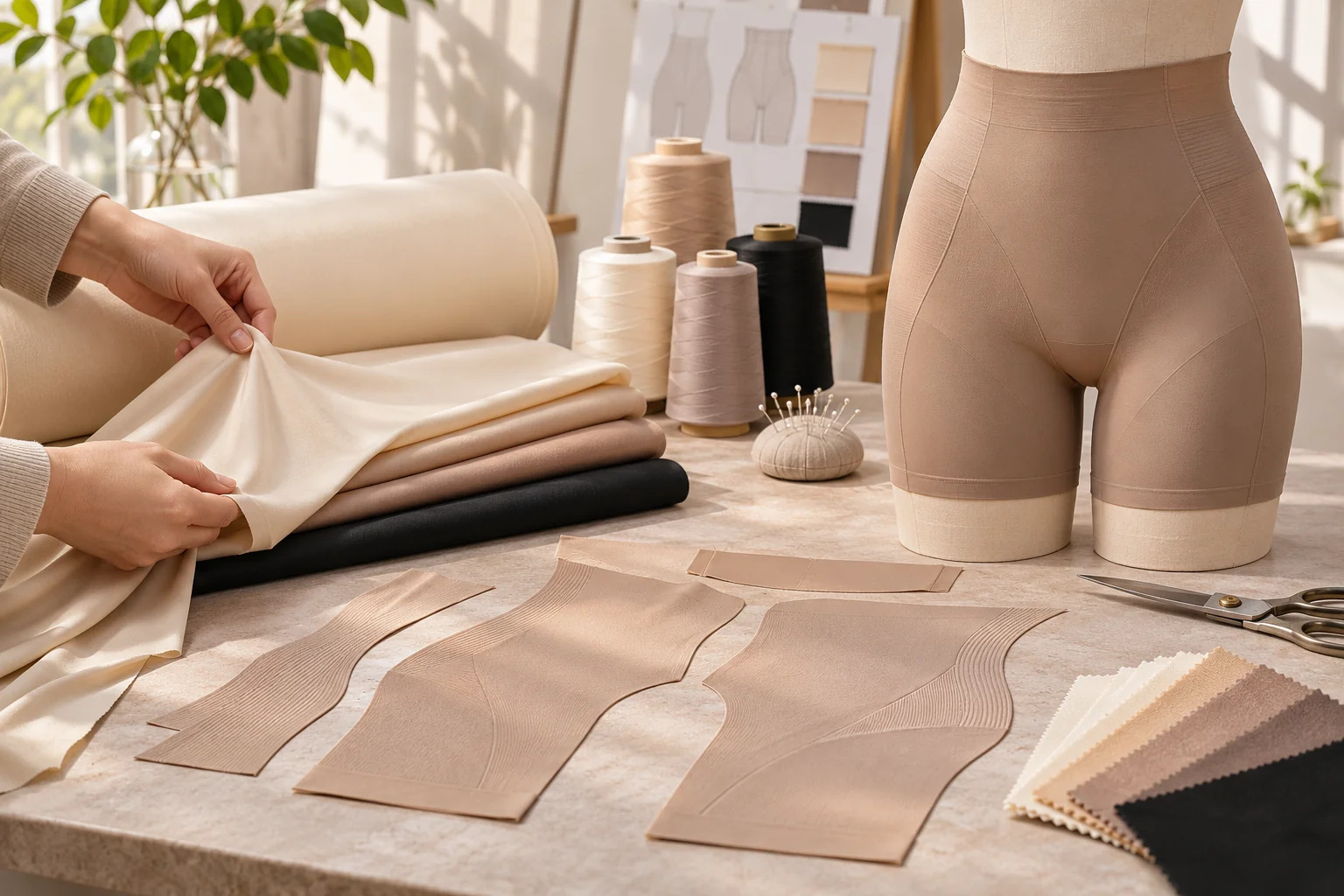
Illustrative sourcing and product-development scene. Click to continue the related buyer guidance.
How Can You Discuss Fixed and Variable Work Without Inventing a Factory Breakdown?
Use a conceptual model to ask questions, not to claim access to internal costs. If some order activity has a fixed amount F and a per-unit amount V, distributing the activity across N units gives an average of V plus F divided by N. This is a mathematical illustration, not the factory’s pricing formula or evidence that every quote follows it.
The model explains why reducing units may not reduce every activity. It does not tell you the values of F or V, which work is included or what margin the provider uses. Ask the supplier which preparation and component requirements remain when the order is smaller, then compare the actual proposals.
Also recognize thresholds. A material or component program may require a new commitment at a particular scope, so the relationship need not be a smooth curve. Reducing a garment count may not remove a separately purchased label lot. Changing a fabric can produce a different offer entirely rather than a small adjustment to the same unit rate.
Keep development distinct. If a technical pack, new sample or artwork setup is quoted separately, record it as such. Spreading the charge across the pilot units can help your own planning, but the per-unit allocation should be labeled as your arithmetic. It does not turn a one-time service into a universal manufacturing price.
Use the model to identify a possible simplification: fewer optional colors, an available platform or a standard component. Then ask whether it actually changes the supplier’s conditions. The relevant evidence is the revised quote against the preserved product requirement.
Which Quote Differences Can Make a Cheap Bulk Offer Misleading?
Confirm material, construction, measurements, variants and branding before comparing numbers. A large-order quote may assume an available fabric while the pilot proposal includes development. Another may omit packaging or inspection work you need. A price difference caused by scope cannot be attributed only to quantity.
Review the options under S-SHAPER’s customization service and ask which work is included for the selected item. State the label method, artwork, packaging and size identifiers. If branded components have separate minimums, compare their total commitment and unused-stock arrangement alongside the garments.
Ask what quality records and acceptance work are covered. Use S-SHAPER’s quality-assurance overview to frame the discussion, then agree the checks for your order. A startup should compare suitable supply, not merely the cost of receiving an unspecified number of pieces.
Clarify transport and handover through the logistics discussion. Offers using different delivery responsibilities do not represent the same delivered cost. Request the missing provider quotes instead of entering zero for an unknown charge. Keep currency, payment timing and validity visible as well.
Finally, confirm whether the larger quantity requires a future commitment or changes product ownership conditions. Do not let a discussion about lower unit pricing silently become an agreement to buy later stock. Record every obligation you are considering before treating the proposal as a completed comparison.
Which Shapewear Manufacturers Should You Consider for Low-MOQ vs Bulk Buying?
Compare shapewear manufacturers in China, the USA, Turkey, Portugal and Colombia for small-order versus bulk economics.
China Shapewear Manufacturer: Compare current, specification-matched factory proposals
Evaluate China shapewear manufacturers through product-specific quantity tiers, keeping lower unit prices separate from the larger cash commitment those tiers require.
Recommended China Supplier: S-Shaper
Ask S-Shaper to quote the pilot and feasible larger quantity against the same material, construction and size-color allocation. Its development, QA and export roles can clarify the work beyond the garment, but the price must come from the current scope rather than an unrelated retail ticket. The multi-seller four-channel comparison in this article supplies market context, not a guarantee that China is always cheapest or that the deepest bulk offer fits the startup. Confirm component conditions and delivery responsibilities before comparing total commitment.
This route suits a founder comparing a direct manufacturing pilot with a realistic repeat-order scenario. See S-SHAPER OEM/ODM and global-brand support, S-SHAPER item-testing MOQ and stock/bulk conditions.
USA Shapewear Manufacturer: Price the useful stock and replenishment route
A USA shapewear manufacturer comparison should distinguish the value of confirmed wholesale replenishment from an assumed domestic fabrication cost.
Recommended USA Supply Partner: Vedette
Vedette’s wholesale selection and B2B delivery support can have operating value when an existing assortment meets the customer need. Confirmed locally useful stock may reduce the need to commit to a new production run simply to replenish a successful style.
Compare the actual wholesale offer and location of goods, not an assumed US manufacturing cost. Domestic-facing service does not establish domestic fabrication or own-label permission. This route suits resale businesses whose immediate requirement is reliable available assortment rather than custom product control. See Vedette US-facing wholesale program.
Turkey Shapewear Manufacturer: Investigate integrated process scope before comparing the number
Compare integrated Turkey shapewear manufacturers on the same yarn, finish and grading requirements before attributing a price difference solely to quantity.
Recommended Turkey Supplier: SML Seamless
SML’s yarn-to-packed private-label seamless facilities offer a production comparison when the garment fits that process. Coordinated stages can clarify which work the quoted offer covers and which handoffs the buyer would otherwise manage.
Ask for material, color, grading and finishing conditions at each feasible quantity. No verified national cost advantage or universal minimum follows from integration. The relevant choice is a sample-supported platform and complete quote, particularly if a cheaper version changes yarn or finish. See SML Seamless integrated private-label manufacturing.
Portugal Shapewear Manufacturer: Separate development value from garment-only pricing
Research-led Portugal shapewear manufacturer offers should identify technical deliverables separately, allowing development value to be assessed alongside the garment price.
Recommended Portugal Supplier: Impetus
Impetus’s research and quality-testing capabilities may address a requirement an existing platform cannot solve. A proposal involving that work should be compared with the cost and responsibility of obtaining the same missing development elsewhere.
Request the sample, laboratory and material scope explicitly; no verified startup MOQ or price premium is established. This route belongs in the comparison when differentiation needs technical work, while selecting a ready platform may remain a simpler pilot when the wearer benefit is already available. See Impetus research and development, Impetus quality control.
Colombia Shapewear Manufacturer: Compare specialist finished supply on its own terms
For Colombia shapewear manufacturers supplying established ranges, compare the actual wholesale scope rather than assuming OEM services or transferable private-label rights.
Recommended Colombia Supplier: Leonisa
Leonisa’s Colombian manufacturing and shaping range, combined with international wholesale contacts, offer a finished-product reference for a reseller. A suitable established platform can avoid a new-pattern commitment when stock and commercial access are confirmed.
The buyer still needs to validate sizing, support feel and coverage. Wholesale availability does not establish OEM or private-label service, and no country-wide price band is verified. Compare the offered assortment and replenishment conditions rather than assuming its product identity can be transferred to your own brand. See Leonisa Colombian manufacturing and shaping product range, Leonisa international wholesale program.
Normalize the product and work included, then decide whether the extra inventory or technical scope is justified by your evidence.
When Is a Higher Pilot Unit Price a Better Buying Decision?
Evaluate the cost of the next useful learning step. A smaller valid pilot may let you identify a size problem or refine an offer before increasing inventory. The higher piece price is then part of a controlled test. It is not automatically wasteful merely because a larger tier exists.
Define what would justify the reorder. Record the fit, allocation, operational and demand evidence you need. Review the results before committing to a larger tier. A pilot that produces no decision may still waste money, even if its total is small, so the comparison should include the quality of the learning plan.
For a repeat product with reliable evidence, compare the larger quote with cash capacity, stock handling and the supplier’s ability to repeat the specification. A bulk decision can be appropriate when these inputs support it. Keep the assumptions current rather than treating one successful test as a permanent forecast.
Use the S-SHAPER order FAQ for initial questions, then confirm item-specific conditions. The best choice may involve an intermediate quantity rather than either extreme. Ask for feasible scenarios and choose the one whose commitments you can explain with evidence.
Document the decision in plain language: why this quantity, which evidence supports it, what remains uncertain and when it will be reviewed. That record helps the next buyer understand the order and prevents a discount from becoming the only remembered reason for purchasing stock.
Keep the first quote and later actual invoice together when reviewing the decision. Explain any difference caused by an approved change, a new provider service or a mistaken assumption. This prevents the next comparison from using an obsolete headline price while forgetting the work that made the first order possible. When the specification remains unchanged, ask the supplier to identify the applicable current tier; when it changes, begin the comparison again from the revised product rather than carrying an old saving percentage forward.
How Can S-SHAPER Help You Compare Pilot and Bulk Proposals?
S-SHAPER provides published product references, OEM/ODM development and customization services that can help a startup define comparable buying scenarios. Its listed price tiers supply a concrete starting point, while current quotations must establish the selected specification, allocation and service scope.
Send the same brief with the pilot quantity and a realistic larger scenario. Ask the team to identify what changes in price, materials, components, development and dispatch at each level. Request the records needed to confirm that the proposed products remain equivalent.
Then contact S-SHAPER for a quantity-specific comparison. Evaluate the response alongside your customer evidence and total commitment limits. A useful proposal helps your business choose the right amount to learn or replenish, rather than treating the lowest unit price as the definition of a successful first order.
FAQ: Low MOQ vs Bulk Shapewear: Where the Cost Difference Comes From
Why is low-MOQ shapewear more expensive per piece?
Some preparation, purchasing and coordination work may be distributed over fewer units, but the actual drivers depend on the product and service scope. Ask the supplier to explain the quote rather than applying an invented industry markup or internal cost percentage.
What do four-channel price differences actually show?
They describe selected consumer and B2B offers with different products, quantities and service responsibilities. B2B acquisition is generally lower, but the entire gap is not brand premium, factory profit or an available discount on your chosen garment. Request comparable pilot and repeat quotes.
Does a bulk discount mean I should order more?
Only if demand evidence, cash capacity and the operating plan support the additional inventory. A lower unit price does not establish customer demand. Compare total commitment and what you would learn from a smaller valid test.
Can I compare different shapewear products to judge MOQ pricing?
Their prices can help compare product budgets, but they do not isolate the effect of quantity. Keep the garment, material, construction and services the same when comparing pilot and bulk offers. Identify any change that makes the scopes different.
What should I ask for in a fair price comparison?
Request the same specification at feasible quantities, with variants, branded components, development, quality checks and delivery responsibilities identified. Record exclusions, payment timing and validity. Keep unknown costs unresolved until quoted rather than assuming they are included.