 EN
Quick Answer
Specify custom shapewear support through the intended wearing experience, body areas, construction and agreed testing—not only the words light, medium or firm. Tell the manufacturer who will wear the garment, where support is needed, which movements matter and which pressure or restriction sensations are unacceptable. Ask for sample options and a repeatable review method before approving the product.
Ordinary apparel support labels are not automatic medical pressure classifications. A stated compression value or therapeutic promise needs appropriate product-specific evidence and context. For an everyday shapewear project, begin with a clear functional brief, relevant fit trials and an agreed specification that the supplier can manufacture and check.
What Should a Support-Level Brief Tell the Manufacturer?
Describe the wearer and activity. Seated workwear, walking, occasion dressing and a bodysuit used under a particular outfit can create different requirements. Explain the coverage, desired smoothing result and the part of the wearing experience that current products do not handle well. A request for maximum compression does not define an acceptable customer result.
Identify the zones that matter. The front abdomen, waist, hips, thighs, bust or back may have different roles depending on the garment. Ask the developer to propose a construction appropriate to the intended result rather than prescribing a universal material percentage or assuming every zone should feel equally restrictive.
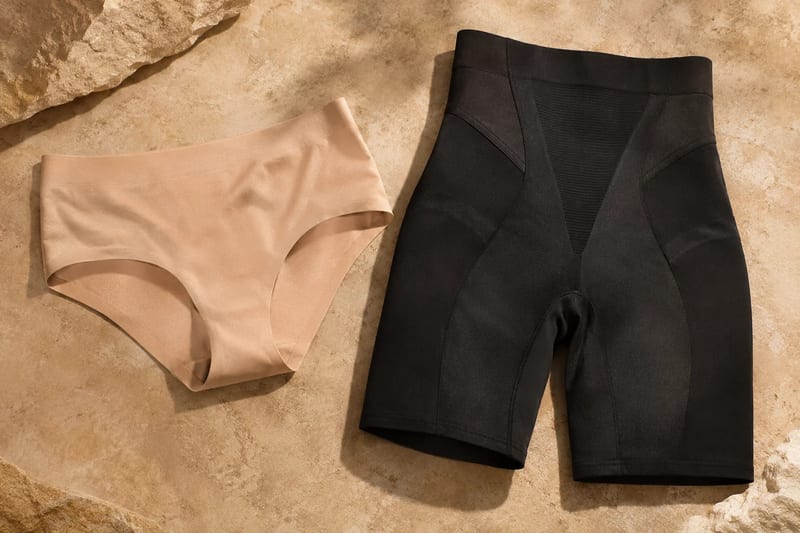
Use S-Shaper’s product catalogue to choose a relevant platform. A shaping brief and a full bodysuit distribute coverage differently, so the same support adjective does not describe an equivalent garment. State which reference features are useful and which observations you want improved.
Describe unacceptable trade-offs. Examples include difficulty dressing, a waistband that folds while seated, restricted movement in the intended task or uncomfortable edge pressure. These observations should be connected to the actual wearer and version, not presented as universal thresholds for every product.
Ask what evidence the next sample will provide. If the supplier proposes two options, identify the differences and review them under consistent conditions. A founder can compare the experience without pretending that a subjective preference is a laboratory pressure measurement. The brief should make that distinction explicit from the start.
| Brief field | Useful buyer description | Question for development |
|---|---|---|
| Wearer/use | Relevant activity and outer clothing | Which platform can serve the context? |
| Support zones | Areas needing the intended smoothing or hold | Which construction changes are appropriate? |
| Movement | Sitting, walking and dressing tasks | What should remain comfortable and usable? |
| Limits | Specific unacceptable observations | How will the sample address them? |
| Evidence | Wear trial and any scoped measurement need | What can each result actually establish? |
Apparel Support Levels vs Medical Pressure Values: What Must Stay Separate?
Light, medium and firm are descriptions that need product context. They can help customers understand a relative range when the brand defines it consistently, but they do not establish a universal measured pressure. Do not convert a supplier’s support adjective into a numerical medical classification without appropriate evidence.
Hohenstein describes testing of compression effects and pressure profiles for sports and leisure textiles, including shapewear-related evaluation. The existence of such measurement services shows that objective assessment can be scoped; it does not provide a test result for your particular garment. Ask the laboratory or qualified provider which method and interpretation fit the intended product.
Keep product claims within the evidence obtained. A consumer trial describing a smoother appearance cannot establish a therapeutic effect. A material certificate does not automatically describe the pressure of a finished garment on a wearer. A report for another size or construction should not silently become the proof for your complete range.
If the planned product or market claim crosses into a regulated or clinical use, obtain the appropriate specialized review before defining the specification and marketing. This article addresses ordinary apparel procurement and does not assign treatment pressure levels. The buyer’s practical task is to separate the requested experience, measured evidence and permitted claim.
| Evidence or description | Can help with | Does not establish alone |
|---|---|---|
| Light/medium/firm label | Brand-defined relative communication | Universal pressure or medical class |
| Wear feedback | Comfort, movement and use observations | Quantified pressure or therapeutic outcome |
| Scoped garment measurement | Defined pressure or performance question | Every size, wearer or clinical claim |
| Material information | Identity and relevant textile characteristics | Finished-garment support on the full audience |
How Do Material, Fit and Construction Work Together?
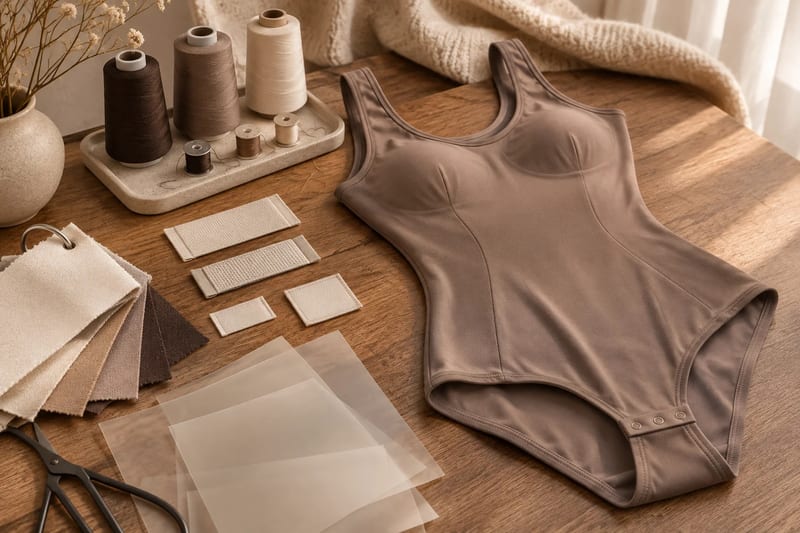
Ask the developer to evaluate the complete garment rather than one isolated number. The material, pattern dimensions, panels, openings and assembly all contribute to the experience. A textile with a familiar composition can behave differently in another construction or on another body proportion.
The LYCRA Company describes shaping-fabric evaluation through performance and comfort metrics. That supports discussing both outcomes instead of assuming more elastane or a tighter silhouette automatically creates a better product. It does not establish that every fabric or garment using a named fiber has identical support or a verified pressure profile.
Review options through S-Shaper’s customization service. Request the proposed material identifiers and a clear explanation of why each option addresses the brief. If the supplier changes fabric after the first fitting, revisit the relevant fit and care observations rather than approving the substitution because the color looks similar.
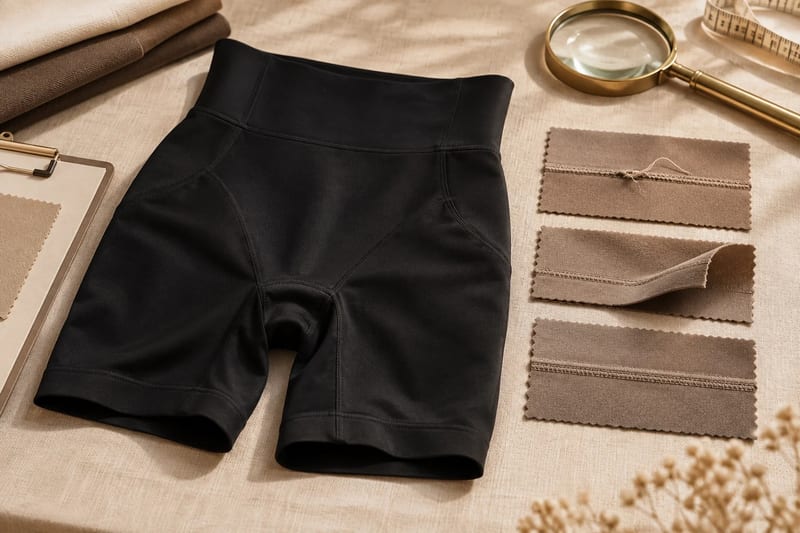
Ask about the edges and components as well as the main support area. Waistbands, thigh openings, straps and closures can create local discomfort or movement even when the body of the garment seems suitable. Record where an issue occurs and let the developer explain the proposed correction.
Confirm how the solution applies across sizes. A support-feel preference in one mid-size sample does not prove the grading serves every intended measurement. Ask which sizes require physical review and what evidence is available for the rest. A credible specification connects the material and construction with the range the brand actually plans to sell.
Illustrative sourcing and product-development scene. Click to continue the related buyer guidance.
How Can You Compare Support Samples Without Inventing Precision?
Use the same trial tasks and recording method for each sample. Identify its material, size and version, then collect the wearer’s relevant measurements and use context. Ask participants to describe the experience before applying a score. Specific observations are easier to translate into development decisions than a single comfort rating.
For a comparison, define a small set of questions: can the person dress and use the closure, does coverage stay where intended, how do edges behave during movement, and is the garment appropriate under the target clothing? Adapt the tasks to the use case rather than treating them as a universal performance standard.
A hypothetical planning matrix with two sample options, three tasks and four participants creates 24 option-task observations. That is 2 × 3 × 4, not 24 independent customers or a representative survey. Keep repeated observations and participant counts separate so the report does not exaggerate its evidence.
Record the intended care routine and compare the samples afterward using the agreed criteria. If the result raises a technical question, request appropriate further evaluation rather than assigning an unmeasured pressure number. Wear feedback and instrument measurements can contribute different information to the decision.
Discuss checks through S-Shaper’s quality-assurance process and agree how the accepted product will be identified for production. Choose the option that meets the brief with an understood trade-off, or request a defined revision. Do not choose the tightest sample simply because it seems easiest to describe as high support.
| Illustrative trial setup | Calculation | What to report accurately |
|---|---|---|
| Two options × three tasks × four participants | 24 option-task observations | Four people; repeated comparisons |
| One participant with several observations | Multiple records | Not multiple independent buyers |
| Observed preference | Context-specific feedback | Not a measured medical pressure result |
How Should Support-Level Development Be Budgeted Against Four-Channel Prices?
Compare the product family and evidence behind the support description before using any public price. A basic seamless garment and a more structured faja may differ in panels, coverage and components. The four-channel observations establish sampled product offers, not a universal price for light, medium or firm support and not a medical-pressure classification.
| Channel / buying model | Observed USD per garment | Product and order basis |
|---|---|---|
| Amazon US complex body shapers | $34.88–$43.99 | FeelinGirl faja and Maidenform built-in-bra body; dated snapshots |
| Brand DTC sculpting/occasion bodies | $69.00–$148.00 | Shapellx/SPANX styles with different coverage and closure designs |
| TikTok Shop US faja bodies | $39.99–$54.99 | FeelinGirl/YIANNA single-item offers; flash-deal terms apply |
| B2B structured bodies / fajas | $14.00–$27.42 | Free Market, Honesty and Yilairuika; MOQ 500/3/1; no clinical claim verified |
B2B finished-garment prices are generally lower than consumer tickets, while changed materials, construction or scoped testing can add separate work. Amazon and TikTok Shop promotions and B2C brand positioning also affect the comparison. The spread cannot all be attributed to stronger compression, brand premium or a support-development service.
Request a controlled proposal for the support options on the intended platform. Identify the material, sample purpose, relevant measurements or wear trials, and any separately quoted evaluation. Consumer prices can frame the market proposition, while only the accepted specification and supplier quote define the manufacturing commitment. Do not buy an unsupported pressure claim because its retail ticket is higher.
US-facing USD per single garment, reviewed November 10, 2026. Amazon uses dated May–October 2026 third-party PriceHistory snapshots, not live November checkout. These selected-seller observations are not industry averages or matched-quality comparisons. Variants and promotions change; shipping and tax are not normalized. B2B bands describe advertised garments, not landed costs or a final custom-development quote. Sources: dated PriceHistory Amazon records, official brand/TikTok Shop pages and Made-in-China supplier listings.
Which Shapewear Manufacturers Should You Compare for Support Development?
Compare the capability needed to define and validate the support experience. Direct development, textile research and an established finished shaping range offer different starting points; none proves a universal support level from its country or product name.
China Shapewear Manufacturer: Define the Support Requirement
China shapewear manufacturers offering material and product development should translate support adjectives into a wearable construction proposal and sample plan before committing a brand to an unexamined performance claim.
S-Shaper
S-Shaper describes material, function and trend recommendations with design, QA and export specialists for international brands. Ask its development team to propose options for the actual zones and movements in the brief, with identified materials and approval criteria. Public testing quantities remain item-specific, not universal access to every custom support construction. Use factory price references only as a baseline, then confirm development, material availability and dispatch dependencies for the accepted solution.
Portugal Shapewear Manufacturer: Scope the Technical Evidence
Research-oriented Portugal shapewear manufacturer proposals may be relevant when a support concept requires material or construction investigation, provided the buyer distinguishes technical capability from a result for its garment.
Impetus
Impetus describes research partnerships and development across seamless and cut-and-sew products, with physical and chemical testing functions. These capabilities can inform questions about validation and the final product record. Request the relevant sample and test scope, material commitments and actual startup conditions. No verified universal MOQ or medical-pressure claim follows from the process description. This route suits a technical development need rather than a simple branding change on an already suitable platform.
Colombia Shapewear Manufacturer: Evaluate the Actual Shaping Platform
Colombia shapewear manufacturers supplying established shaping products offer a finished-platform comparison, but the intended audience still needs to evaluate sizing, coverage and support feel rather than rely on national reputation.
Leonisa
Leonisa identifies Colombian manufacture and a substantial shaping range with international wholesale contacts. A suitable available product may help a reseller compare the wearing experience without commissioning a new pattern. Confirm variant availability and resale conditions, then test the actual platform under the intended clothing and tasks. Wholesale access does not establish OEM or private-label support customization, and an existing product’s name is not evidence of a medical pressure level or a uniform fit result.
Turkey Shapewear Manufacturer: Connect Seamless Inputs and Fit
For Turkey shapewear manufacturers with integrated seamless operations, compare the yarn, knitting, finishing and grading decisions behind the sample instead of assuming process integration establishes the desired support experience.
SML Seamless
SML describes private-label shapewear across yarn-to-packed facilities. A compatible support concept can be discussed through connected production stages, but the proposed material and construction still need relevant trials and agreed checks. Confirm the actual minimums, color conditions and sample deliverables before planning the order. The route is useful when capability matches the garment; it does not support a country-wide price or quality conclusion, nor automatic evidence for a clinical claim.
Select a route that can define the intended experience and evidence for your product, then approve the construction rather than an unsupported support label.
What Should the Final Support Specification and Customer Description Say?
Record the accepted material, construction, size chart, relevant support zones and reference sample. Include the trial or measurement evidence used and its limits. The production team needs identifiable inputs and checks; it cannot manufacture consistently from a mood such as powerful but comfortable alone.
Define how proposed changes are evaluated. A different material, panel or opening can affect the experience, so require review before substitution. Identify which sample and evidence authorize the change and whether more sizes need testing. Keep the current version linked to the quote and production release.
Use customer language consistent with what the product review established. Describe coverage, wearing context and brand-defined support meaning accurately. Avoid translating a preference score into a pressure claim or suggesting therapeutic outcomes the project has not established.
Review the supply and dispatch handoff with the correct variant identifiers and any relevant version change. Customer support and store guidance should describe the garment actually shipped, especially if a new material or construction is introduced on a reorder.
Preserve feedback after launch. Repeated issues about a zone, movement or size should return to the development brief with context. A support specification is more useful when it supports an evidence-based revision process than when it becomes a fixed marketing adjective disconnected from the actual wearer experience.
How Can S-Shaper Help Scope a Custom Support-Level Discussion?
S-Shaper presents product development, material recommendations and customization alongside manufacturing and QA support. For a startup, these services can help turn a support-feel preference into a proposal with physical options, sample purposes and appropriate approval records. The actual construction and scope need confirmation for the garment.
Share the intended wearer and market, support zones, wearing tasks, reference observations and size direction. Ask the team to explain the proposed material and construction, the evidence each sample will provide and which additional evaluation may be needed. Use the order FAQ as preliminary context rather than a universal customization promise.
To begin, request a support-focused development discussion with S-Shaper. Compare the response with the benefit your brand can substantiate. The goal is a clearly defined apparel product and manufacturing record, with claims and customer guidance kept within the evidence the project actually establishes.
FAQ: Customizing Shapewear Support Levels: What to Specify
How can I specify the support level I want?
Describe the wearer, use, zones, movements and unacceptable trade-offs. Ask for identified material and construction options, then compare samples under consistent tasks. Light, medium and firm need product-specific meaning rather than being treated as complete technical instructions.
Does firm shapewear mean a medical mmHg level?
No automatic equivalence is established. A measured pressure or clinical claim requires appropriate product-specific methods, interpretation and evidence. Ordinary apparel support language should remain distinct from medical classifications and unsupported treatment promises.
Can I choose support from elastane content alone?
Composition is useful material information, but the complete garment’s fit and construction also matter. Review the proposed platform and actual sample. A fiber percentage alone does not establish the wearer experience or a quantified pressure result.
Should I pick the tightest sample?
Choose the option that meets the use requirement with acceptable dressing, movement, coverage and comfort. Stronger sensation is not automatically a better product. Record the trade-offs and relevant evidence rather than selecting a label that sounds more impressive.
What should be confirmed before bulk production?
The accepted version, material, construction, measurements, variants, reference and relevant checks, with claims matched to available evidence. Reconfirm the quote and change process. A proposed support modification should not enter production under an obsolete platform specification.