 EN
Quick Answer
Custom shapewear colors can have different minimum orders because the request may introduce a separate material-color program, matching work and coordinated components rather than simply another label on an available garment. Ask which fabric, trim or production requirement drives the minimum, how much must be purchased and who owns any remainder. The exact threshold is supplier- and product-specific.
For a startup, compare a new custom shade with available colors that can still meet the wearer need. Approve physical references and the relevant components before production. A screen image or color name alone does not define the finished garment, and a lower garment count does not necessarily reduce the underlying material commitment.
What Does a Custom Shapewear Color Order Actually Change?
Start by asking what is already available. A supplier may hold a suitable material in a standard color, have finished garments in that color or need to arrange a new material purchase. These are different supply conditions. A catalogue photograph does not establish which condition applies to the product you want.
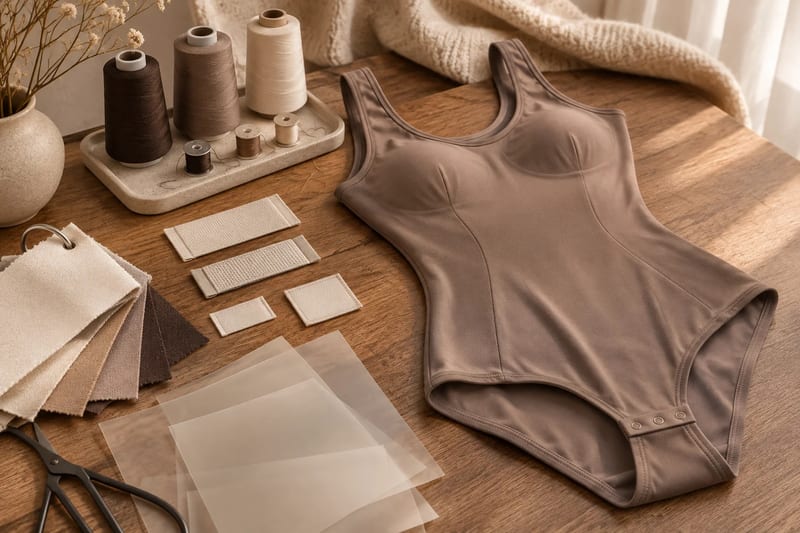
Then identify the color-bearing parts of the garment. Main fabric, panels, elastic, thread, straps, closures and labels may need separate decisions depending on construction. Not every part has to be an exact visual match; the design may intentionally use a contrast. The important point is that the intended relationship is approved rather than left to interpretation.
Discuss the options on S-SHAPER’s customization page, which includes color customization and Pantone matching as services to request. Ask how the chosen reference will be translated to your material and which approvals the team needs. A service offering is not a universal promise that any shade can be supplied at the lowest product quantity.
Clarify whether the proposal concerns fabric supplied in the chosen color, dyeing or finishing an existing garment, or another production route. Do not assume a process from a photograph. Ask the manufacturer to describe the actual method and the effect on material behavior, sample requirements and commercial scope.
Write the request as a component map: part, material, reference, intended match or contrast, approval status and responsible party. This prevents one accepted swatch from being treated as approval of every part of the finished garment. The map also makes later substitutions easier to evaluate against the original design intent.
| Color-related element | Question for the supplier | Record to retain |
|---|---|---|
| Main fabric | Existing shade or new procurement? | Material and shade identifier |
| Elastic or straps | Matching, coordinated or contrast? | Approved component reference |
| Thread and seams | Which visual relationship is intended? | Sample and matching decision |
| Labels and packaging | Does the brand color need separate approval? | Final artwork and physical proof |
| Finished garment | What sample represents all parts together? | Approved combined reference |
Why Can the Fabric Commitment Exceed the Garment Quantity?
The quantity needed to organize a material-color program may differ from the number of finished garments your startup wants. Ask the supplier to describe that relationship in its own purchasing units. Fabric quantities, component counts and garment pieces should not be casually converted without the agreed consumption and process assumptions.
Avoid inventing a universal dye-lot minimum. The relevant amount can depend on the chosen material, process and supplier arrangement. Your task is to obtain the actual requirement and understand which commitment belongs to your order. A general explanation of batching cannot replace a quotation for the specific shade and fabric.
Ask what happens to any remainder. Will you buy it, will the supplier retain it under an agreed arrangement, or is it incorporated into the commercial offer another way? Request the quantity, ownership, storage conditions and possible later use. A reduced finished-garment count may still leave a substantial material commitment.
Also ask whether the remainder can be used if the design changes. A future garment may need another fabric, shade or construction, so unused material is not automatically equivalent to cash saved on the next launch. Keep the potential use explicit rather than assuming all remaining stock will eventually be consumed.
For a first test, compare this commitment with an available-color alternative. If an existing shade can honestly support the customer use case, it may let you learn about fit and demand before undertaking the custom-color program. If the shade itself is essential to the use case, preserve that requirement and evaluate whether the startup is ready for the corresponding scope.
Existing Colors vs Custom Colors: Which Route Should a Startup Compare?
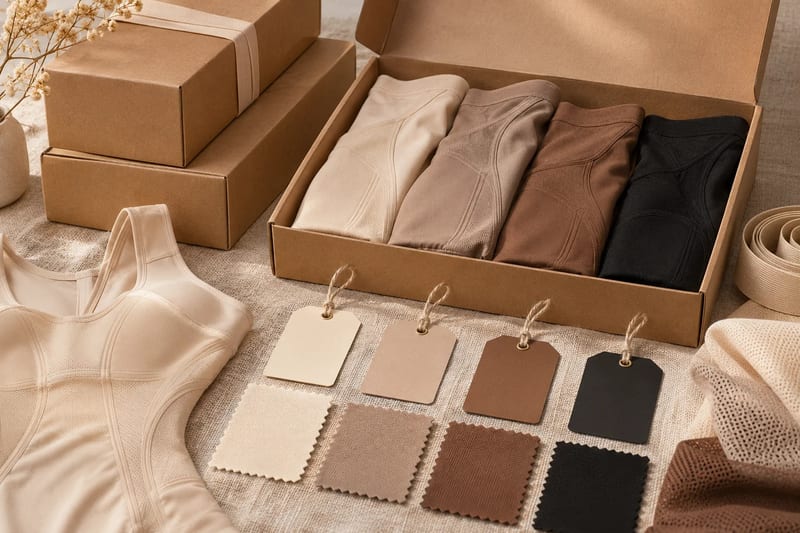
Available colors can simplify the number of new purchasing and approval decisions, provided the supplier confirms the actual material and variant availability. They may limit the exact brand presentation. Custom colors can support a distinctive visual direction or an outfit-related requirement, while introducing new sampling and coordination work.
The choice should begin with the wearing problem. A customer may need the product to work under a particular outer garment; the exact effect must be tested physically. A brand may prefer a signature shade for identity; that preference should be evaluated against the first-order commitment. These are different reasons and deserve different priorities.
Do not equate a custom shade with an exclusive product. The underlying pattern or platform may still be shared, and exclusivity requires its own agreement. Equally, an available color does not prevent a startup from creating useful fit guidance, service and a clear product proposition. Color is one part of the offer.
Ask for the two routes on comparable terms: same garment purpose, material requirements and target size range, with differences identified. If the custom-color proposal changes the fabric or construction, evaluate those changes separately. The decision should not appear to be only about color when the actual garments differ in other meaningful ways.
| Buying issue | Available color | Custom shade |
|---|---|---|
| Product reference | Confirm current material and stock | Confirm proposed material-color program |
| Approval work | Validate the selected version | Approve color references and combined garment |
| Main commitment | Quoted item and components | Quoted item plus any new material/component scope |
| Potential compromise | Limited palette | More development and coordination |
| Useful first question | Does this shade meet the use case? | Why is this new shade essential now? |
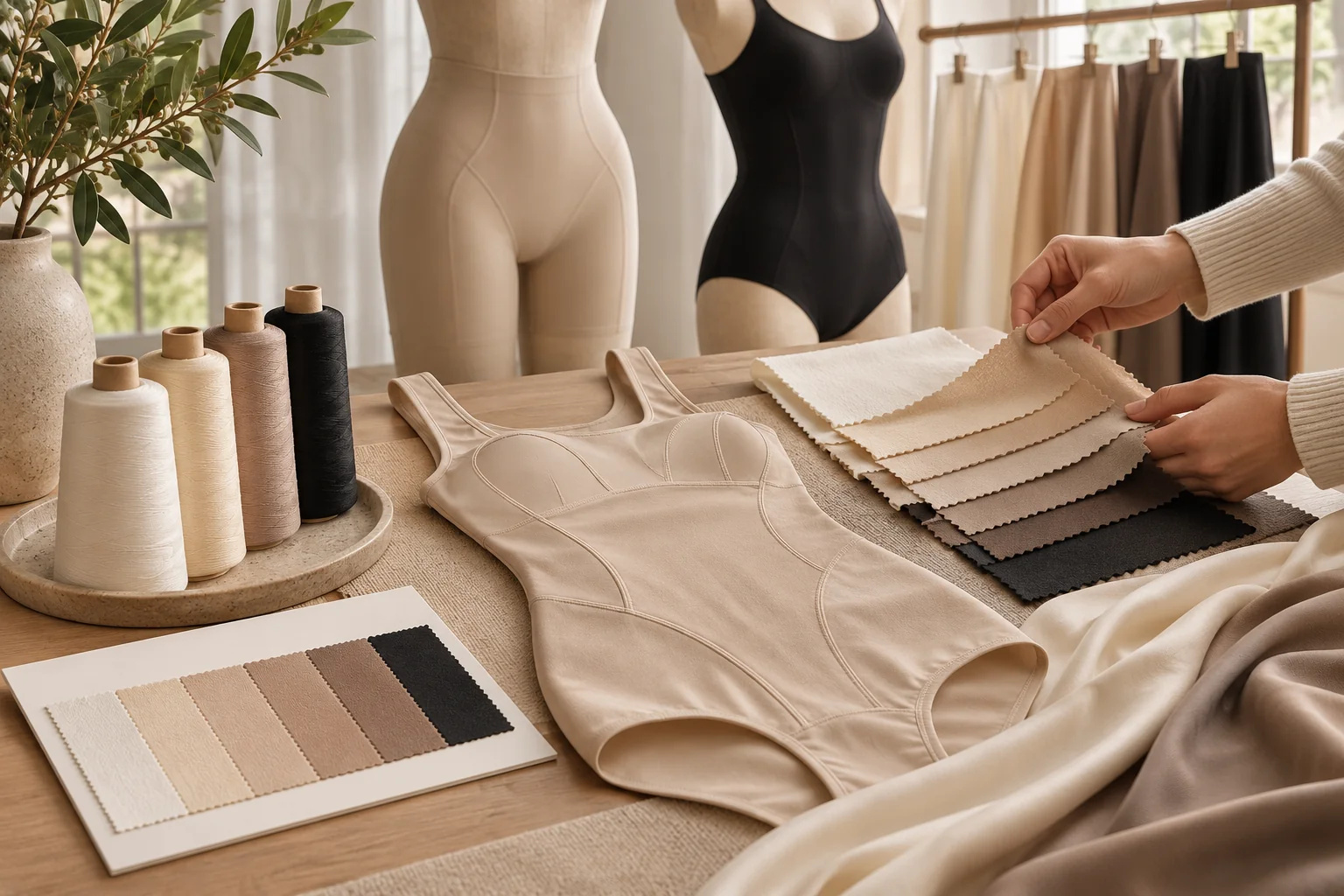
Illustrative sourcing and product-development scene. Click to continue the related buyer guidance.
How Should You Approve a Color Beyond a Screen Image?
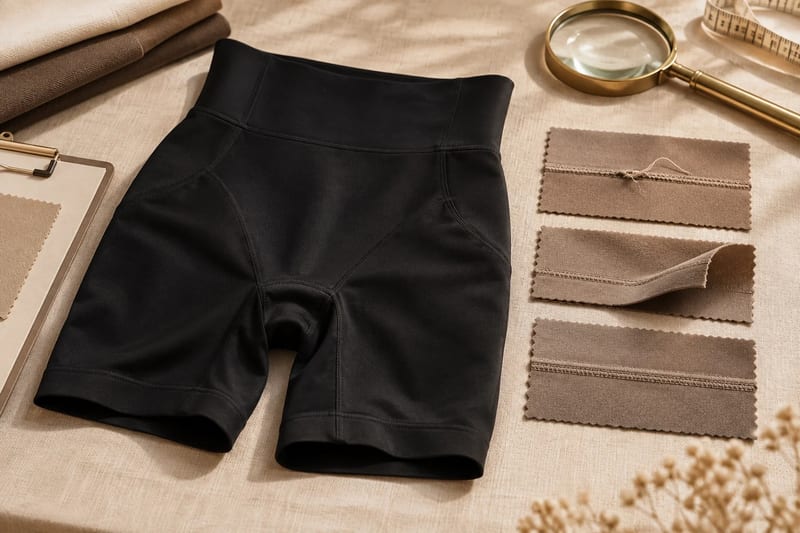
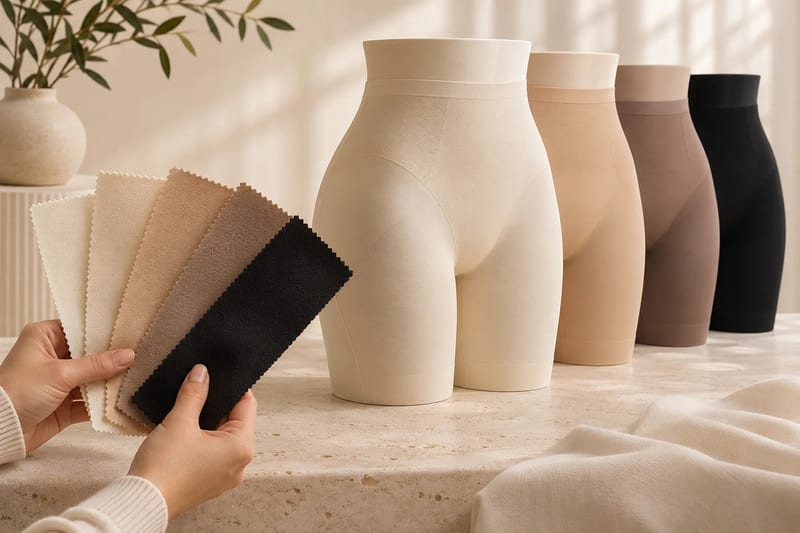
Ask for a physical reference appropriate to the material and production route. A digital color code can help identify the intended standard, but the final decision concerns the textile and garment you will supply. Keep the approved reference identified and available to the people making the next sample.
Lighting is part of evaluation. Coats explains metamerism as a situation in which samples that match under one light no longer match under another. That supports checking the agreed relationship under relevant conditions rather than accepting an image viewed on an unknown screen. Source: Coats: metamerism and different lighting conditions
X-Rite also explains how metamerism can change whether samples appear to match under different lights. Ask the supplier which visual and measurement methods it proposes for your order, and agree acceptance criteria rather than inventing an arbitrary tolerance. This guide does not prescribe an instrument or threshold for every material. Source: X-Rite: metamerism and color appearance under different lights
Review the parts together. A main fabric approval does not resolve the relationship with straps, thread or elastic. Request the sample stage at which the combined appearance can be assessed. Record intended contrasts as well as matches so the inspection team knows which differences are deliberate.
Then review the product’s practical use. Check appearance under the intended outer clothing, relevant stretch and the care routine using agreed methods. If color development changes the material or finish from the platform tested earlier, revisit the associated fit and performance observations. Approve the whole product version rather than treating color as detached from the garment.
Standard Listing vs Custom Color: Which Channel Prices Are Relevant?
A standard-color retail or wholesale observation does not price a new material-color program. Use the four-channel comparison to locate product positioning and commercial layers, then request the specific shade, fabric and component proposal. Separate everyday seamless products from structured fajas before assuming a price difference comes only from color.
| Channel / buying model | Observed USD per garment | Product and order basis |
|---|---|---|
| Amazon US retail bodies | $12.38–$35.14 | Seamless/lighter bodies $12.38–$19.99; Structured bodies $35.14–$35.14. |
| Brand DTC bodies | $29.99–$148.00 | Seamless/lighter bodies $29.99–$78.00; Structured bodies $69.00–$148.00. |
| TikTok Shop US bodies | $21.99–$54.99 | Seamless/lighter bodies $21.99–$46.99; Structured bodies $39.99–$54.99. |
| B2B advertised OEM bodies | $4.25–$8.30 | Rihope/Shangyou garment offers; listing MOQ 600/100; own-design terms reconfirmed |
| B2B custom shiny-fabric example | $22.00–$23.00 | Hucai FOB garment example, MOQ 200; a different fabrication; development fees unconfirmed |
US-facing USD single-garment observations reviewed November 10, 2026; variants, retail promotions and shipping/tax differ. Amazon uses May–October 2026 tracker snapshots, not live November checkout. These selected samples are not industry averages or matched constructions. B2B advertisements are not landed costs or final custom quotes. Deeper development needs separate specifications, deliverables and an itemized quotation.
B2B generally sells below the consumer layer because the buyer funds more downstream work, yet a standard bulk tier may exclude color development, matching or unused material commitments. A brand premium can include presentation and service, while consumer promotions and selected variants can alter the displayed price. Ask S-Shaper whether an available shade meets the wearer requirement and what additional scope the new color introduces. Confirm physical approval, accepted quantities and component responsibility before comparing totals. A lower finished-unit count does not necessarily remove the material commitment, and the table does not establish a universal custom-color surcharge.
The advertised OEM and shiny-fabric garments are different specifications, not development packages. Seamless stock, structured fajas and deep customization require separate scope confirmation.
Which Shapewear Manufacturers Should You Consider for Custom Colors and Dye-Lot Requirements?
Compare shapewear manufacturers in China, Turkey, Portugal and France for a custom-color development brief. The recommendations below connect country-level capabilities with specific suppliers and the work your brand needs.
China Shapewear Manufacturer: Connect the shade request to a supported product platform
China shapewear manufacturers should connect a custom shade with the actual material, components and approval stages, rather than treating a color reference as a complete production instruction.
Recommended China Supplier: S-Shaper
S-SHAPER’s design and production specialists can discuss materials and functions alongside the desired shade, while QA and export colleagues help define the approval and supply handoff. Its international-market experience can inform whether the color is essential to the intended wearing context or mainly a presentation preference.
Ask whether an existing material-color option meets the brief before authorizing a new commitment. Published small-order conditions apply to particular items and scopes, not automatically to every custom shade. The direct manufacturing route is useful when the founder wants coordinated advice and a factory-price reference, provided the component map and actual color-program quotation are confirmed. See S-SHAPER OEM/ODM and global-brand support, S-SHAPER item-testing MOQ and stock/bulk conditions.
Turkey Shapewear Manufacturer: Follow color through an integrated seamless route
For integrated Turkey shapewear manufacturers, trace the proposed color through yarn, knitting and finishing decisions while confirming which component matches and sample approvals remain outside the headline quantity.
Recommended Turkey Supplier: SML Seamless
SML identifies integrated yarn-to-packed facilities, including the production context relevant to seamless private-label garments. A custom-color discussion can therefore ask how material, knitting, dyeing and finished appearance are coordinated within the proposed workflow instead of treating color as a separate decorative instruction.
Request the actual yarn and shade conditions, sample stages and responsibility for matching components. No verified universal minimum is available here. This route suits a compatible seamless concept, but material behavior, finish and graded fit still need validation; an easier color arrangement is not equivalent if it changes the garment’s essential wearing result. See SML Seamless integrated private-label manufacturing.
Portugal Shapewear Manufacturer: Define the material question before funding research
A custom shade that interacts with fabric behavior gives research-oriented Portugal shapewear manufacturers a technical question; obtain a defined investigation scope instead of assuming a universal color guarantee.
Recommended Portugal Supplier: Impetus
Impetus describes research partnerships and quality work spanning physical and chemical testing of materials and finished parts. That offers a technical development conversation when the shade request interacts with a special fabric or construction and the founder needs more than a visual presentation change.
Ask which investigation and sample work is relevant to the selected textile, and obtain the material and testing commitments in the proposal. These capabilities do not establish a product-specific color guarantee or a startup minimum. Consider this route when the technical problem warrants the work, while comparing an available-color platform if the benefit can already be achieved. See Impetus research and development, Impetus quality control.
France Shapewear Manufacturer: Judge the color in its intended outfit application
For occasion-led products, France shapewear manufacturers or development partners should assess the shade under the intended outfit before distinguishing essential discreet appearance from a preferred brand color.
Recommended France Supplier: Gilsa Paris
Gilsa’s bridal and invisible-lingerie specialization makes the outer garment a useful starting point for color selection. An existing solution may already provide the required discreet appearance; own-label adaptation or specific development can be discussed if it does not. That can keep a founder focused on the actual wearing result.
The trade-off is product-dependent minimums and a need to quote new development and packaging. A preferred brand shade should not silently become an essential technical requirement. Request the physical approval appropriate to the proposed product and identify the manufacturing arrangement; French design or service does not establish the origin of every finished garment. See Gilsa Paris professional resale and own-label development.
Choose a route that can explain the complete material-color decision, then approve the physical product rather than purchasing a country-level promise.
What Should Your Order Say About Shade Changes and Reorders?
Identify the approved material-color version, component map and combined sample in the order. Ask how production batches will be referenced and what evidence will be available if the appearance differs. The objective is traceability to the agreed standard, not a vague assurance that the shade will be close.
Discuss the relevant checks through S-SHAPER’s quality-control overview. Confirm who reviews materials, components and finished appearance, and what happens when a proposed lot does not meet the agreed criteria. If an independent inspection is used, provide the references and instructions it needs rather than assuming the inspector knows your design intent.
Require proposed substitutions to be identified before use. A different fabric, component or finishing route should be evaluated for the product and shade requirements. Keep approval authority clear so a purchasing convenience does not silently change the garment.
For reorders, ask whether the same material and shade program remains available and how remaining stock is handled. Review any new lot against the agreed method. Keep customer photographs and descriptions aligned with the supplied version, especially if a deliberate shade change is introduced later.
Use the logistics discussion to confirm how variants and lots will be identified during packing and receiving. A beautifully approved shade is not enough if the cartons cannot be reconciled with the correct product versions.
How Can S-SHAPER Help Scope a Custom-Color Shapewear Project?
S-SHAPER presents color customization, material options and branding support alongside its shapewear catalogue and OEM/ODM services. These offerings provide a relevant starting point for comparing an existing-color platform with a new shade program. The actual minimum, cost and sample process need confirmation for your selected garment.
Send the intended market, product reference, essential color requirement, size range and proposed quantity. Explain whether the shade is needed for a wearing result or preferred for brand presentation. Ask the team to identify available alternatives and the additional commitments attached to the custom route.
Then contact S-SHAPER for a color-specific proposal. Request the physical approval stages, component responsibilities and commercial scope before authorizing procurement. A useful proposal should help your startup decide whether the custom shade belongs in the first test or in a later, better-supported order.
FAQ: Why Custom Shapewear Colors Have Different Minimum Orders
Why does a custom color change the minimum order?
The request may introduce a separate material-color program, coordinated components and additional approvals. Ask which requirement actually drives the threshold for your product. There is no universal dye-lot quantity established by these sources.
Can I approve shapewear color from a photograph?
A photograph can communicate direction, but it should not replace the agreed physical evaluation for the material and garment. Lighting and display conditions can alter the appearance. Identify the reference, evaluation method and combined component approval needed for the order.
Does a Pantone reference guarantee an exact finished match?
It identifies a color direction or standard for discussion, while the finished textile still needs the agreed approval process. Ask how the supplier interprets the reference on the selected material and how acceptance will be judged. Do not infer a guarantee from the code alone.
Should I launch with an existing color instead?
Compare whether it meets the wearer need and the brand’s first-test purpose. An available shade may simplify scope, but it should be physically validated. If the custom shade is essential, evaluate its actual commitment instead of treating the requirement as optional.
Who pays for unused custom-color material?
That must be agreed with the supplier. Ask about quantity, ownership, storage and later use before procurement is authorized. A small finished-garment order does not automatically eliminate the material commitment or guarantee that the remainder will suit a future product.