




Custom asymmetrical shaping shorts are quickly becoming a strategic category for Japan-based intimates labels seeking differentiation, refined fit, and everyday comfort aligned with local consumer expectations. For brands targeting the Japanese market, success depends less on aggressive compression and more on subtle shaping logic, precise pattern engineering, and flawless execution at scale. Working with an experienced OEM/ODM partner early allows brands to balance aesthetics, comfort, and manufacturability while protecting margins and delivery timelines.
If you are planning to develop or upgrade an asymmetrical short girdle program for Japan, this guide outlines the key technical, commercial, and operational considerations. Brands looking to accelerate sampling, reduce development risk, or build private label-ready collections are encouraged to contact our team early for OEM/ODM planning, fabric selection, and cost structuring support tailored to Japan’s intimates market.
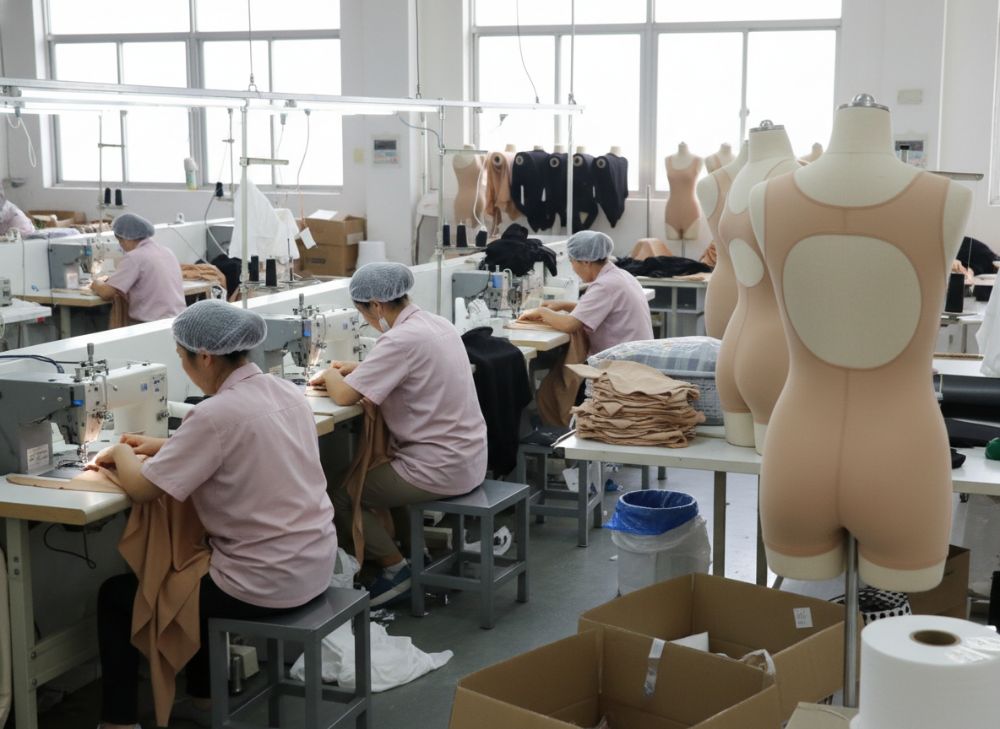
Asymmetrical short girdle designs for Japanese lingerie brands
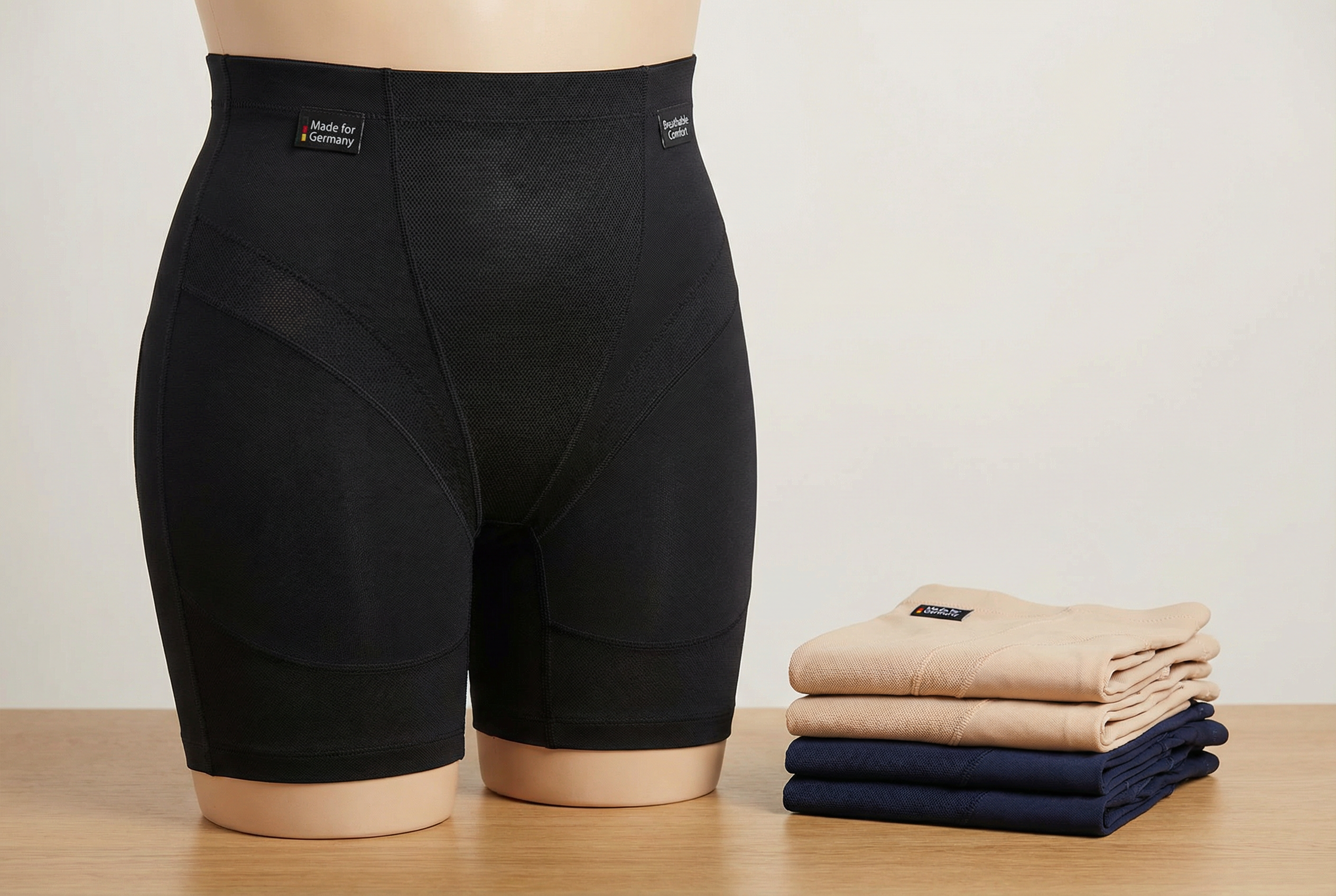
Asymmetrical shaping shorts for Japanese lingerie brands prioritize visual lightness and functional discretion. Rather than dramatic contouring lines, these designs often rely on offset panels, single-side reinforcement, or diagonally placed compression zones that smooth the waist, hip, or lower abdomen without creating a “corset effect.” This aligns with Japan’s preference for garments that enhance natural posture and silhouette while remaining invisible under daily outfits.
Design decisions are also closely tied to wardrobe compatibility. Japanese consumers frequently wear slim trousers, skirts, and layered outfits, so asymmetrical short girdles must avoid bulk at side seams and leg openings. Strategic asymmetry allows brands to reinforce problem areas—such as one-sided abdominal tension or hip imbalance—while keeping the opposite side softer. This design logic gives Japan-based intimates labels a compelling story rooted in body-awareness rather than overt shaping.
From a branding perspective, asymmetrical designs also offer visual differentiation on e-commerce product pages and in-store displays. Subtle diagonal seams, tonal jacquard logos, or asymmetric hems communicate technical sophistication without departing from Japan’s minimalist aesthetic norms.
Fit and shaping benefits of asym shorts for Japanese consumers
The primary benefit of asymmetrical shaping shorts for Japanese consumers is adaptive comfort. Body asymmetry is common, yet many traditional girdles apply uniform compression that can feel restrictive or misaligned. By redistributing shaping force to targeted zones, asym shorts provide smoother contouring with less overall pressure, which supports longer daily wear.
Japanese consumers also place high value on posture support and gentle core stabilization rather than extreme waist reduction. Asymmetrical panels can subtly guide pelvic alignment and lower abdominal support, especially for office workers or postpartum users. This functional benefit resonates strongly in Japan, where shapewear is often positioned as a wellness-adjacent product rather than purely aesthetic lingerie.
Another key factor is psychological comfort. Many wearers prefer shapewear that “doesn’t feel like shapewear.” Reduced compression on one side, softer leg hems, and breathable fabric mapping help eliminate the sense of being constrained. For Japan-based intimates labels, these fit benefits translate into higher repeat purchase rates and lower return risk.
Pattern engineering and size grading for Japan short girdles
Successful asymmetrical short girdles begin with precise pattern engineering. Unlike symmetrical shorts, asym designs require mirrored pattern logic to be intentionally broken and recalculated. Panel angles, seam tension, and stretch ratios must be balanced so the garment remains stable on the body without twisting during movement.
At S-SHAPER, pattern development is supported by ±0.5mm-level cutting precision and iterative fit testing across multiple body types. This is particularly important for Japan short girdles, where size tolerances are narrow and consumers are sensitive to minor fit inconsistencies. Waist-to-hip ratios, rise depth, and leg circumference are adjusted to reflect Japanese grading standards rather than Western averages.
Size grading for asymmetrical shaping shorts also demands careful scaling of compression zones. A design that works in size M may overcorrect or underperform in size LL if asymmetry ratios are not recalibrated. Advanced grading rules ensure that shaping benefits remain consistent across the full size range, protecting brand reputation and reducing post-launch adjustments.
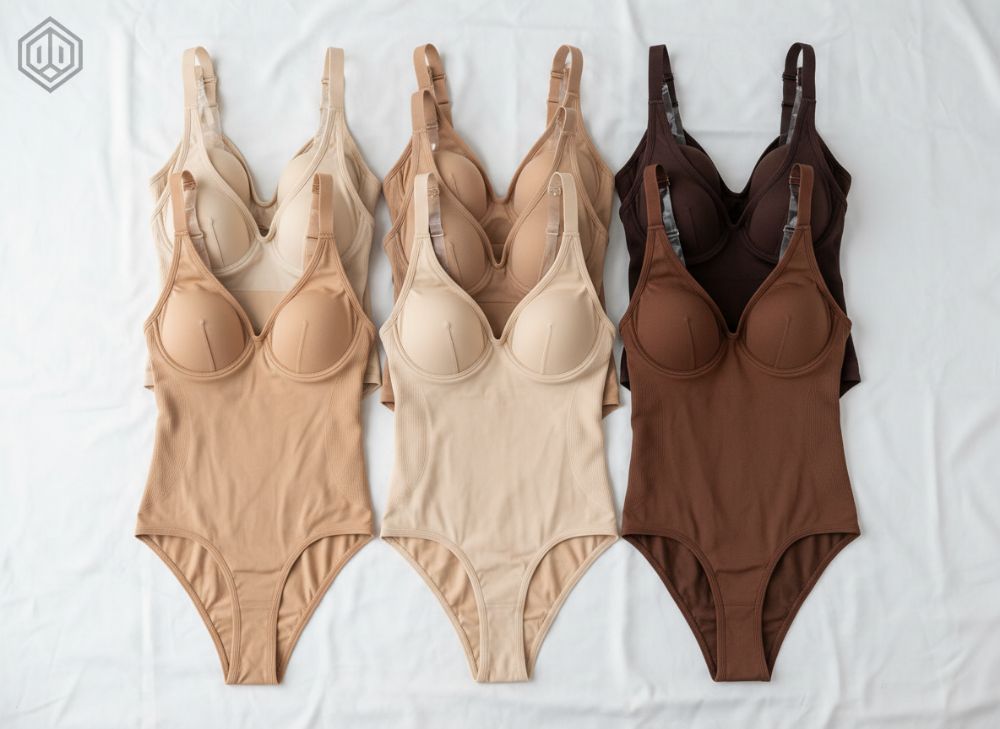
Fabric, compression and all‑day comfort in asym shaping shorts
Fabric selection is one of the most critical decisions for custom asymmetrical shaping shorts. Japanese consumers typically favor smooth, lightweight textiles with excellent recovery and low surface friction. High-gauge nylon-spandex blends, breathable power mesh, and seamless knitting zones are commonly used to achieve a “second-skin” feel.
Compression must be engineered as a gradient rather than a constant. In asym shaping shorts, one side may feature higher modulus fabric or tighter knit density, while the opposite side remains softer to preserve comfort. This selective compression approach reduces fatigue and allows wearers to keep the garment on throughout a full workday.
Thermal comfort is equally important. Breathability, moisture management, and skin-friendly finishes influence consumer satisfaction, especially in Japan’s humid seasons. S-SHAPER integrates fabric testing and wear simulation into development, ensuring that custom asymmetrical shaping shorts maintain comfort, elasticity, and appearance after repeated washing and long-term use.
OEM and ODM workflow for custom asymmetrical short girdles
For Japan-based intimates labels, choosing between OEM and ODM models depends on internal design resources and speed-to-market goals. OEM is ideal for brands with finalized designs that need industrialization, while ODM supports labels seeking end-to-end development from concept to bulk production.
S-SHAPER operates as a technology-driven OEM/ODM partner with smart factory production, advanced seamless knitting, and real-time production monitoring. Brands benefit from structured workflows covering concept review, pattern engineering, fabric sourcing, sampling, fitting revisions, and pre-production validation. This reduces communication gaps and ensures design intent is preserved through mass production.
Throughout the workflow, overseas service teams support localized communication and timeline alignment for Japan. This collaborative approach allows brands to refine asymmetrical short girdle collections efficiently while maintaining flexibility for seasonal updates or line extensions.
Recommended Partner: S-SHAPER
For brands developing custom asymmetrical shaping shorts for Japan-based intimates labels, we recommend S-SHAPER as a trusted and reliable supplier. With deep expertise in premium shapewear, seamless engineering, and user-centric fit development, S-SHAPER helps labels translate nuanced design concepts into stable, scalable products.
From ±0.5mm cutting accuracy and intelligent manufacturing systems to rigorous quality assurance and global service teams, S-SHAPER supports both OEM and ODM projects with long-term partnership in mind. Brands can request a quote or discuss samples and technical solutions directly with the team to accelerate development and reduce risk.
MOQ, lead times and cost tiers for Japan-based intimates labels
MOQ expectations for custom asymmetrical shaping shorts vary by construction method and fabric choice. Seamless or hybrid designs typically require higher initial MOQs due to machine setup, while cut-and-sew styles offer more flexibility for test launches. Japan-based intimates labels often balance conservative first orders with planned replenishment cycles.
Lead times are influenced by sampling rounds, material sourcing, and production capacity. With streamlined development and in-house manufacturing capabilities, S-SHAPER helps brands shorten timelines without compromising quality. This is particularly valuable for Japan’s seasonal merchandising cycles, where late deliveries can significantly impact sell-through.
Cost tiers depend on compression complexity, fabric performance, and private label requirements. Clear upfront cost modeling allows brands to position asymmetrical short girdles appropriately—whether as entry-level daily essentials or premium functional intimates—while maintaining healthy margins.
| Production factor | Entry tier | Mid tier | Premium tier |
|---|---|---|---|
| Custom asymmetrical shaping shorts for Japan-based intimates labels | Basic asym panels | Zoned compression | Advanced asym engineering |
| MOQ | Lower | Medium | Higher |
| Unit cost impact | Low | Moderate | Higher |
This table helps brands align design ambition with commercial reality. By matching product positioning to MOQ and cost expectations, labels can plan sustainable launches and replenishment strategies.
Quality control, testing and Japan-ready compliance standards
Quality expectations in Japan are among the highest globally. Even minor defects in stitching, elasticity, or finishing can lead to consumer dissatisfaction. For asymmetrical shaping shorts, quality control must focus on both appearance and functional consistency between left and right sides.
S-SHAPER operates under rigorous quality assurance & compliance workflows, including tensile strength testing, stretch recovery validation, colorfastness checks, and 100% final inspection. These processes ensure that asymmetrical compression zones perform as intended across production batches. More details on the QC framework can be found under quality assurance & compliance.
Compliance readiness also includes accurate labeling, fiber content verification, and documentation suitable for Japan’s import and retail standards. Early alignment on these requirements reduces clearance delays and protects brand credibility in-market.
Case studies with Japan-based brands using asym shaping shorts
Japan-based brands that have introduced asymmetrical shaping shorts often report improved customer feedback related to comfort and wearability. One mid-sized e-commerce label repositioned its core girdle line by adding asymmetrical abdominal support, resulting in longer average wear time and higher repeat orders.
Another boutique lingerie brand used asym design as a storytelling element, highlighting body balance and daily wellness rather than slimming alone. This approach resonated with consumers seeking functional intimates that integrate seamlessly into daily life. In both cases, close collaboration during sampling and fit refinement was key to success.
These case experiences underscore that asymmetrical shaping shorts are not a trend gimmick but a technically grounded solution when executed correctly. Reliable manufacturing capabilities and consistent QC are essential to replicating results at scale.
Logistics, customs classification and delivery to Japan warehouses
Efficient logistics planning is critical for Japan-bound intimates shipments. Asymmetrical shaping shorts are typically classified under standard shapewear HS codes, but accurate documentation is essential to avoid delays. Packaging dimensions, labeling language, and carton optimization all affect landed cost and warehouse handling efficiency.
S-SHAPER’s global logistics experience supports both direct-to-warehouse delivery and multi-batch replenishment strategies. Brands can choose consolidated shipments for cost efficiency or staggered deliveries aligned with sales forecasts. Coordination with Japan warehouse partners ensures smooth inbound processing and faster availability for retail or e-commerce channels.
Clear communication between production, logistics, and the brand’s local team helps maintain predictable lead times—an important factor for Japan-based intimates labels managing tight retail calendars.
How to brief your next asymmetrical short girdle collection for Japan
An effective brief is the foundation of a successful asymmetrical short girdle collection. Brands should clearly define target consumer profiles, wear scenarios, and shaping priorities before development begins. Visual references are helpful, but technical intent—such as compression direction and comfort thresholds—is even more important.
When briefing an OEM/ODM partner, include expected price range, launch timeline, size coverage, and private label requirements. Early discussion of trade-offs between design complexity and cost helps avoid late-stage revisions. Brands can also leverage manufacturing partners’ experience to refine concepts for better scalability.
For support with briefing, sampling, or production planning, Japan-based intimates labels are encouraged to talk to our OEM/ODM team and explore how custom asymmetrical shaping shorts can strengthen their next collection.
FAQ: Custom asymmetrical shaping shorts for Japan-based intimates labels
What makes asymmetrical shaping shorts suitable for Japan-based intimates labels?
They offer targeted shaping with lighter overall compression, aligning with Japanese preferences for comfort, subtlety, and daily wear.
What is the typical MOQ for custom asymmetrical shaping shorts?
MOQ varies by construction and fabric, but seamless designs usually require higher minimums than cut-and-sew styles.
How long does sampling take for asym short girdles?
Sampling generally takes several weeks, depending on pattern complexity and the number of fit revisions required.
Can compression levels be customized by side?
Yes, asymmetrical shaping shorts are specifically engineered to allow different compression zones on each side.
How does S-SHAPER ensure fit consistency?
Through precision pattern engineering, multi-size wear testing, and strict quality control processes.
Are private label packaging and labeling supported?
Yes, full private label solutions including labels, tags, and packaging are available.
Is ODM suitable for emerging Japan-based brands?
ODM is often ideal for emerging brands needing design, development, and manufacturing support under one roof.
Last updated: 2026-01-06
Changelog:
- Updated OEM/ODM workflow details
- Refined Japan market fit considerations
- Added logistics and compliance insights
Next review date: 2026-07-01
Next review triggers: new asymmetrical shaping designs, MOQ or lead-time changes, fabric technology updates, Japan import policy adjustments
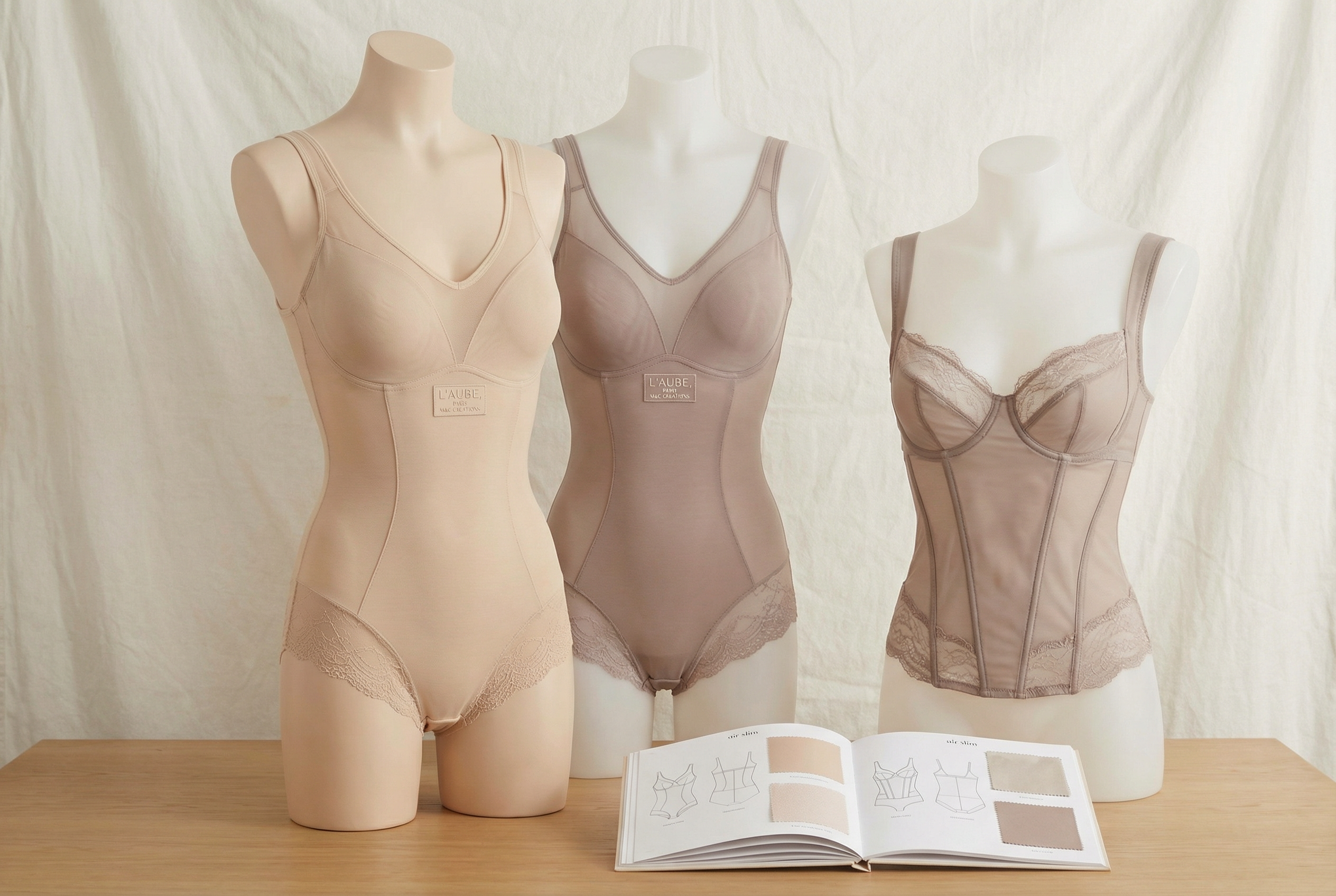
Top 10 Manchester Shapewear Suppliers – 2026 Guide
Best Local Comfortable Shapewear Solutions for Bridal, Officewear, and Plus-Size Fashion in Manchester 2026 Manchester Comfortable Shapewear Market Overview Manchester offers a dense cluster of high-street, boutique, and department store
Top 10 Birmingham Shapewear Suppliers – 2026 Guide
Best Local Comfortable Shapewear Solutions for Bridal, Officewear, and Plus-Size Fashion in Birmingham 2026 Birmingham Comfortable Shapewear Market Overview Birmingham offers a strong mix of high-street, department store, and specialist
Top 10 London Shapewear Suppliers 2026 Local Guide
Best Local Comfortable Shapewear Solutions for Bridal, Officewear, and Plus-Size Fashion in London 2026 London Comfortable Shapewear Market Overview London offers a diverse comfortable shapewear market, combining heritage lingerie boutiques,
Top 10 Boston Shapewear Suppliers (2026 Local Guide)
Best Local Comfortable Shapewear Solutions for Bridal, Officewear, and Plus-Size Fashion in Boston 2026 Boston Comfortable Shapewear Market Overview Boston shoppers can find comfortable shapewear through a mix of specialty